
Nexgard Spectra vs. Simparica Trio
NexGard Spectra and Simparica Trio both provide monthly protection against several common parasites, including fleas, ticks, heartworm, and intestinal worms. However, their coverage is not exactly the same. NexGard Spectra combines afoxolaner with milbemycin oxime and also covers whipworms, mange, and ear mites. Simparica Trio combines sarolaner, moxidectin, and pyrantel, with a focus on flea and tick control and coverage against a wider range of ticks. Both come as monthly chews, but differences in parasite coverage and minimum weight requirements may make one a better fit for your dog.
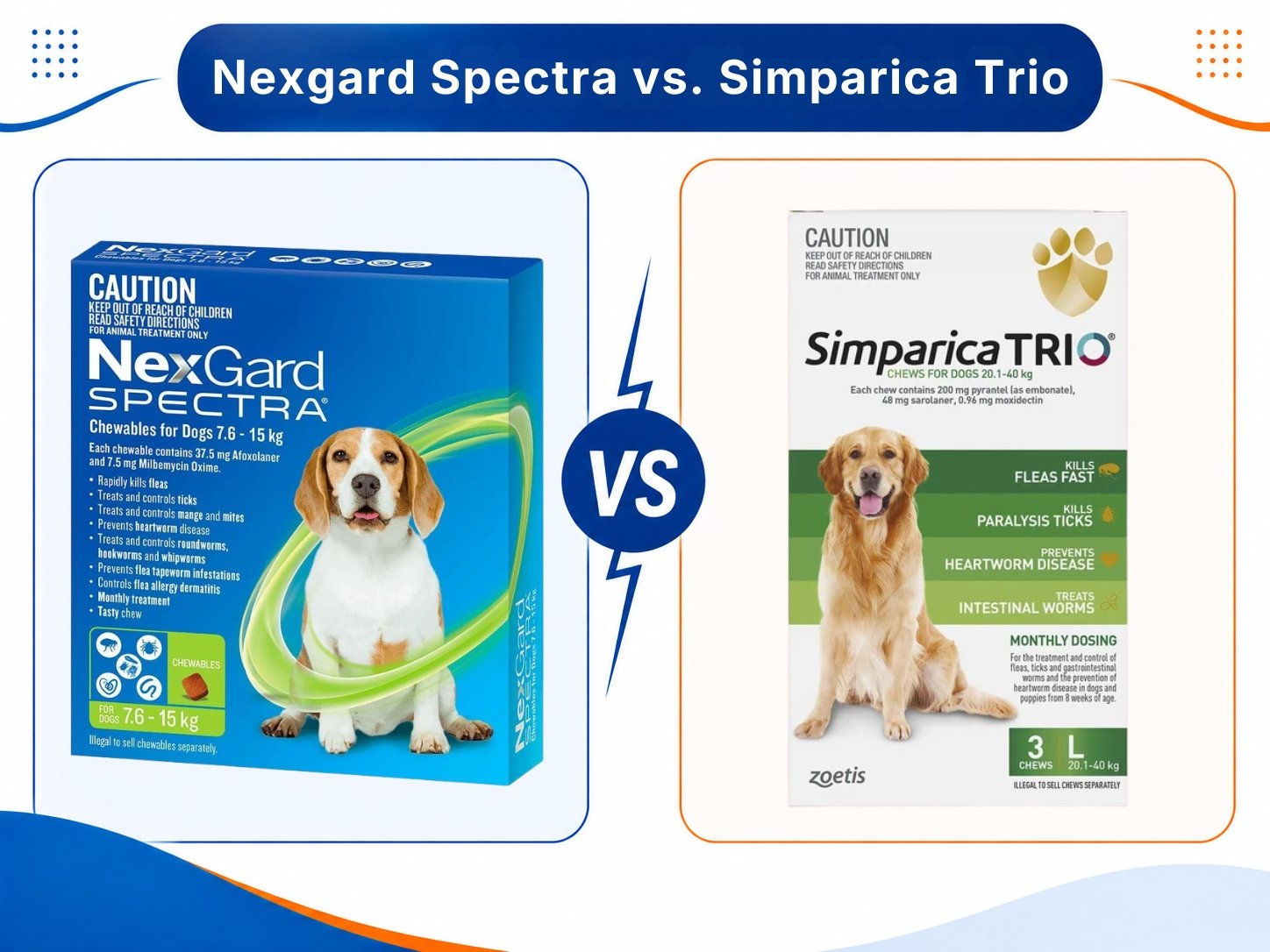
Let’s compare NexGard Spectra and Simparica Trio side by side to see how their ingredients, parasite coverage, and dosing requirements differ.
|
Features |
NexGard Spectra | Simparica Trio |
| Tapeworm Protection | Yes, prevents flea tapeworm infestation through flea control | Yes, prevents D. caninum infection by killing fleas before they can transmit tapeworm |
| Active Ingredients | Afoxolaner + Milbemycin oxime | Sarolaner + Moxidectin + Pyrantel |
| Duration of Protection | 1 month | 1 month |
| Heartworm Protection | Yes | Yes |
| Roundworm Protection | Yes | Yes |
| Hookworm Protection | Yes | Yes |
| Whipworm Protection | Yes | No |
| Flea Protection | Yes, rapidly kills fleas within 6–8 hours | Yes, begins killing fleas within 4 hours |
| Tick Protection | Yes, Paralysis, Brown Dog, Bush ticks, Ornate dog tick, Castor bean tick, Hedgehog tick, Brown dog tick, Mediterranean Hyalomma tick | Yes,multiple tick species, including Black-legged, Gulf Coast, American Dog, Lone Star and Brown Dog ticks |
| Form | Soft, tasty chewable | Flavored chewable tablet |
| Administration Frequency | Monthly | Monthly |
| Suitable for Dogs | Dogs and puppies 8 weeks and older; 2 kg+ | Dogs and puppies 8 weeks and older; 2.8 lb+ |
| Broad-Spectrum | Yes | Yes |
| Additional Parasites | Mange & ear mites | No |
| Side effects of Active Ingredients | Vomiting, diarrhea, lethargy; rarely seizures | Vomiting, diarrhea, lethargy; possible neurologic signs |
| Best fit | Dogs needing broader parasite & mite protection | Dogs needing broad monthly parasite protection |
| Veterinary Guidance | Consult a veterinarian | Vet prescription required |
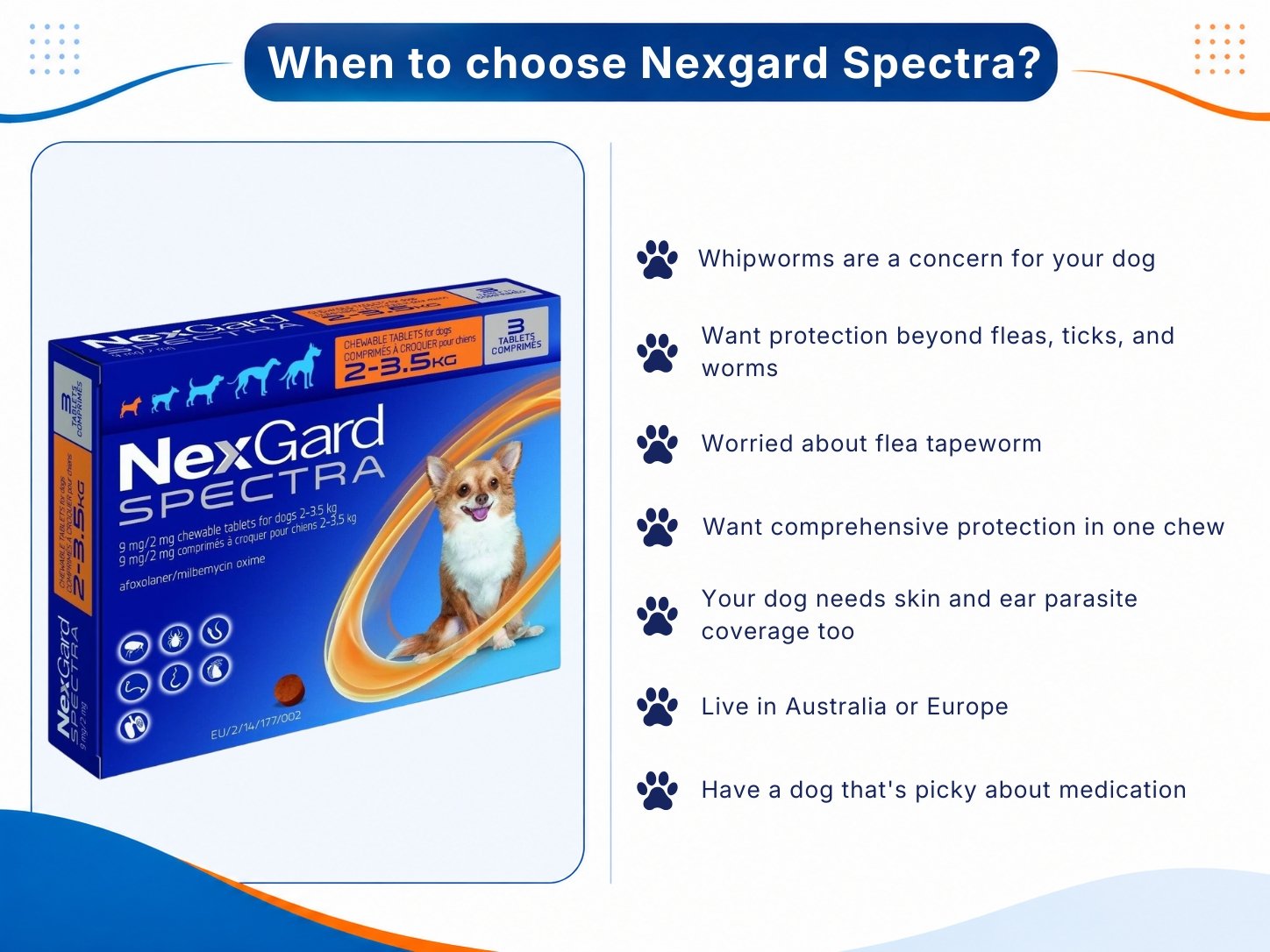
When to choose Nexgard Spectra?
Whipworms are a concern for your dog: NexGard Spectra covers whipworms, protection that isn’t listed among the intestinal worms Simparica Trio covers, so if this is a risk in your area, it fills a gap Simparica Trio doesn’t.
Want protection beyond fleas, ticks, and worms: NexGard Spectra also treats demodectic mange, sarcoptic mange, and ear mites, giving it broader skin-parasite coverage than a typical flea, tick, and worm product.
Worried about flea tapeworm: by controlling fleas effectively, NexGard Spectra helps prevent the flea tapeworm infestations that can follow untreated flea exposure.
Want comprehensive protection in one chew: NexGard Spectra combines coverage for fleas, ticks, heartworm, roundworms, hookworms, whipworms, and mites or mange, so you’re not managing separate products for each parasite type.
Your dog needs skin and ear parasite coverage too: for dogs facing risks beyond the usual flea, tick, and intestinal worm targets, this broader coverage can be a practical fit.
Live in Australia or Europe: NexGard Spectra may be a more relevant choice for pet owners in Australia and European markets, where the product has been specifically developed and studied with parasite risks and treatment needs in these regions in mind.
Have a dog that’s picky about medication: NexGard Spectra comes as a soft, palatable chew given once a month, making it easier to keep up with a consistent monthly routine.
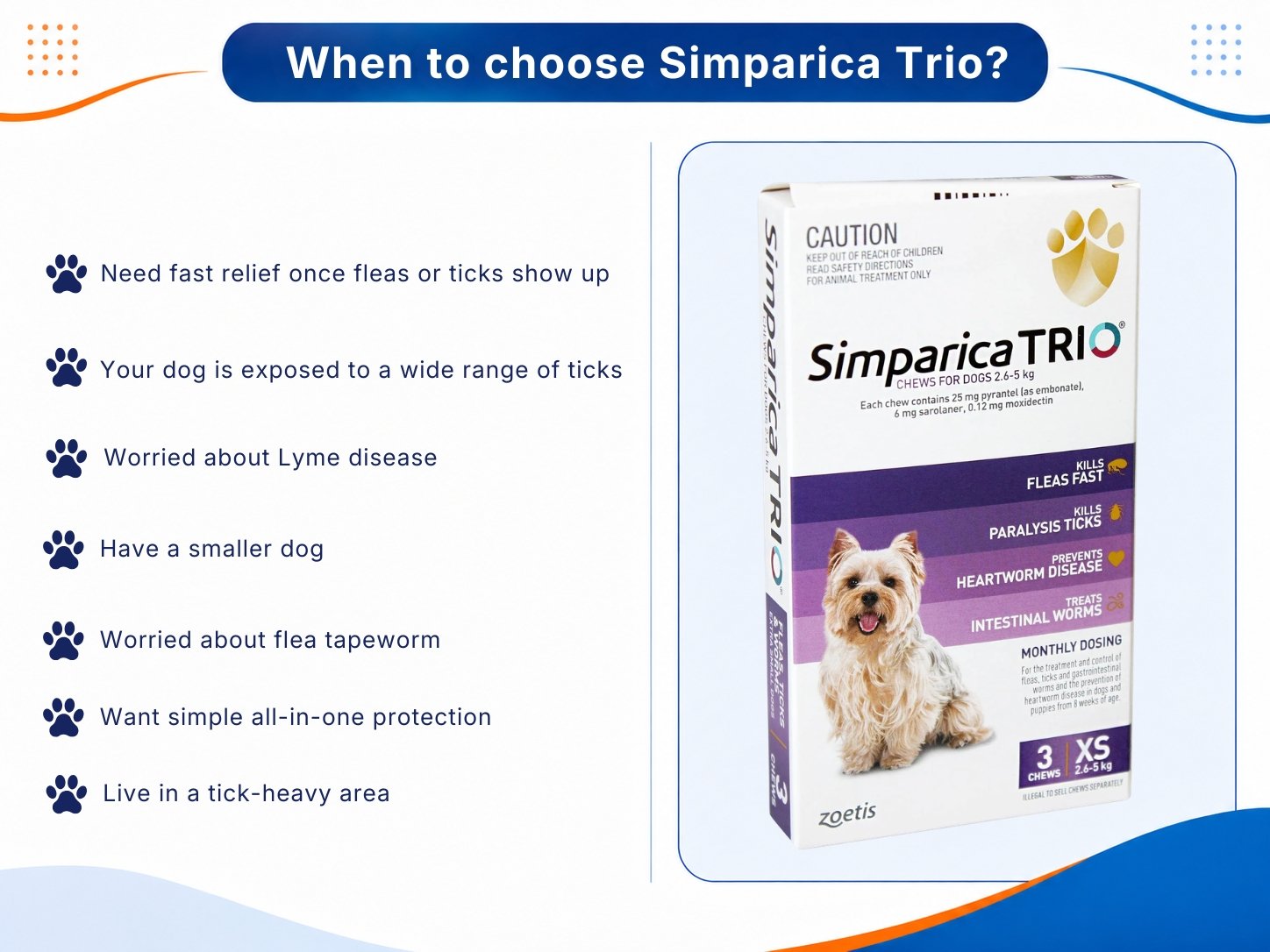
When to choose Simparica Trio?
Need fast relief once fleas or ticks show up: Simparica Trio starts killing fleas within 4 hours, faster than NexGard Spectra’s 6 to 8 hour window, so your dog gets relief sooner.
Your dog is exposed to a wide range of ticks: Simparica Trio covers a broad range of tick species, making it a strong choice for dogs facing frequent tick exposure.
Worried about Lyme disease: Simparica Trio is specifically labeled in the U.S. to help prevent Borrelia burgdorferi infection through its activity against black-legged ticks.
Have a smaller dog: Simparica Trio can be used in dogs from 2.8 lb, giving you an option for smaller breeds that need parasite prevention.
Worried about flea tapeworm: Simparica Trio helps prevent Dipylidium caninum infection by killing the fleas that transmit it.
Want simple all-in-one protection: Simparica Trio combines sarolaner, moxidectin, and pyrantel in one monthly chew, covering fleas, ticks, heartworm, roundworms, and hookworms.
Live in a tick-heavy area: with broad tick coverage and fast-acting protection, Simparica Trio can be particularly well suited for dogs with higher tick exposure.
Which is the better choice for your dog?
There is no universal winner between NexGard Spectra and Simparica Trio. The better option depends on your dog’s parasite risks, health needs, and the type of protection you’re looking for.
NexGard Spectra may be a better fit if:
- Whipworms are a concern where you live, as NexGard Spectra provides coverage against them while Simparica Trio does not.
- Your dog needs broader protection against skin parasites, including demodectic mange, sarcoptic mange, and ear mites.
- You’re in Australia or Europe and want parasite protection tailored to these markets.
Simparica Trio may be the better option if:
- Your dog regularly encounters different types of ticks and you want fast-acting flea and tick protection.
- Lyme disease prevention is important, as Simparica Trio is specifically labeled to help prevent Lyme disease.
- You have a smaller dog, since Simparica Trio is approved for dogs at a lower minimum body weight.
NexGard Spectra and Simparica Trio each offer a different approach to parasite protection, so the best choice depends on your dog’s individual needs. NexGard Spectra may be a good option when whipworm or skin parasite protection is a priority, while Simparica Trio may suit dogs with greater tick exposure or those that fall within its lower weight range. Your veterinarian can help determine which product is appropriate based on your dog’s health, lifestyle, and local parasite risks. Whichever option you use, following the recommended monthly schedule can help maintain consistent protection against the parasites it covers.

Anipet Team
Anipet Team is dedicated to sharing reliable information about pet health, veterinary care, and animal wellbeing. Our content is researched and reviewed by veterinary professionals to provide pet owners with trusted, practical information for caring for their pets.