Free Shipping on Orders Over $99*

Price range: US$58.50 through US$110.50
This product has multiple variants. The options may be chosen on the product page
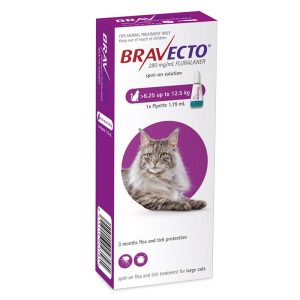
Price range: US$62.50 through US$116.50
This product has multiple variants. The options may be chosen on the product page
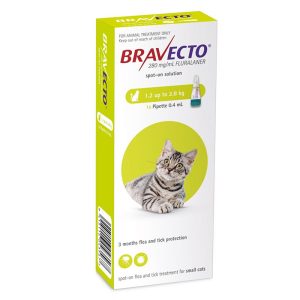
Price range: US$57.50 through US$107.50
This product has multiple variants. The options may be chosen on the product page
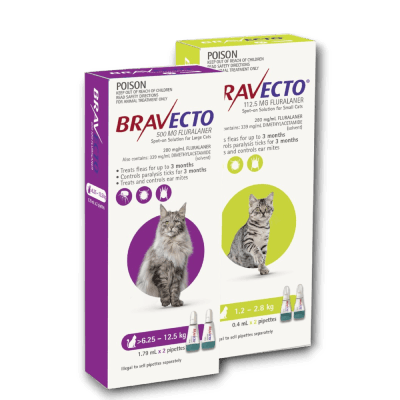
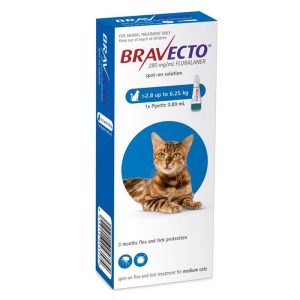
Bravecto Spot-On for Cats is a topical fluralaner solution available in three tube strengths. Each tube delivers a minimum dose of 18.2 mg/lb (40 mg/kg) of fluralaner, the same active ingredient and concentration found in clinic-dispensed Bravecto in the United States.
Anipetshop operates under Australia’s APVMA regulatory framework, which classifies these formulations as over-the-counter veterinary medications. No veterinary prescription is required to order from this collection.
Can You Buy Bravecto for Cats Without a Vet Prescription?
Bravecto for Cats is available through Anipetshop, a licensed online pharmacy operating under Australia’s APVMA regulatory framework, without a veterinary prescription. Whether a prescription is required depends on the regulatory classification applied by the dispensing country, not the medication’s active ingredient or formulation.
In the United States, Bravecto is classified as a prescription animal drug under 21 CFR, assigned NADA #141-459. U.S. federal law restricts its dispensing to use by or on the order of a licensed veterinarian, meaning no U.S. pharmacy or retailer can legally supply it without a valid veterinary authorization.
Australia’s APVMA applies a separate scheduling framework. Under APVMA classification, Bravecto is registered as an over-the-counter veterinary product for licensed pharmacies, which means registered pharmacies operating under Australian law are authorized to dispense it without requiring a prescription from the buyer.
Anipetshop holds an Australian pharmacy license that authorizes it to supply APVMA-registered medications to international customers. The fluralaner formulations dispensed through Anipetshop contain the same active ingredient, at the same labeled concentration, as the prescription-only Bravecto products sold in the United States.
Explore The Topical Spot-On Solution Formulation
Bravecto for Cats comes in one delivery format: a topical spot-on solution (fluralaner) applied once every 12 weeks directly to the skin. The product is available in three tube strengths calibrated by body weight, each delivered via a “Twist’n’Use” applicator that breaks the tube seal without removing the cap. There is no oral or chewable version for cats.
The following formulation details apply across all three tube strengths:
- Flavoring: Bravecto Spot-On is applied to the skin, not ingested, so flavoring is not included in the formulation.
- Key excipients: Dimethylacetamide, glycofurol, diethyltoluamide (DEET), and acetone are present as carrier and solvent components.
- Physical form: A clear to slightly yellow liquid solution housed in a plastic tube with a non-removable cap.
- Storage: Store at or below 86°F (30°C) in a cool, dry location, and keep out of reach of children.
The table below lists each tube strength, its corresponding weight range, and current pricing per dose at Anipetshop:
|
Product |
Price for 1 Dose | Price for 2 Doses |
Pack Color |
| $57.50 | $107.50 |
Yellow |
|
| $58.50 | $110.50 |
Blue |
|
| $62.50 | $116.50 | Purple |
Take the Correct Dosage
Bravecto for Cats is dosed by body weight. One tube is applied topically every 12 weeks. In areas where Dermacentor variabilis (American dog tick) exposure is a concern, the labeled dosing interval is every 8 weeks, as Bravecto’s efficacy against that species falls below 90% after the 8-week mark.
The table below shows the correct tube strength for each weight range:
|
Cat’s Weight (lbs) |
Fluralaner (mg) |
Pack Color |
|
2.6 – 6.2 |
112.5 mg |
Yellow |
|
6.2 – 13.8 |
250 mg |
Blue |
|
13.8 – 27.5 |
500 mg |
Purple |
For cats over 27.5 lbs, the FDA label directs combining tubes to reach the minimum labeled dose of 18.2 mg/lb (40 mg/kg); consult a veterinarian before dosing cats in this weight range.
When a cat sits exactly at a weight cutoff, the higher tube strength should be selected. For example, a cat weighing 6.2 lbs falls at the lower boundary of the 6.2 to 13.8 lbs range: the 250 mg tube, not the 112.5 mg tube, is the appropriate selection. Safety studies conducted at up to 5 times the maximum labeled dose produced no clinically relevant adverse effects, which means the margin between the labeled dose and a problematic exposure level is substantial. Underdosing in borderline cats is a more common cause of treatment failure than administering the next tube strength up.
If you select the higher tube for a cat near a weight boundary, monitor for drooling, lethargy, or localized skin irritation at the application site within the first 24 to 48 hours. These reactions are typically self-limiting at this dose level. Consult a veterinarian if tremors or persistent vomiting occur.
Why Cat Owners Should Choose Bravecto
The primary clinical reason cat owners select Bravecto over monthly topical alternatives is the 12-week dosing interval. Monthly treatments require 12 applications per year; Bravecto requires 4. That reduction is most relevant for cats that resist handling and for owners whose schedules make consistent monthly application difficult to sustain without a missed dose.
The following points outline the clinical and practical basis for that preference:
- Extended protection duration: One application covers 12 weeks against fleas (Ctenocephalides felis) and black-legged ticks (Ixodes scapularis, Haemaphysalis longicornis), with no reapplication required within that interval.
- Fast flea kill onset: Fluralaner begins killing fleas within 8 hours of application. Controlled laboratory studies report greater than 98% flea elimination within 12 hours post-infestation.
- Reduced handling frequency: Four applications per year versus twelve reduces the number of restraint events for cats with handling sensitivity, which is a direct welfare consideration.
- Owner compliance data: In reported surveys, 97% of cat owners expressed satisfaction with Bravecto, and 87% preferred it over monthly alternatives they had previously used.
Bravecto’s standard topical formulation does not cover heartworms or intestinal worms. Owners requiring broader parasite coverage should discuss Bravecto Plus with their veterinarian: it adds moxidectin for heartworm and roundworm protection but is labeled for every-8-week dosing rather than 12-week.
How Do Pet Owners Review Non-Prescription Bravecto for Cats Online?
Pet owners who purchase Bravecto through Anipetshop without a prescription consistently report that the product performs identically to clinic-dispensed Bravecto. The 12-week dosing interval is the most frequently cited factor, with owners noting that fewer annual applications reduce both treatment cost and the frequency of handling a cat that resists topical products.
Merck Animal Health has acknowledged that monthly parasite prevention is difficult for many cat owners to maintain without missed doses, and that extended-duration formulations address measurable compliance gaps in practice. Independent veterinary reviewers, including clinicians at Delavan Lakes Veterinary Care, have characterized Bravecto as a long-duration flea and tick treatment distinguished from shorter-interval alternatives by its sustained systemic action through the full 12-week window.
Buy Bravecto for Cats Without a Vet Prescription at Anipetshop
Bravecto for Cats is available through Anipetshop without a veterinary prescription, supplied under Anipetshop’s Australian pharmacy license and APVMA regulatory authorization. The following points describe the sourcing and product standards that apply to every order:
- Authenticity: All Bravecto units are sourced directly from licensed manufacturers, with English-language labeling that matches the labeled specifications for active ingredient, concentration, and dosing interval.
- Sourcing geography: Products are sourced from licensed manufacturing facilities across Australia and Europe, all operating under their respective national regulatory frameworks.
- Shelf life: Each unit is supplied with sufficient shelf life remaining to ensure the product retains full potency at the time of administration.
- No generics or substitutes: Every unit supplied is the original branded Bravecto formulation. No generic fluralaner products or reformulated substitutes are dispensed.
- Formulation equivalence: Active ingredient (fluralaner), concentration, and dosage standards in units supplied through Anipetshop match those of Bravecto products sold in the United States under NADA #141-459.
How Bravecto Works on Cats
Fluralaner works systemically: after topical application at the base of the skull, it absorbs through the skin into subcutaneous tissue and enters systemic circulation. Fleas and ticks ingest fluralaner when they feed on the cat’s blood, at which point the compound blocks both GABA-gated chloride channels and glutamate-gated chloride channels in the arthropod nervous system. Disruption of these inhibitory neurotransmission pathways causes rapid paralysis and death in the parasite.
This mechanism is selective for arthropods because mammals express different chloride channel subtypes with substantially lower binding affinity for fluralaner. That receptor selectivity is the pharmacological basis for the compound’s safety margin in cats and other vertebrates.
Fluralaner reaches peak plasma concentration between 7 and 21 days after a single topical dose, with an elimination half-life of 11 to 13 days. That half-life sustains blood concentrations above the minimum effective threshold across the full 12-week protection window. Flea kill begins within 8 hours of initial application; controlled European laboratory studies report greater than 98% flea elimination within 12 hours post-infestation.
How Should You Administer Bravecto for Cats?
Bravecto Spot-On should be applied as a single topical dose to the skin at the base of the skull. This site is selected to prevent the cat from reaching and licking the application area. Apply the full contents of one tube in a single administration; do not split the dose across sessions.
The following steps cover correct application from tube preparation through post-application handling:
- Prepare the applicator: Remove the tube from its pouch immediately before use. Hold the tube upright by the crimped end and rotate the cap one full turn in either direction until the seal breaks. The cap remains on the tube throughout application and is not removed.
- Position the cat: Place the cat in a standing or prone position with its back horizontal. A flat back ensures the application site is accessible and reduces liquid runoff along the neck.
- Apply to skin: Part the fur at the base of the skull until skin is visible. Hold the tube tip vertically against the skin and squeeze firmly to deliver the entire contents in one spot. Incomplete delivery results in underdosing.
- Manage runoff: If the liquid volume risks dripping before absorbing, apply the remainder in a second spot directly behind the first. Do not spread the product across a wider area, as this reduces local absorption concentration.
- Post-application handling: Wash hands with soap and water immediately after contact with the tube or application site. Do not touch the application site, and prevent children from touching it, for at least 2 hours after application.
Are There Any Side Effects of Bravecto for Cats to Consider?
Bravecto for Cats carries a documented adverse reaction profile established in both the U.S. field study and post-approval surveillance. The U.S. field study enrolled 224 fluralaner-treated cats over a 105-day period. The following adverse reactions were recorded in that study, listed in decreasing order of frequency:
- Vomiting: Reported in 7.6% of treated cats, making it the most frequently observed reaction in the field study.
- Pruritus: Reported in 5.4% of treated cats; generalized itching without an identified dermatological cause.
- Diarrhea: Reported in 4.9% of treated cats.
- Alopecia: Reported in 4.9% of treated cats, including both generalized and application site hair loss.
- Decreased appetite: Reported in 3.6% of treated cats.
- Lethargy: Reported in 3.1% of treated cats.
- Ataxia: Observed in 2 cats during the study period.
Post-approval surveillance data (2020) identified additional reactions not captured at field study frequency thresholds. These are listed in decreasing order of reporting frequency: application site alopecia, hypersalivation, anorexia, behavioral changes (including hyperactivity, hiding, and vocalization), generalized pruritus, application site erythema, and muscle tremor.
Fluralaner belongs to the isoxazoline drug class, which the FDA has associated with neurologic adverse reactions including tremors, ataxia, and seizures. These reactions have occurred in cats with no prior history of neurological disorders. Cats with a known seizure history or existing neurological condition should not receive Bravecto without prior veterinary assessment.
The safety of Bravecto has not been established in breeding, pregnant, or lactating cats; the current FDA label does not confirm safe use in these reproductive groups. A veterinarian should be consulted before administering Bravecto to any cat in these categories.
Are There Bravecto Alternatives That Don’t Require a Vet’s Prescription?
Revolution Plus, Advocate, Frontline Plus, and Stronghold are all available through Anipetshop without a veterinary prescription, dispensed under APVMA authorization. The appropriate alternative depends on the parasite species requiring coverage and whether tick protection is a clinical priority for the individual cat.
The following alternatives differ from Bravecto in active ingredient, parasite spectrum, and dosing interval:
- Revolution Plus: Combines selamectin and sarolaner in a monthly topical dose covering fleas, ticks, ear mites, roundworms, and hookworms. It is the broadest-spectrum prescription-free option for cats requiring multi-parasite coverage in a single monthly application.
- Advocate: Uses imidacloprid and moxidectin for monthly control of fleas, ear mites, roundworms, and hookworms. Advocate carries no labeled tick efficacy and is not an appropriate substitute for Bravecto in tick-endemic environments.
- Frontline Plus: Uses fipronil and S-methoprene as a monthly topical. Frontline Plus acts through a contact-kill mechanism rather than systemic absorption, meaning parasites are killed on contact with the treated coat without ingesting the compound through a blood meal.
- Stronghold: Uses selamectin as a monthly topical for fleas, ear mites, roundworms, and hookworms. Stronghold carries no labeled tick efficacy, which limits its use in tick-endemic regions to the same degree as Advocate.
The primary clinical basis for selecting Bravecto over these alternatives is the 12-week dosing interval. In households where monthly applications are frequently missed, the extended protection window reduces the risk of parasite rebound between doses. For cats requiring tick coverage alongside heartworm or intestinal worm protection, consult a veterinarian to determine whether Bravecto Plus or Revolution Plus is the more appropriate option.
FAQs
How long does Bravecto for Cats last?
Standard Bravecto provides 12 weeks of protection against fleas (Ctenocephalides felis) and black-legged ticks (Ixodes scapularis, Haemaphysalis longicornis). For Dermacentor variabilis (American dog tick), efficacy drops below 90% after 8 weeks, so the labeled dosing interval for that species is every 8 weeks.
Does it kill parasites already on my cat?
Yes. Bravecto begins killing fleas within 8 hours of application and achieves greater than 98% flea elimination within 12 hours post-infestation in controlled laboratory studies.
Is there a Bravecto chewable for cats?
No. Bravecto is available for cats as a topical solution only. The chewable tablet formulation is registered for dogs and has not been approved for use in cats.
What is the difference between Bravecto and Bravecto Plus?
Standard Bravecto covers fleas and ticks for 12 weeks. Bravecto Plus adds moxidectin to extend coverage to heartworm prevention and intestinal worm control, but the addition of moxidectin requires a shorter dosing interval of every 8 weeks rather than 12.
Is it safe for pregnant or breeding cats?
The safety of Bravecto has not been established in breeding, pregnant, or lactating cats; the current FDA label does not confirm safe use in these groups. Consult a veterinarian before administering Bravecto to a cat in any of these reproductive states.
Can I use my dog’s Bravecto on my cat?
No. Canine Bravecto formulations contain active ingredient concentrations that are not labeled for cats and may be toxic. Never apply a product formulated for dogs to a cat.
What if my cat licks the application site?
Licking the application site may cause hypersalivation or vomiting due to the bitter taste of the excipients, including dimethylacetamide and acetone. Monitor the cat and contact a veterinarian if symptoms persist beyond a few hours or if neurological signs such as tremors appear.
What if I miss a dose?
Apply the missed dose as soon as the gap is identified, then restart the 12-week schedule from that date. Do not administer two doses in close succession to compensate for the missed application, as this does not improve efficacy and increases the risk of adverse reactions.