
Trifexis vs. Simparica Trio
Trifexis and Simparica Trio give your dog broad monthly protection against fleas, heartworms, and intestinal worms, so the real question comes down to a few key differences. Trifexis pairs spinosad with milbemycin oxime and adds whipworm coverage, while Simparica Trio pairs sarolaner with moxidectin and pyrantel to add tick protection instead. Both are approved for dogs 8 weeks and older, though they start at slightly different minimum weights. Beyond the active ingredients, a few label differences, including tick coverage and ingredient class, can make one product a better fit than the other depending on your dog’s lifestyle and health history.
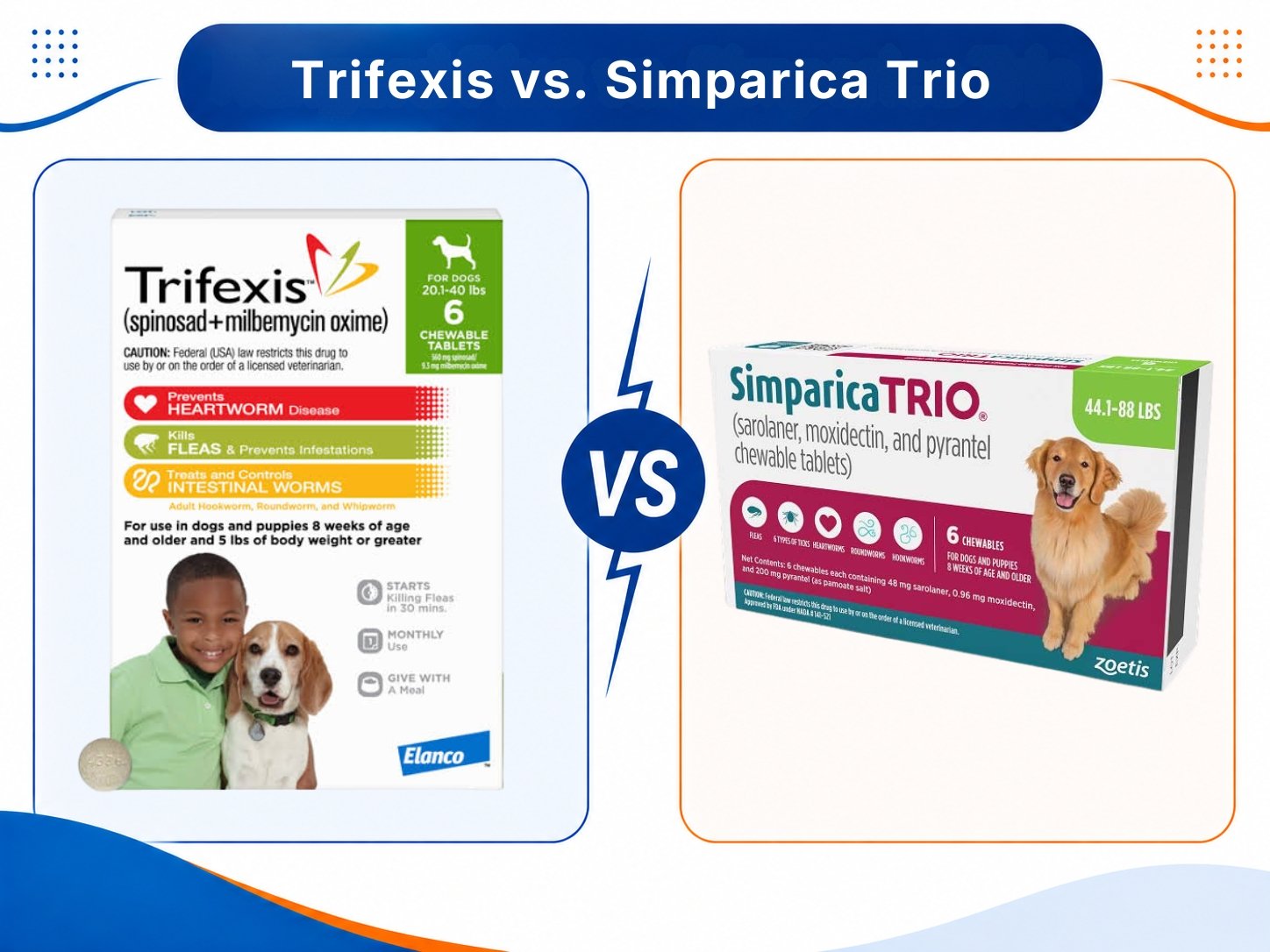
Here’s how the two products stack up side by side, from active ingredients to which parasites each one covers.
| Features | Trifexis | Simparica Trio |
| Active Ingredients | Spinosad, Milbemycin Oxime | Sarolaner, Moxidectin, Pyrantel |
| Duration of Protection | 1 month | 1 month |
| Heartworm Protection | Yes | Yes |
| Roundworm Protection | Yes | Yes |
| Hookworm Protection | Yes | Yes |
| Whipworm Protection | Yes | No |
| Tapeworm Protection | No | Yes, prevents Dipylidium caninum infection by killing flea vectors |
| Flea Protection | Yes | Yes |
| Tick Protection | No | Yes |
| Form | Flavored chewable tablet | Chewable tablet |
| Administration Frequency | Monthly | Monthly |
| Suitable for Dogs | ≥8 weeks, ≥5 lbs (2.3 kg) | ≥8 weeks, ≥2.8 lbs (1.3 kg) |
| Broad-Spectrum | Fleas, heartworm & intestinal worms | Fleas, ticks, heartworm & intestinal worms |
| Additional Parasites | None | 4 common tick species |
| Side effects of Active Ingredients | Vomiting, diarrhea, lethargy | Vomiting, diarrhea, possible neurological reactions |
| Best Fit | Dogs with low tick risk | Dogs in tick-prone areas |
| Veterinary Guidance | Give with food; vet advice before use | Monthly use as directed by your vet |
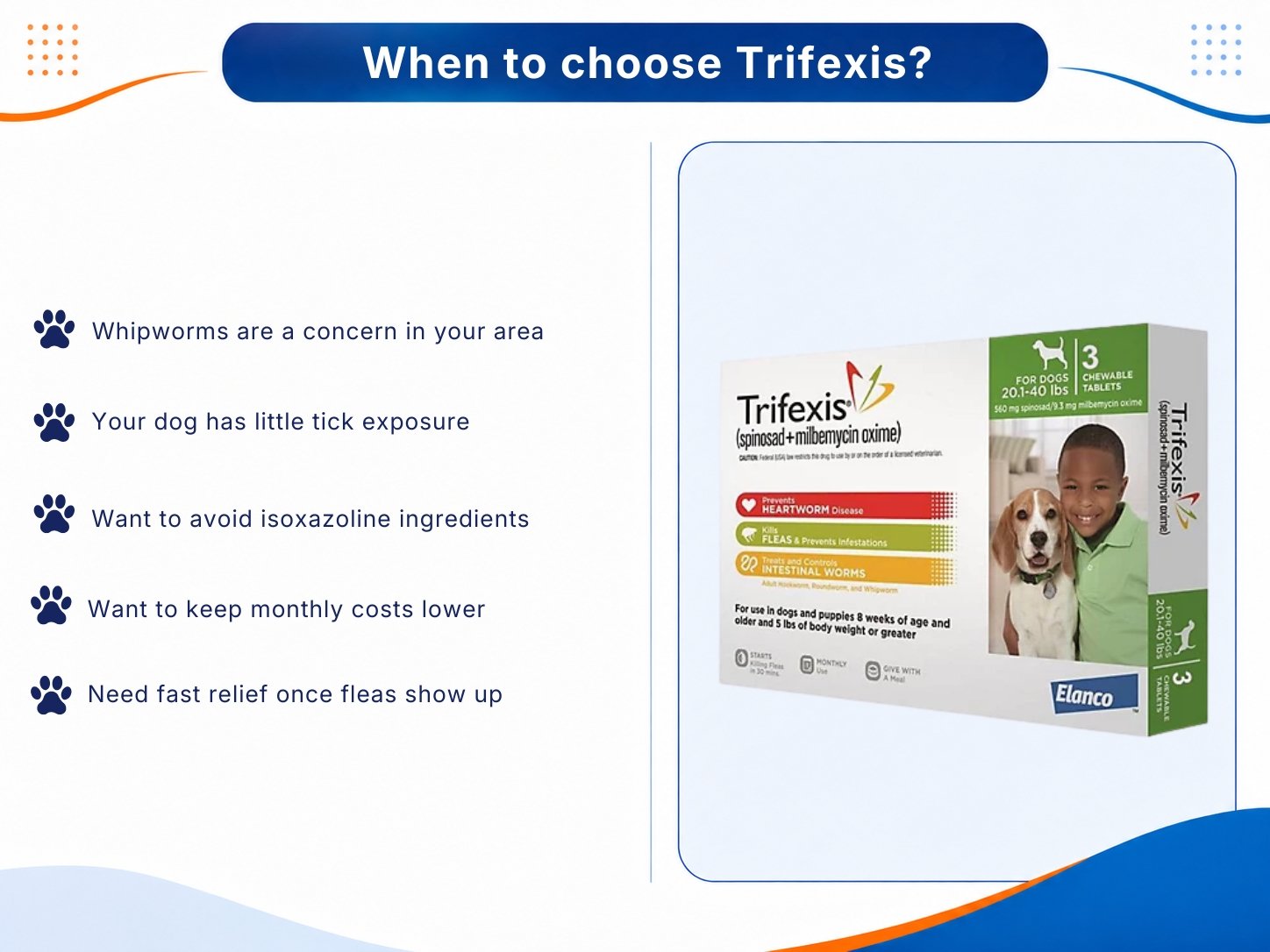
When to choose Trifexis?
Whipworms are a concern in your area: Trifexis protects against fleas, heartworms, roundworms, hookworms, and whipworms, coverage Simparica Trio doesn’t include, so if your dog has a history of whipworm infection or lives somewhere it’s common, this fills a gap Simparica Trio can’t.
Your dog has little tick exposure: Trifexis provides comprehensive protection against internal parasites and fleas without tick coverage, so if your dog lives in a low-risk area or spends little time outdoors, you’re not paying for protection you may not need.
Want to avoid isoxazoline ingredients: Trifexis doesn’t contain an isoxazoline such as sarolaner, so for dogs with a history of neurological reactions, or when a vet recommends steering clear of this drug class, Trifexis can be the safer fit.
Want to keep monthly costs lower: Trifexis is generally less expensive while still covering the most common internal parasites and fleas, so it can be a practical choice if broader coverage isn’t a priority.
Need fast relief once fleas show up: the active ingredient spinosad begins killing adult fleas quickly, making Trifexis a strong option for dogs dealing with an active flea infestation.
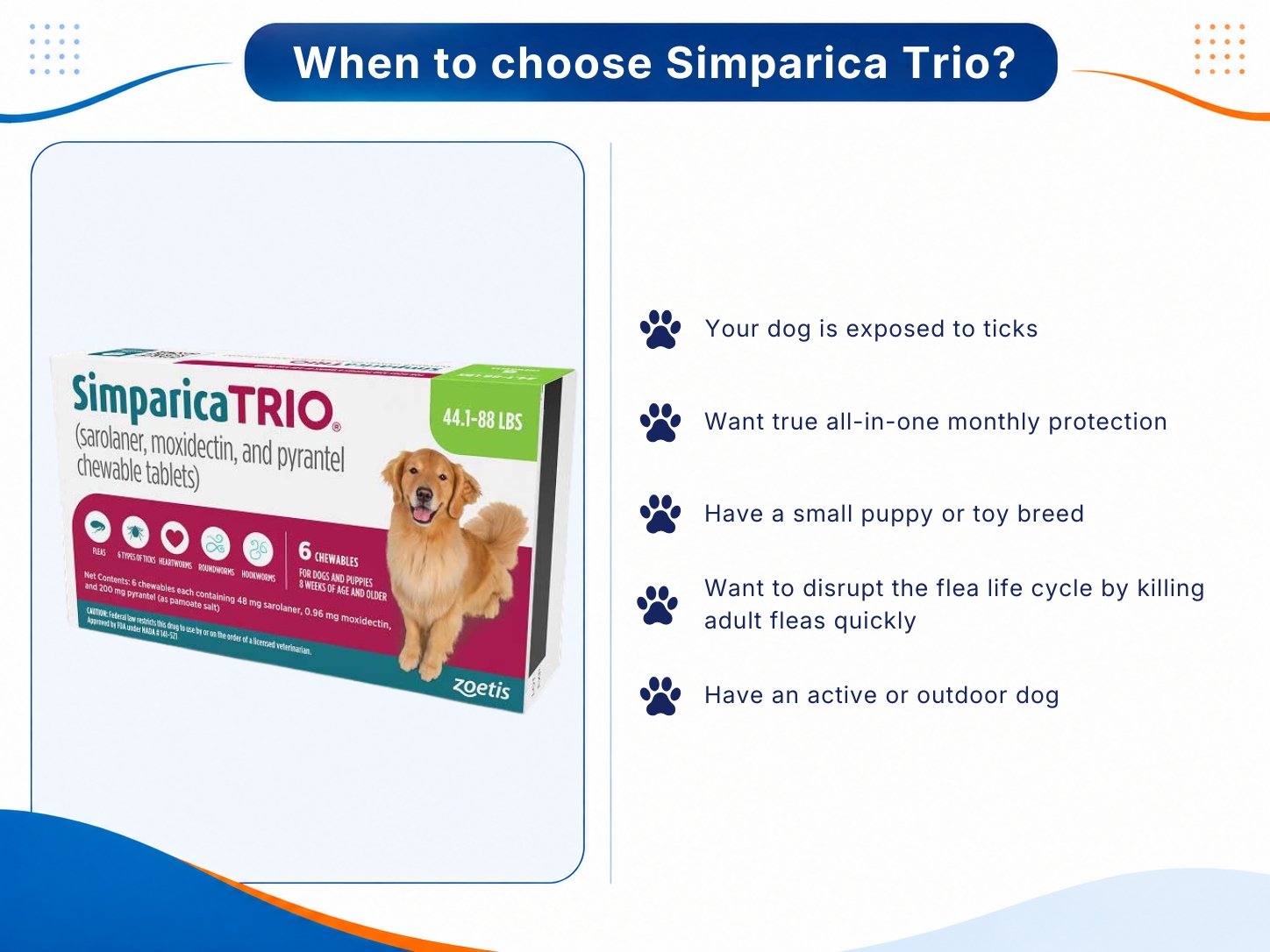
When to choose Simparica Trio?
Your dog is exposed to ticks: Simparica Trio kills five major tick species, including deer ticks, American dog ticks, Lone Star ticks, Gulf Coast ticks, and brown dog ticks, coverage Trifexis doesn’t offer, so if your dog spends time in tick-prone areas, this fills a gap Trifexis simply can’t.
Want true all-in-one monthly protection: Simparica Trio combines flea, tick, heartworm, and intestinal worm protection in a single monthly chew, so you can skip the separate topical treatment or tick collar altogether.
Have a small puppy or toy breed: Simparica Trio is approved for puppies 8 weeks and older weighing at least 2.8 lb, a lower starting weight than Trifexis requires, so it can start protecting smaller dogs earlier.
Want to disrupt the flea life cycle by killing adult fleas quickly: Simparica Trio kills adult fleas quickly, helping stop them from laying eggs and reducing the risk of continued flea infestation in your home.
Have an active or outdoor dog: for dogs that hike, camp, or spend time in wooded or grassy areas, the combined flea and tick protection in one product makes Simparica Trio a strong fit for that higher exposure risk.
Which is better for your dog?
Neither product is better across the board, the right choice depends on your dog’s parasite exposure and health history.
Trifexis is better when:
- Whipworms are a concern in your area or your dog has a history of infection, since Trifexis covers whipworms while Simparica Trio doesn’t.
- Your dog has little tick exposure and doesn’t need coverage for a parasite risk that isn’t really present.
- Your dog has a history of neurological reactions or your vet recommends avoiding isoxazoline ingredients like sarolaner.
Simparica Trio is better when:
- Your dog spends time in tick-prone areas, since Simparica Trio protects against five major tick species that Trifexis doesn’t cover.
- You have a small puppy or toy breed, as Simparica Trio is approved from a lower minimum weight than Trifexis.
- Your dog is active outdoors and would benefit from combined flea and tick protection in a single monthly chew.
At the end of the day, neither Trifexis nor Simparica Trio is the universally better product, they’re simply built for different parasite risks. Trifexis is a good choice if tick protection isn’t a priority and whipworms are more of a concern, while Simparica Trio may be better for dogs in tick-prone areas or those needing a lower starting weight. Talk to your veterinarian before choosing either product, since they can recommend the best option based on your dog’s health, lifestyle, and local parasite risks. Whichever you choose, use it consistently every month to keep your dog protected from fleas, heartworm, and intestinal worms, along with whichever additional parasites the product you select covers.

Anipet Team
Anipet Team is dedicated to sharing reliable information about pet health, veterinary care, and animal wellbeing. Our content is researched and reviewed by veterinary professionals to provide pet owners with trusted, practical information for caring for their pets.