
Simparica vs. Simparica Trio
Choosing a monthly parasite preventive for your dog often comes down to two solid options that look similar on the surface but cover different ground underneath. Simparica and Simparica Trio share the same sarolaner-based flea and tick protection, yet Trio extends that coverage to heartworms, roundworms, and hookworms, which can make the decision feel more complicated than it needs to be. Understanding what each product actually protects against, and where your dog’s specific risks lie, makes it much easier to land on the right choice without second guessing yourself.
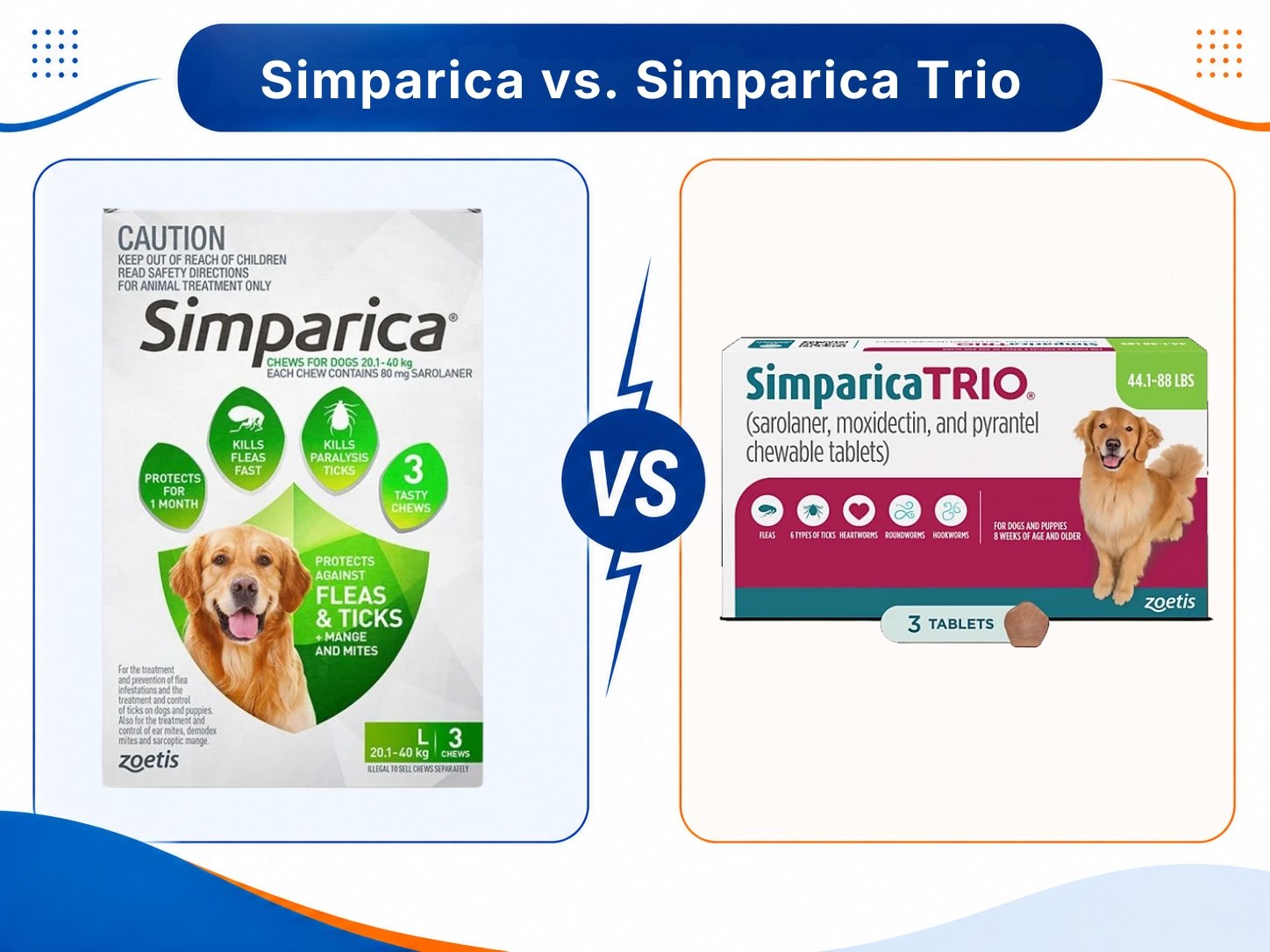
Here’s how the two products stack up side by side, from active ingredients to age requirements.
| Features | Simparica | Simparica Trio |
| Active Ingredients | Sarolaner | Sarolaner + Moxidectin + Pyrantel |
| Duration of Protection | 1 month | 1 month |
| Heartworm Protection | No | Yes |
| Roundworm Protection | No | Yes |
| Hookworm Protection | No | Yes |
| Whipworm Protection | No | No |
| Tapeworm Protection | No | Yes, prevents Dipylidium caninum infection by killing flea vectors |
| Flea Protection | Yes | Yes |
| Tick Protection | Yes | Yes |
| Form | Chewable | Chewable |
| Administration Frequency | Monthly | Monthly |
| Suitable for Dogs | 6+ months | 8+ weeks |
| Broad-Spectrum | No | Yes |
| Additional Parasites | Fleas, ticks | Fleas, ticks, heartworms, roundworms, hookworms |
| Side effects of Active ingredients | Vomiting, diarrhea, lethargy | Vomiting, diarrhea, lethargy, anorexia |
| Best fit | Flea & tick protection | Broader parasite protection |
| Veterinary Guidance | Recommended | Recommended |
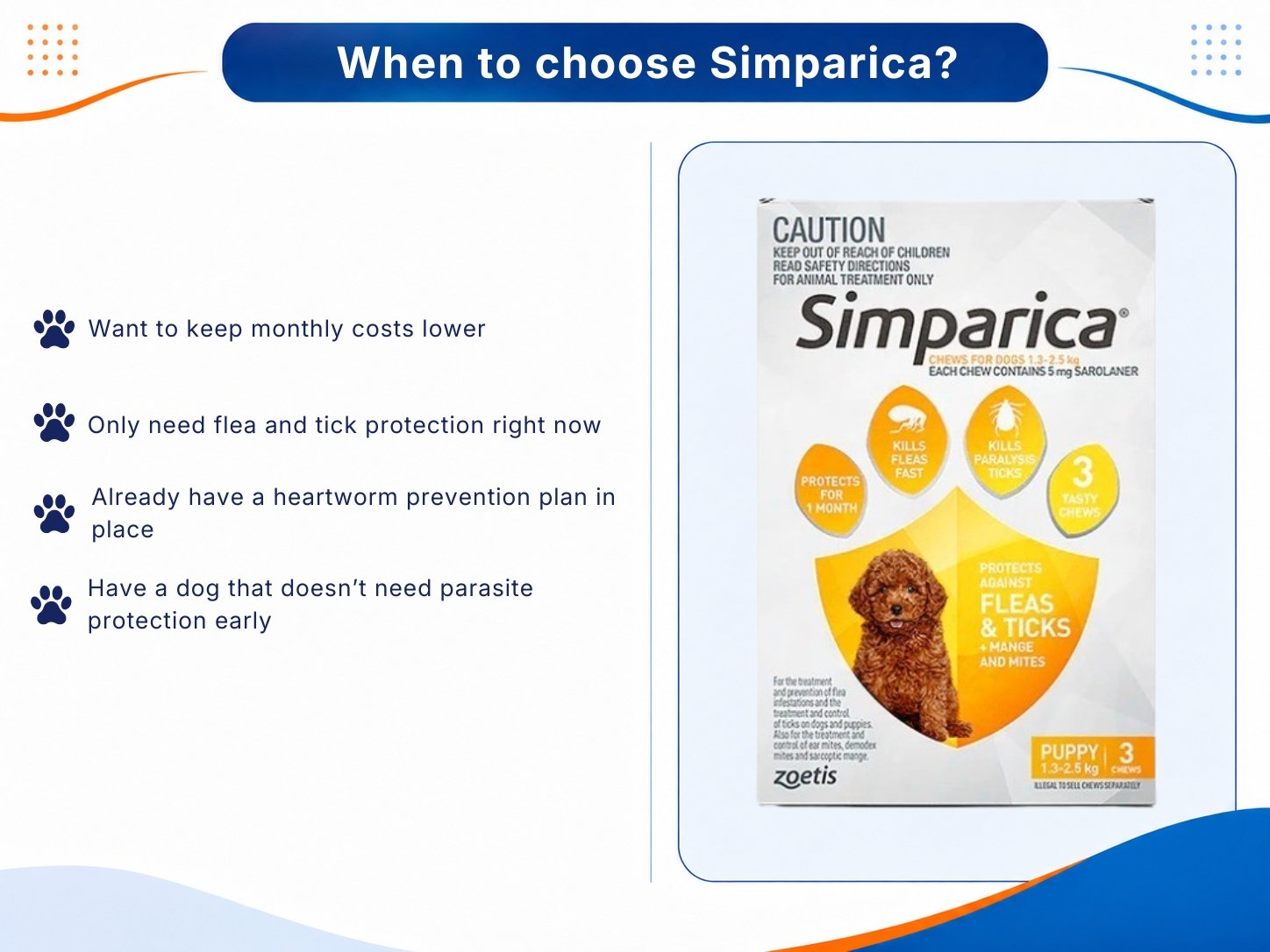
When to choose Simparica?
Want to keep monthly costs lower: Simparica costs less per dose, so if your dog’s parasite risks are limited to fleas and ticks, you’re not paying for broader coverage you don’t actually need.
Only need flea and tick protection right now: Simparica focuses specifically on flea and tick control with a simpler, single-purpose formulation, so if heartworm and intestinal worm risks are already being handled elsewhere, this keeps things straightforward.
Already have a heartworm prevention plan in place: Simparica doesn’t include a heartworm ingredient, so it can fit into your dog’s existing prevention routine without adding overlapping coverage.
Have a dog that doesn’t need parasite protection early: Simparica is approved for dogs and puppies 6 months and older, making it a straightforward option when parasite prevention doesn’t need to start at a younger age.
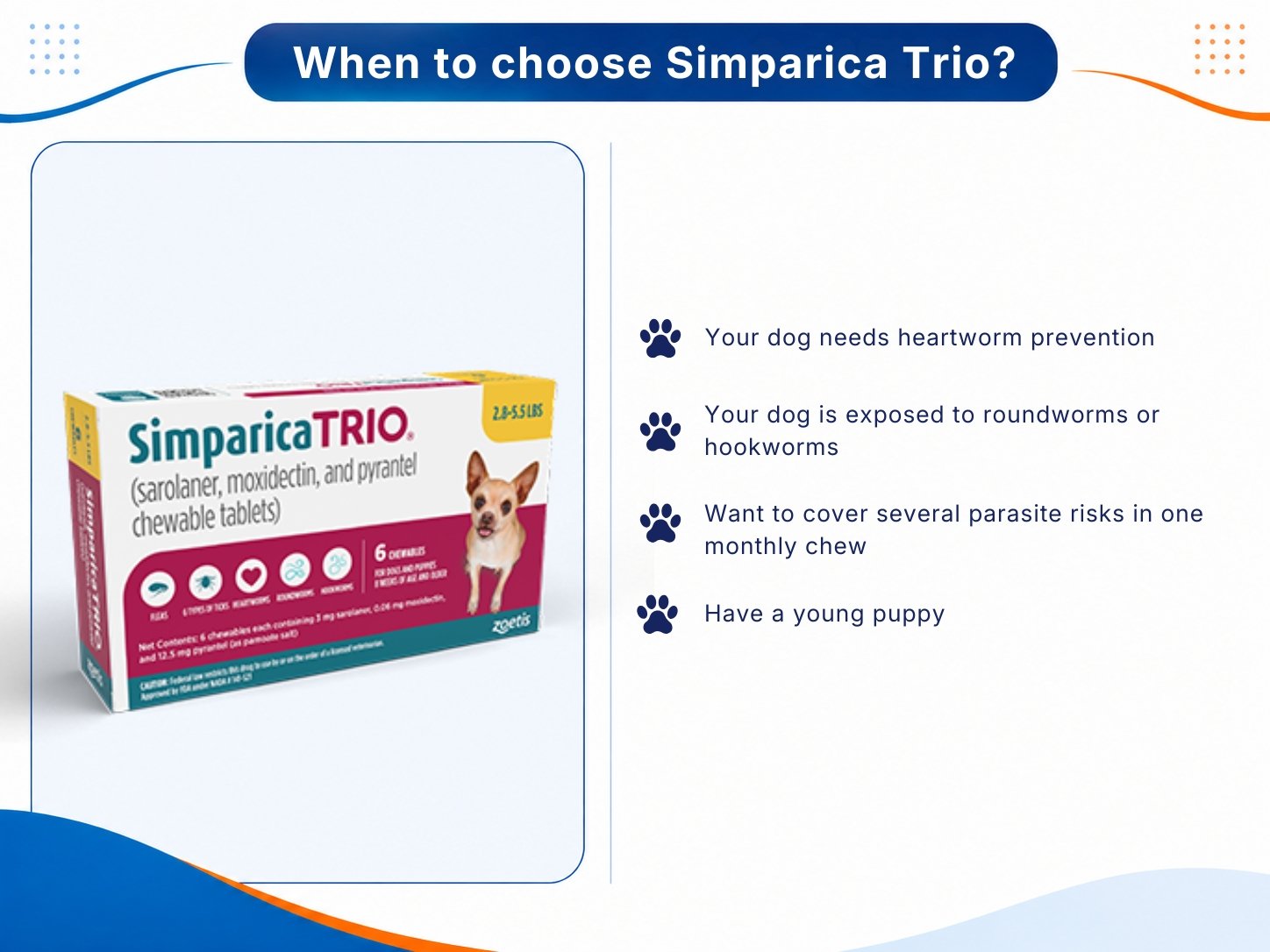
When to choose Simparica Trio?
Your dog needs heartworm prevention: Simparica Trio helps prevent heartworm disease, coverage that Simparica alone doesn’t provide, so if heartworm risk is part of your dog’s routine, this fills that gap in the same chew.
Your dog is exposed to roundworms or hookworms: Simparica Trio treats and controls both parasites, protection Simparica doesn’t cover, which can matter for dogs that spend time outdoors or in environments where intestinal worm exposure is a concern.
Want to cover several parasite risks in one monthly chew: Simparica Trio combines flea, tick, heartworm, roundworm, and hookworm protection in a single product, so instead of managing separate preventives and schedules, you get one simple routine to follow every month.
Have a young puppy: Simparica Trio is approved from 8 weeks of age and 2.8 lb, while Simparica is only approved from 6 months, so for puppies that need to start prevention early, this gives you a head start Simparica can’t.
Which is better for your dog?
Choosing between the two depends less on which product is better and more on which one best matches your dog’s parasite protection needs.
Simparica Trio may be preferable when:
- Your dog needs heartworm prevention along with roundworm and hookworm coverage, not just flea and tick protection.
- You want to consolidate several parasite risks into one monthly chew instead of managing separate preventives and schedules.
- You have a young puppy, since Simparica Trio is approved from 8 weeks of age while Simparica requires waiting until 6 months.
And consider Simparica when
- Your dog already has a separate heartworm prevention plan in place and only needs flea and tick protection.
- You want to keep monthly costs lower and your dog’s parasite risks are limited to fleas and ticks.
- You have a dog that doesn’t need parasite protection at an early age and has straightforward prevention needs.
Once you’ve matched these scenarios to your dog’s situation, the comparison table below lays out the full differences side by side.
Simparica and Simparica Trio both provide monthly parasite protection. Simparica is suitable for dogs needing flea and tick protection, while Simparica Trio may be a better fit for dogs also at risk of heartworm, roundworm, or hookworm.
Talk to your veterinarian to choose the right option based on your dog’s health, lifestyle, and local parasite risks.
Whichever you choose, consistent monthly use helps keep your dog protected.

Lily Watson is an author specializing in veterinary care in Australia. With a profound passion for animal welfare and a solid foundation in veterinary science, Lily has dedicated herself to disseminating valuable knowledge and information for both pet owners and professionals in this field.