
Flea Allergy Dermatitis in Dogs: Symptoms, Causes, and Treatment
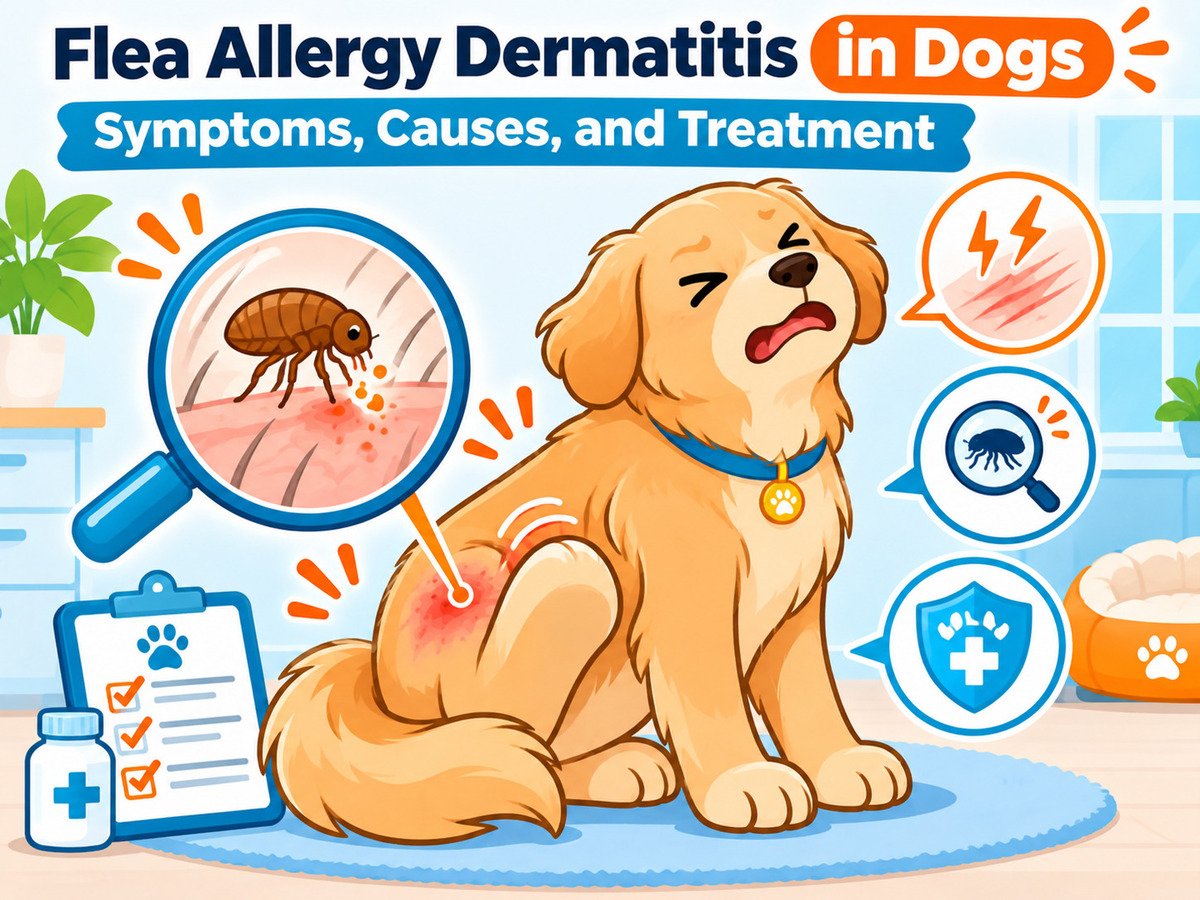
Flea allergy dermatitis (FAD) is an allergic skin condition in dogs caused by a hypersensitive reaction to proteins in flea saliva. Even a single flea bite can trigger intense itching in a sensitive dog, so you may not always see live fleas when symptoms appear.
Understanding the signs of FAD, how it is diagnosed, and how flea exposure is controlled can help prevent ongoing skin irritation and related complications.
What Is Flea Allergy Dermatitis in Dogs?
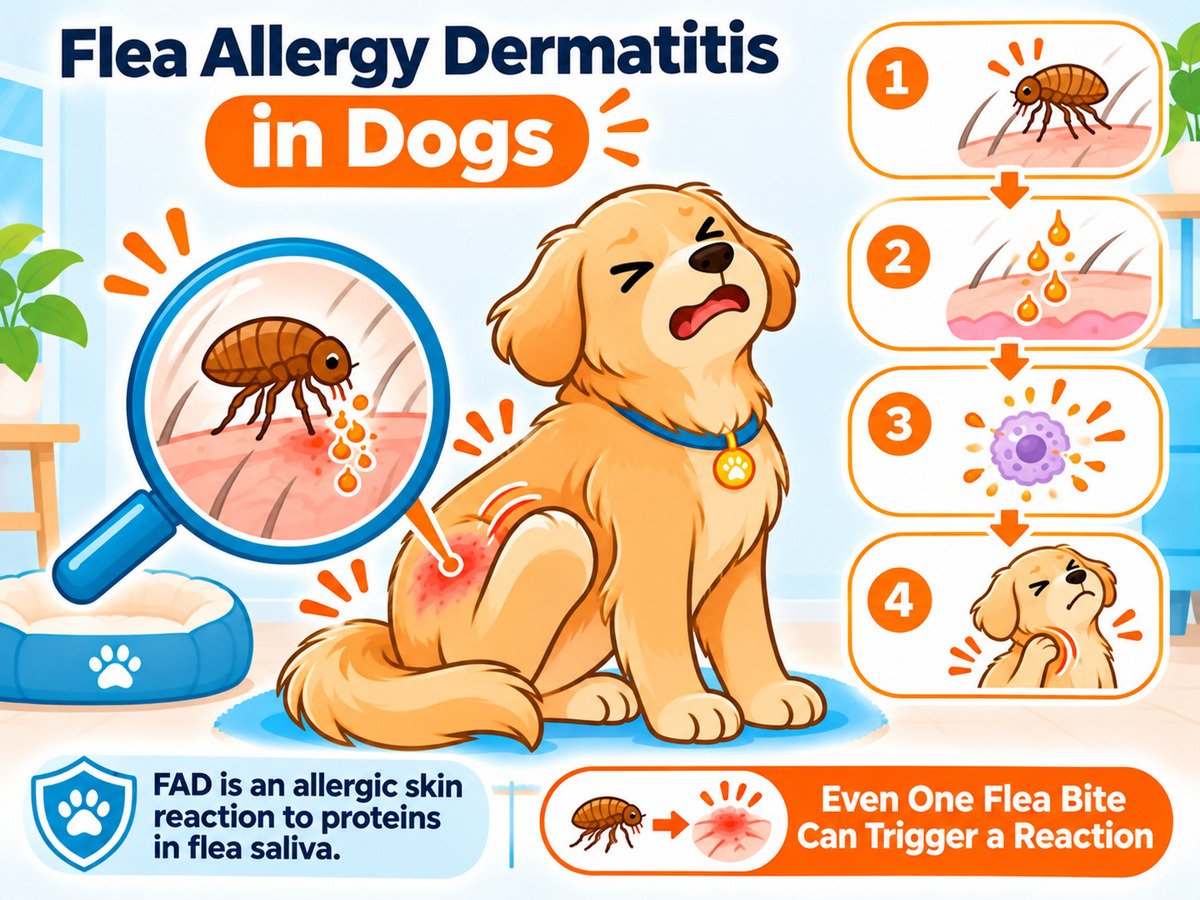
Flea allergy dermatitis (FAD) is an allergic reaction to proteins and other substances in flea saliva that causes intense itching and skin inflammation in sensitive dogs. When a flea bites a dog to feed, it introduces saliva into the skin, which can trigger an exaggerated immune response in dogs that are hypersensitive to these substances.
FAD is different from simply having a flea infestation. A dog does not need to have a large number of fleas to develop an allergic reaction. In sensitive dogs, even a single flea bite may cause itching that lasts for several days.
This also explains why flea allergy dermatitis can be difficult for owners to recognize. Fleas may stay on a dog only long enough to feed, while dogs may groom themselves and remove evidence of adult fleas. As a result, a dog can have signs consistent with FAD even when no live fleas are visible.
Dogs of any age can develop flea allergy dermatitis, and dogs with other allergic conditions may also be particularly sensitive to flea bites.
What Are the Symptoms of Flea Allergy Dermatitis in Dogs?
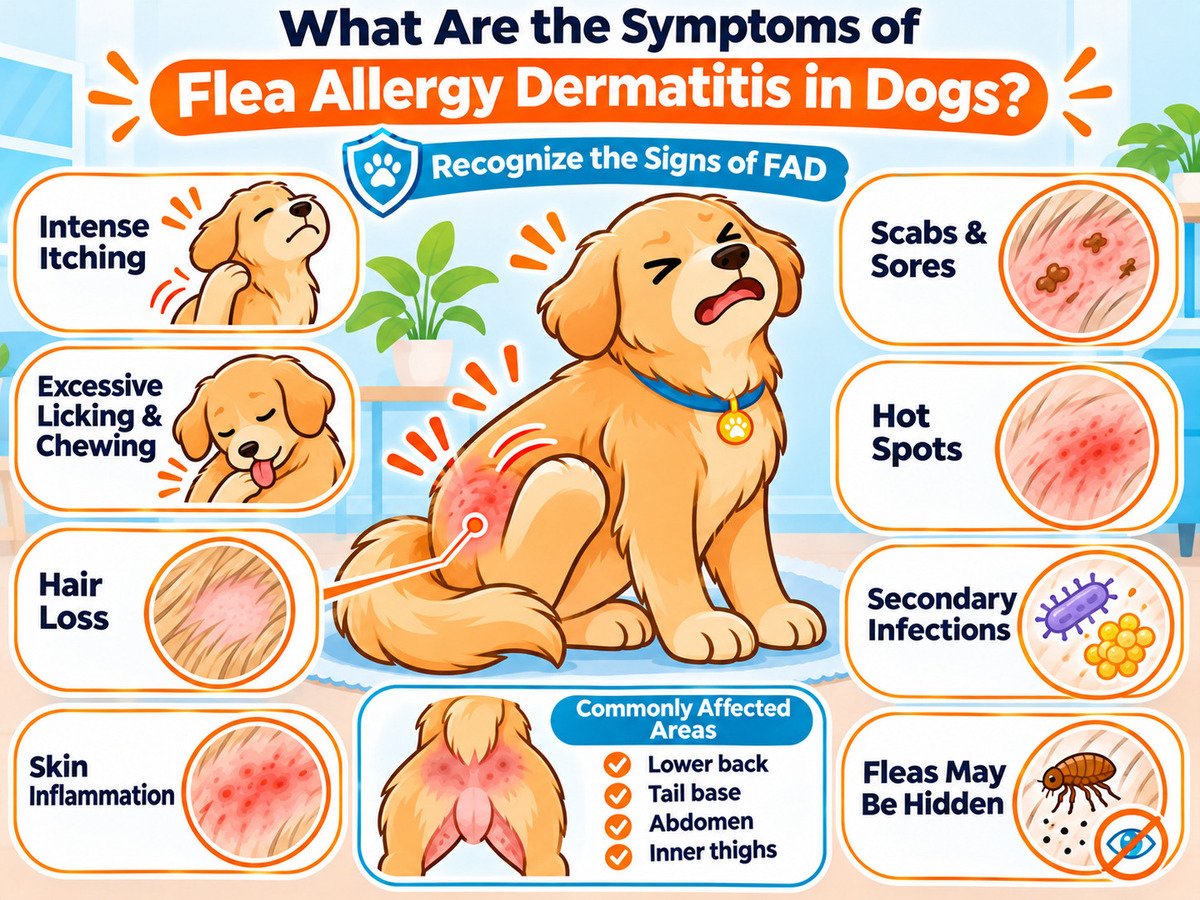
The most common symptoms of flea allergy dermatitis in dogs are intense itching, scratching, licking, chewing, hair loss, and inflamed or damaged skin. These symptoms develop as the dog’s allergic reaction causes itching and the resulting scratching or licking further damages the skin.
Common signs of FAD include:
- Intense scratching or itching
- Excessive licking, chewing, or biting of the skin
- Hair loss, especially around the rear of the body
- Red or inflamed skin
- Small raised bumps or papules
- Scabs and crusts
- Sores caused by scratching
- Hot spots
- Secondary bacterial or Malassezia skin infections
- Fleas or flea dirt, although these may not always be visible
Repeated scratching and licking can make the original allergic reaction more severe. In chronic cases, continued inflammation and self-trauma may result in more extensive hair loss, thickened skin, and darker skin pigmentation.
Secondary skin infections can also develop when damaged skin becomes infected with bacteria or Malassezia. These infections can add another source of itching and may make the skin condition more difficult to resolve.
Where Does Flea Allergy Dermatitis Affect Dogs?
Flea allergy dermatitis most commonly affects a dog’s mid-to-lower back, tailhead, and rear or inner thighs. This characteristic distribution is often associated with the areas most commonly affected by flea bites.
The skin around the base of the tail and the hindquarters may become particularly itchy, leading dogs to scratch, lick, or chew these areas repeatedly.
Although FAD often follows this recognizable pattern, severe or chronic cases can become more widespread and may eventually involve other areas of the body, including the face and ears.
The location of skin lesions can provide an important clue, but it does not confirm FAD by itself because other allergic, parasitic, and infectious skin conditions can cause similar signs.
What Causes Flea Allergy Dermatitis in Dogs?
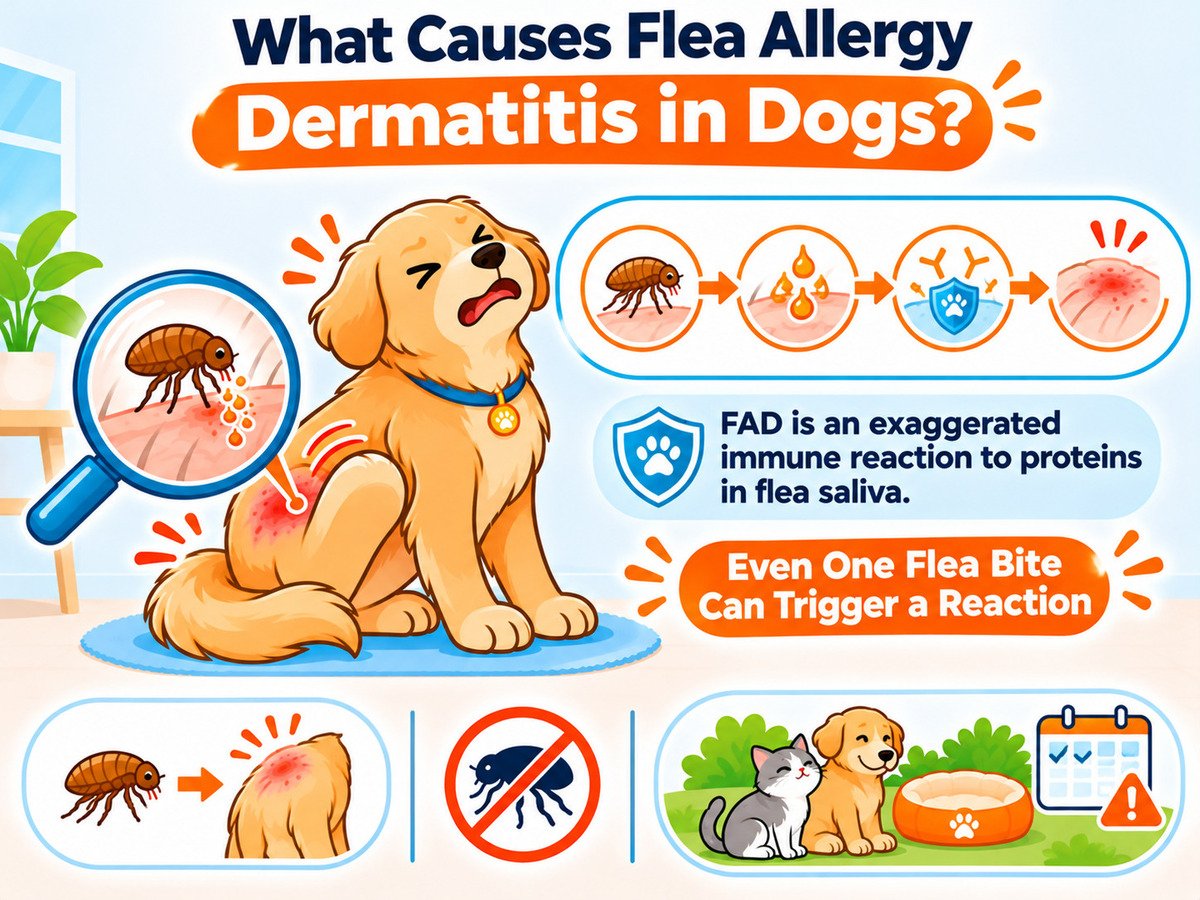
Flea allergy dermatitis is caused by an exaggerated immune response to proteins and other antigens in flea saliva. When a flea feeds on a dog, it introduces saliva into the skin, and a sensitive dog’s immune system reacts to these substances by triggering inflammation and intense itching.
The severity of the reaction does not necessarily depend on how many fleas are present. A highly sensitive dog may develop significant itching after only limited flea exposure, while another dog exposed to fleas may show fewer clinical signs.
This is why seeing only one flea or not seeing any fleas at all does not necessarily mean that flea exposure is unrelated to a dog’s skin problems.
Flea exposure can occur through contact with other animals or environments where fleas are present. Inconsistent flea control among household pets can also allow fleas to persist and continue exposing a sensitive dog.
How Is Flea Allergy Dermatitis Diagnosed?
Flea allergy dermatitis is diagnosed by evaluating a dog’s history and clinical signs, looking for evidence of fleas or flea dirt, assessing the response to flea control, and ruling out other possible causes of skin disease. Because several dermatological conditions can cause similar itching and lesions, diagnosis involves considering the overall clinical picture rather than relying on a single sign.
During an examination, a veterinarian may look for the characteristic distribution of skin lesions and use a flea comb to search for fleas or flea dirt. However, not finding fleas does not rule out FAD because sensitive dogs may groom themselves frequently enough to remove visible fleas.
The veterinarian may also consider other possible causes of itching, including environmental or food-triggered allergic skin disease, mange, other ectoparasites, bacterial infections, and Malassezia dermatitis.
Additional tests may be used when another condition is suspected. For example, skin cytology can help identify bacterial or Malassezia infections, while skin scrapings may be used when mites or other ectoparasites are a concern.
A dog’s response to appropriate flea control can also provide useful information when FAD is suspected but fleas are difficult to find.
How to Treat Flea Allergy Dermatitis in Dogs?
Treating flea allergy dermatitis requires eliminating flea exposure while managing the resulting itching, inflammation, and any secondary skin infections. Flea control is the foundation of treatment because preventing additional flea bites removes the trigger that causes the allergic reaction.
The first step is to eliminate fleas from the affected dog and prevent new flea bites with an appropriate flea-control plan. Flea preventatives are available in different forms, and the appropriate option should be selected according to the dog’s needs and veterinary guidance.
Flea control should also extend to the dog’s environment. Other pets in the household may need appropriate flea prevention, while regular vacuuming and washing pet bedding can help reduce flea stages in the home.
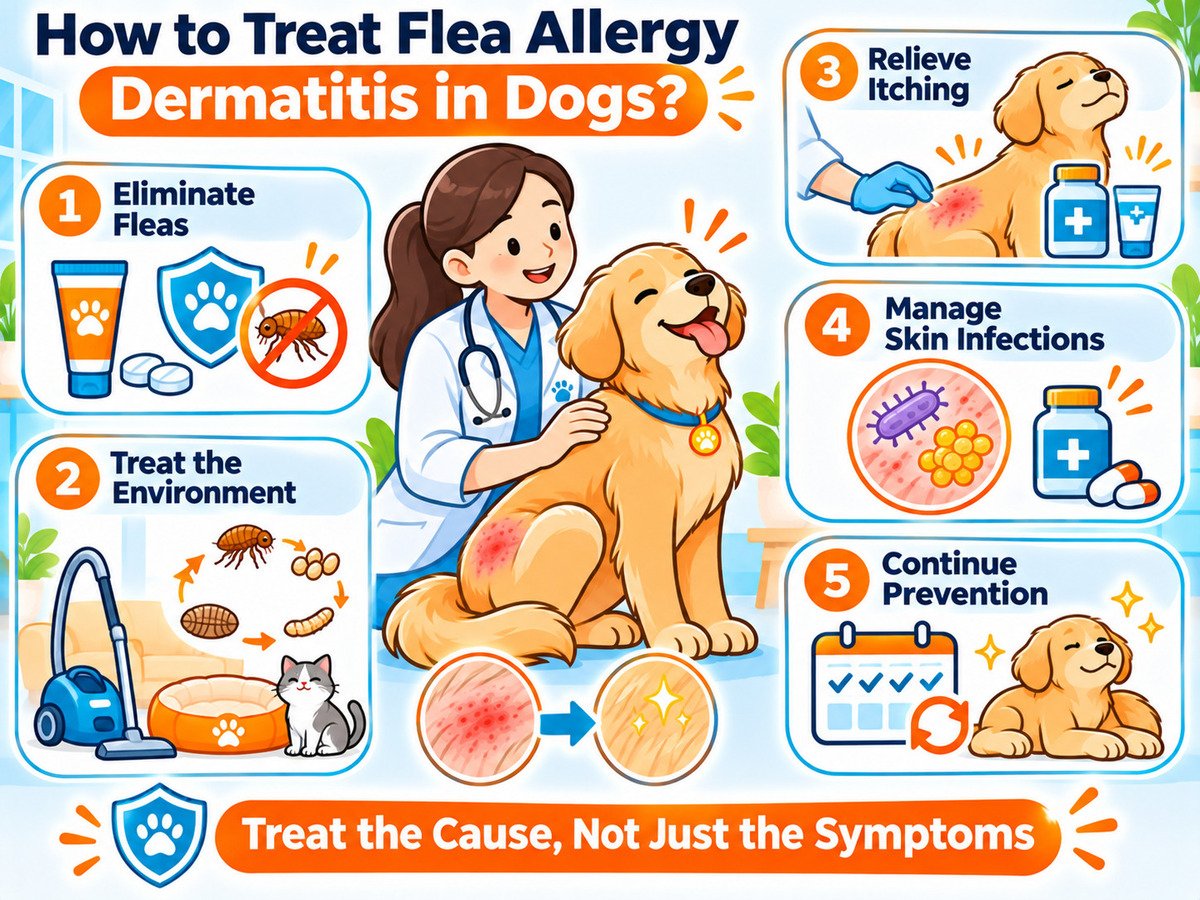
Environmental control is important because fleas have multiple life stages, and immature stages can remain in the environment even after adult fleas on the dog have been treated. As a result, owners may continue to see some fleas for a period of time without this necessarily meaning that treatment has failed.
Dogs with significant itching or inflammation may also need additional treatment to relieve discomfort while flea control takes effect. Depending on the dog’s condition, a veterinarian may recommend appropriate antipruritic or anti-inflammatory treatment.
If scratching has resulted in bacterial or Malassezia infections, those infections may also require treatment. Managing these secondary problems is important because they can become an additional source of itching.
Treating the skin reaction alone is not enough to control FAD. Continued flea exposure can trigger another allergic response, so controlling the underlying flea problem remains essential.
How Long Does Flea Allergy Dermatitis Last in Dogs?
Flea allergy dermatitis can begin improving within days after appropriate treatment, but complete flea control may take several weeks or longer because flea life stages can remain in the environment. The recovery period therefore depends on both the dog’s skin condition and how effectively flea exposure is controlled.
Existing inflammation and skin damage do not necessarily disappear as soon as adult fleas are eliminated. A dog may continue to scratch while the allergic skin reaction settles or while secondary infections are being treated.
Environmental flea stages can also make the process longer. Flea pupae may remain in the environment and emerge later, which means that occasional fleas may still appear after treatment has started.
The source material indicates that flea control may need to continue for approximately three weeks to three months, depending on the infestation and environmental flea stages.
If a dog continues to experience significant itching despite appropriate flea control, the veterinarian may need to investigate ongoing flea exposure, secondary infection, or another underlying cause of itching.
Can Flea Allergy Dermatitis Be Prevented?
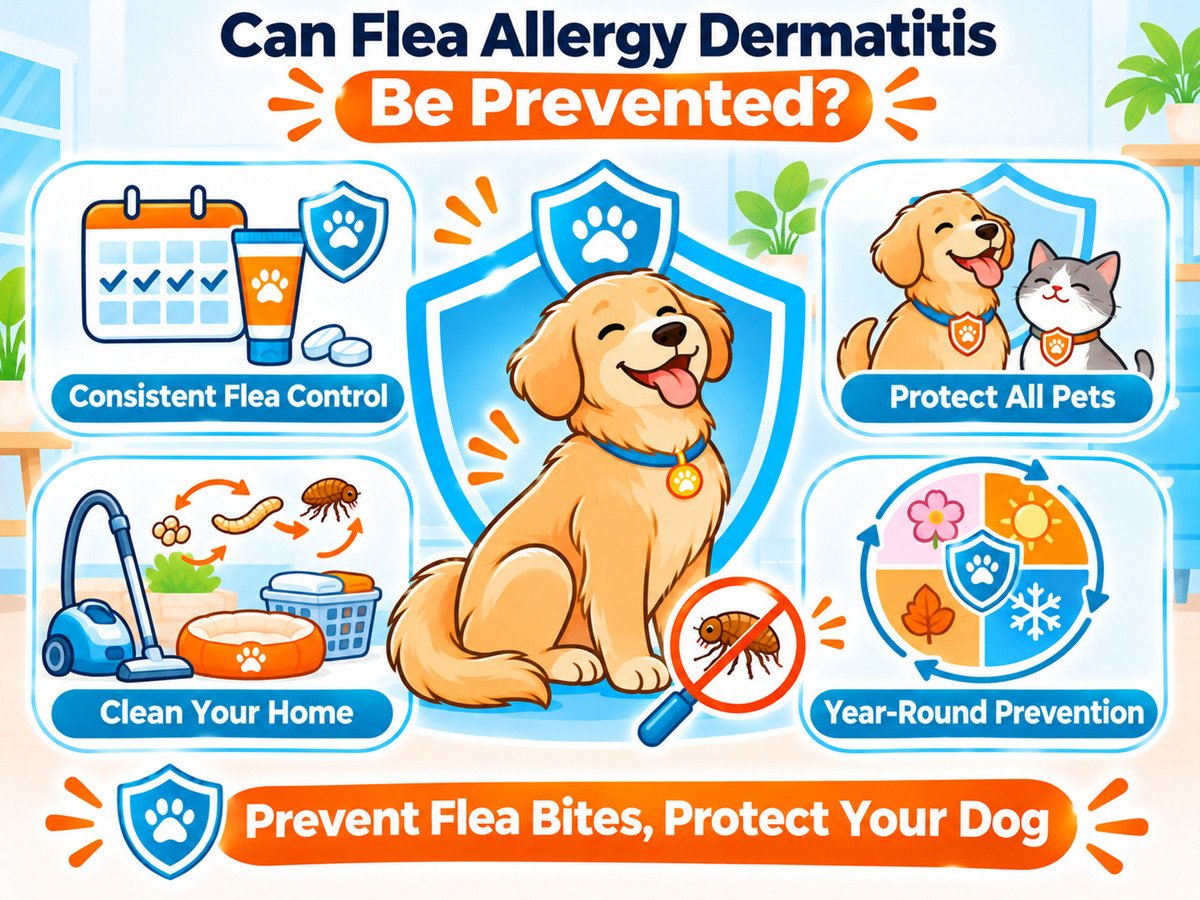
Flea allergy dermatitis can be prevented by maintaining consistent flea control and reducing flea exposure for the dog, other household pets, and the home environment. Because sensitive dogs can react to limited flea exposure, prevention should not depend on whether live fleas are currently visible.
Consistent flea prevention is particularly important for dogs that have previously developed FAD because future flea bites can trigger another allergic reaction.
Prevention should include an appropriate flea-control plan for the dog and, when needed, other pets in the household. Environmental measures such as regular vacuuming and washing pet bedding can also help reduce flea exposure.
Year-round prevention may be particularly important because fleas can survive and reproduce in suitable indoor environments even when outdoor conditions are less favorable.
When Should You Take Your Dog to the Veterinarian?
You should take your dog to a veterinarian when persistent or severe itching is accompanied by hair loss, sores, scabs, hot spots, or signs of a skin infection, or when symptoms do not improve with appropriate flea control. These signs can occur with FAD but may also indicate another skin condition that requires a different approach.
Veterinary evaluation is especially important when your dog is constantly scratching, licking, biting, or rubbing the skin, as continued self-trauma can worsen existing lesions.
You should also seek veterinary advice if skin problems continue or return despite appropriate flea prevention. Persistent symptoms may indicate ongoing flea exposure, a secondary bacterial or Malassezia infection, or another underlying cause of itching.
Frequently Asked Questions About Flea Allergy Dermatitis in Dogs
Can dogs have flea allergy dermatitis without visible fleas?
Yes, dogs can have flea allergy dermatitis without visible fleas. Sensitive dogs may react strongly to a small number of flea bites, while frequent grooming can remove adult fleas before an owner notices them.
Can one flea bite cause flea allergy dermatitis?
Yes, one flea bite can trigger a significant reaction in a dog that is sensitive to flea saliva. The source material notes that itching from a flea bite can persist for several days, so the severity of the reaction does not necessarily correspond to the number of fleas present.
Can flea allergy dermatitis cause hair loss?
Yes, flea allergy dermatitis can cause hair loss. Repeated scratching, licking, chewing, and inflammation can damage the skin and cause hair to become thin or fall out, particularly around the tail base and hindquarters.
Can flea allergy dermatitis go away on its own?
Flea allergy dermatitis is unlikely to remain controlled without addressing flea exposure. Even if the skin temporarily improves, another flea bite can trigger another allergic reaction in a sensitive dog, making consistent flea prevention an important part of long-term management.
Can flea allergy dermatitis come back?
Yes, flea allergy dermatitis can come back after another flea exposure. Dogs with flea allergy remain sensitive to flea saliva, so preventing future flea bites is essential for reducing the risk of recurrent symptoms.
How long does flea allergy dermatitis last?
Flea allergy dermatitis may begin improving within days after appropriate treatment, but complete flea control can take several weeks or longer. Environmental flea stages can continue to emerge after treatment begins, while existing inflammation, skin damage, or secondary infections may take additional time to resolve.

Anipet Team
Anipet Team is dedicated to sharing reliable information about pet health, veterinary care, and animal wellbeing. Our content is researched and reviewed by veterinary professionals to provide pet owners with trusted, practical information for caring for their pets.