
How to Get Rid of Fleas on Cats
You can get rid of fleas on cats by using a cat-safe flea treatment, removing visible fleas, and treating the home to break the flea life cycle. Even indoor cats can get fleas, and seeing fleas on your cat usually means there may also be eggs, larvae, or pupae in the surrounding environment.
This guide explains how to identify a flea infestation, choose an appropriate flea treatment, clean your home, and prevent fleas from coming back.
How to Tell If Your Cat Has Fleas
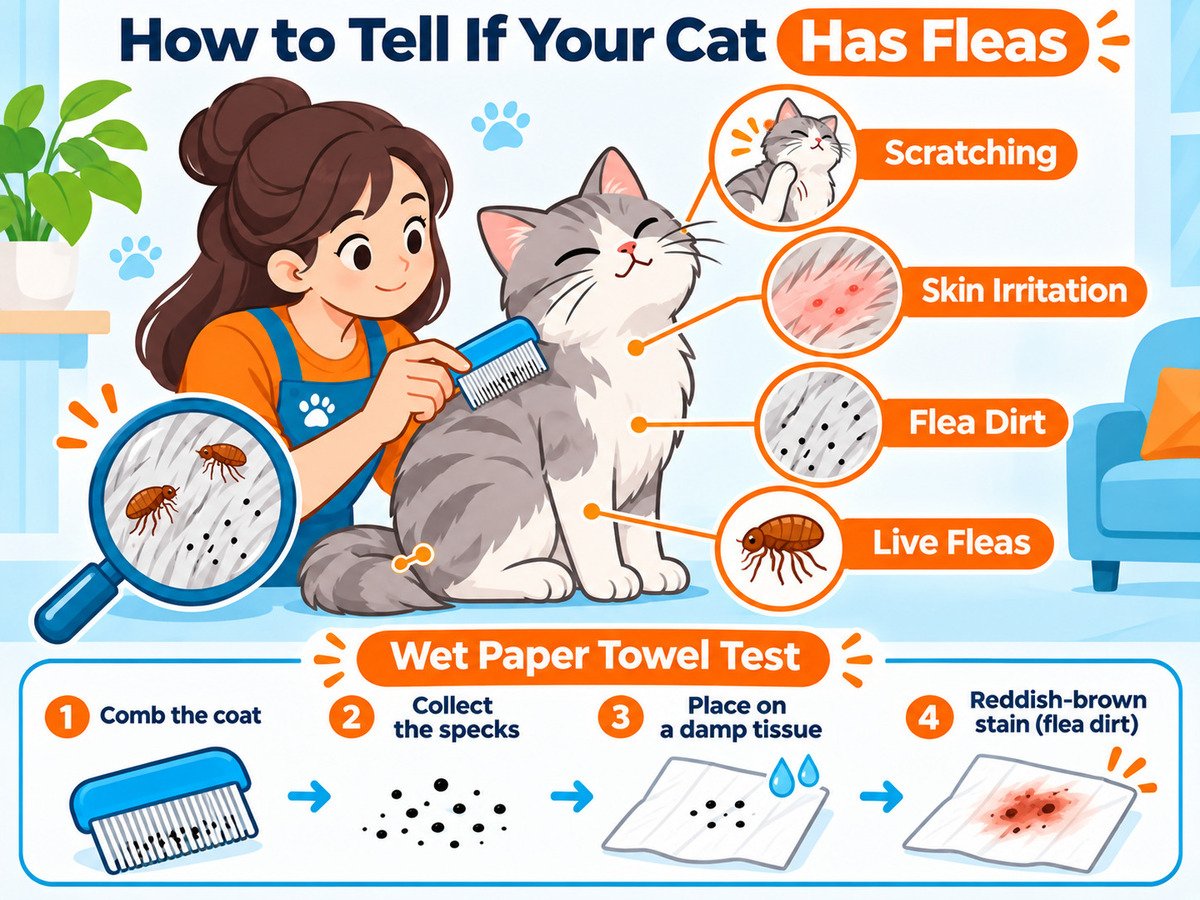
You can tell if your cat has fleas by looking for frequent scratching or grooming, flea dirt, irritated skin, or live fleas in the coat. Commonly affected areas include the neck, belly, back, and base of the tail. However, because cats groom themselves frequently, you may not see live fleas even when an infestation is present.
When checking your cat, look for these signs:
- Scratching or biting: Frequent itching, especially around the neck and tail base.
- Excessive grooming: Repeated licking or nibbling of the coat.
- Skin irritation: Hair loss, redness, bumps, or scabs.
- Flea dirt: Tiny black specks resembling ground pepper.
- Live fleas: Small, fast-moving brown or black insects.
- Rice-like segments: White segments that may indicate tapeworms.
Examine the neck, belly, back, and tail base with a fine-toothed flea comb to check for fleas and flea dirt. If you find black or brown specks but are unsure whether they are flea dirt or ordinary dirt, you can use a simple wet paper towel test:
- Comb the fur: Run a fine-toothed flea comb through your cat’s coat, focusing on the neck, belly, back, and tail base.
- Collect the specks: Place any black or brown particles from the comb onto a damp white paper towel or tissue.
- Add water: Put a few drops of water on the specks and gently smear them.
- Check the stain: If the specks dissolve and leave a reddish or rust-colored mark, they are likely flea dirt because they contain digested blood.
How to Get Rid of Fleas on Cats
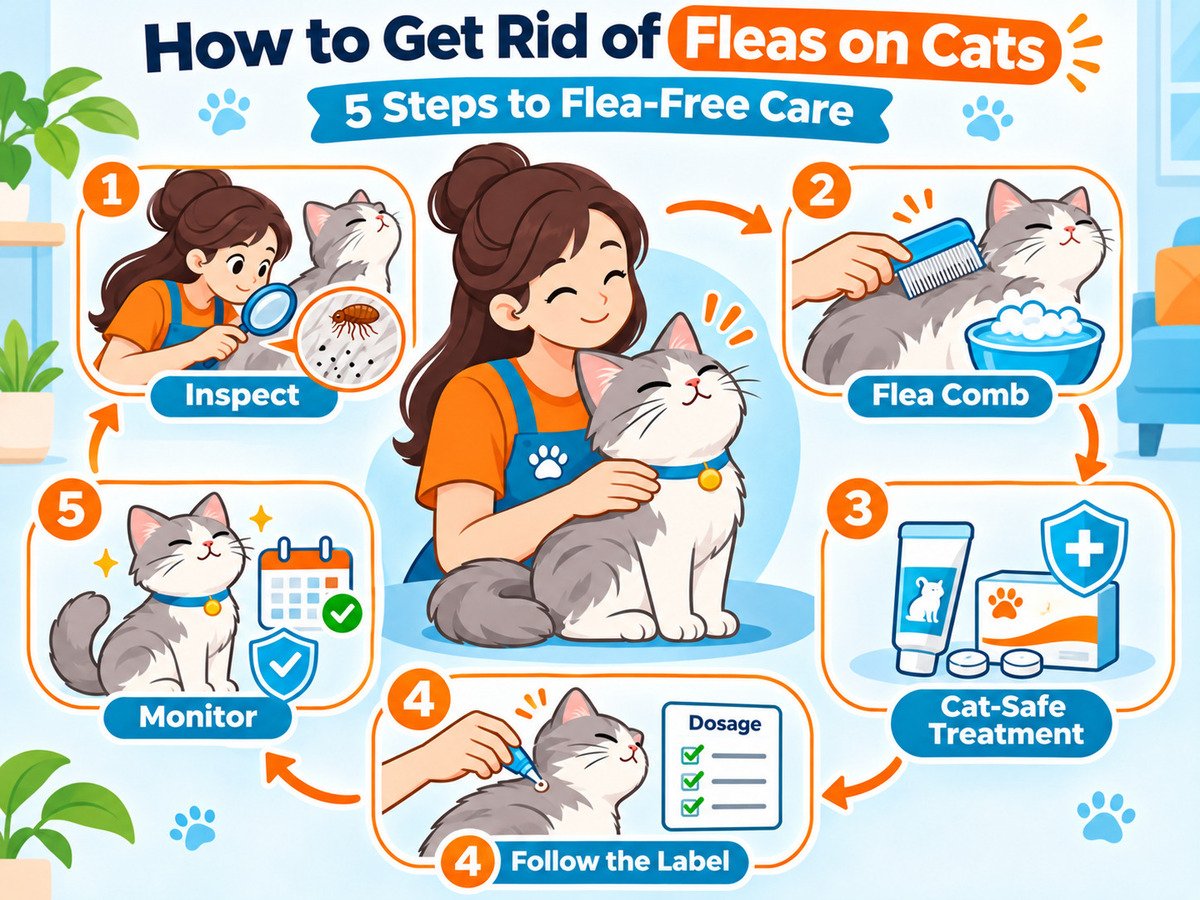
To get rid of fleas on your cat, check for fleas and flea dirt, remove visible fleas, use a cat-safe flea treatment, follow the product label, and monitor your cat afterward.
- Check your cat for fleas and flea dirt: Check the fur, especially around the neck, belly, and base of the tail.
- Use a flea comb to remove visible fleas: Run a fine-toothed flea comb through the coat and dip it in warm, soapy water to kill trapped fleas.
- Choose an appropriate flea treatment: Use a veterinarian-recommended topical or oral treatment specifically labeled for cats.
- Apply or administer the treatment according to the label: Follow the recommended dose, application method, and treatment schedule.
- Continue monitoring your cat after treatment: Check regularly for fleas or flea dirt and continue treatment as directed.
What Flea Treatments Are Available for Cats?
Cats can be treated with topical medications, oral treatments, flea collars, or flea shampoos, depending on the product and the cat’s age, weight, and parasite needs. Always choose a product specifically labeled for cats and follow the product directions.
Topical Flea Treatments
Topical flea treatments are applied directly to a cat’s skin, usually at the back of the neck or another location specified on the product label. Depending on the product, they can provide flea control along with protection against ticks, heartworm, mites, and intestinal parasites.
- Bravecto Topical: Contains fluralaner, an isoxazoline-class compound. It kills adult fleas and provides flea treatment and prevention for 12 weeks in cats and kittens 12 weeks of age and older weighing at least 2.6 lb. It also provides protection against certain tick species in cats and kittens 6 months of age and older.

- Advantage Multi: Contains imidacloprid and moxidectin. It kills adult fleas and provides protection against heartworm disease, ear mites, roundworms, and hookworms. It is used as a monthly topical treatment in the U.S.
- NexGard COMBO: Contains esafoxolaner, eprinomectin, and praziquantel. It provides monthly protection against fleas, ticks, heartworm disease, roundworms, hookworms, and tapeworms. It is labeled for cats and kittens 8 weeks and older and weighing at least 1.8 lb.

- Revolution: Contains selamectin and is applied monthly. It controls fleas, heartworm disease, ear mites, roundworms, and hookworms but does not provide tick protection.

- Revolution Plus: Contains selamectin and sarolaner. It adds tick protection while also covering fleas, heartworm disease, ear mites, roundworms, and hookworms. It is labeled for cats and kittens 8 weeks and older and weighing at least 2.8 lb.

Oral Flea Treatments
Oral flea treatments are given by mouth and can provide fast flea control or ongoing monthly protection, depending on the product.
- Credelio CAT: Contains lotilaner, an isoxazoline-class compound. It kills adult fleas and controls black-legged ticks with monthly dosing. It is labeled for cats and kittens 8 weeks and older and weighing at least 2 lb. The tablet should be given with food or within 30 minutes after feeding.

Flea Collars
Flea collars are wearable flea-control products that release active ingredients over time, with protection periods and parasite coverage varying by product.
- Seresto Flea & Tick Collar for Cats: Contains imidacloprid and flumethrin in a controlled-release collar. It kills fleas and flea larvae and repels and kills ticks through contact for up to 8 months. It is labeled for cats and kittens 10 weeks and older and features a safety-release mechanism designed to help the collar release if the cat becomes caught.
Flea Shampoos
Flea shampoos can kill or remove fleas during bathing, but their protection is generally shorter than ongoing flea-control products.
- TropiClean Natural Flea & Tick Waterless Cat Shampoo: A no-rinse shampoo that kills fleas, mites, and mosquitoes by contact and repels ticks. It is labeled for cats and kittens over 12 weeks of age.
- Wondercide Flea & Tick Shampoo: A plant-based shampoo with natural essential oils that kills fleas and flea eggs and repels ticks. It is labeled for dogs and cats 4 months and older.
- Adams Plus Flea & Tick Foaming Shampoo: Contains pyrethrins and S-methoprene to kill fleas and prevent eggs from hatching. For cats over 12 weeks.
- Sentry PurrScriptions Plus Shampoo: Contains pyrethrins and an IGR to kill fleas and eggs while providing up to 30 days of protection. For cats over 12 weeks.
How to Get Rid of Fleas in Your Home
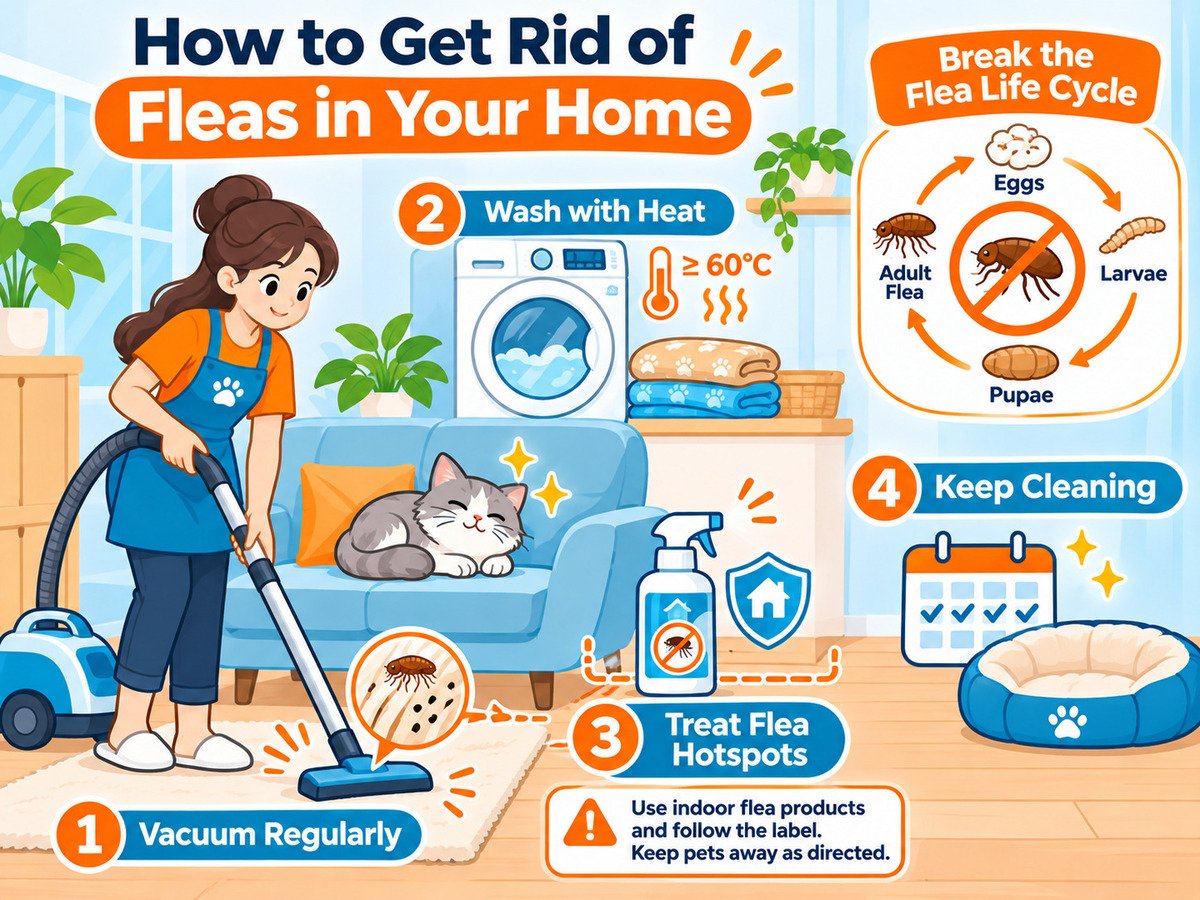
To get rid of fleas in your home, vacuum frequently, wash fabrics with heat, treat flea hotspots, and keep cleaning for several weeks because flea eggs, larvae, and pupae can remain in the environment.
- Vacuum your home regularly
Vacuum carpets, rugs, sofas, floor crevices, corners, and areas under furniture where fleas may develop. For an active infestation, vacuum once or twice a day for 2–3 weeks and empty the vacuum outside immediately.
- Wash and dry fabrics with heat
Wash pet bedding, blankets, and other washable fabrics regularly with hot water and dry them thoroughly on a high-heat setting.
- Treat areas where fleas may hide
For severe infestations, consider a household flea-control product labeled for indoor use. Products containing an insect growth regulator (IGR), such as methoprene or pyriproxyfen, can help interrupt flea development. Follow the product label carefully and keep pets away from treated areas as directed.
- Keep cleaning after treatment
Continue vacuuming and washing bedding even after you stop seeing adult fleas. Flea pupae can remain protected in their cocoons and emerge later, so consistent cleaning is important for breaking the flea life cycle.
Do You Need to Treat Other Pets for Fleas?
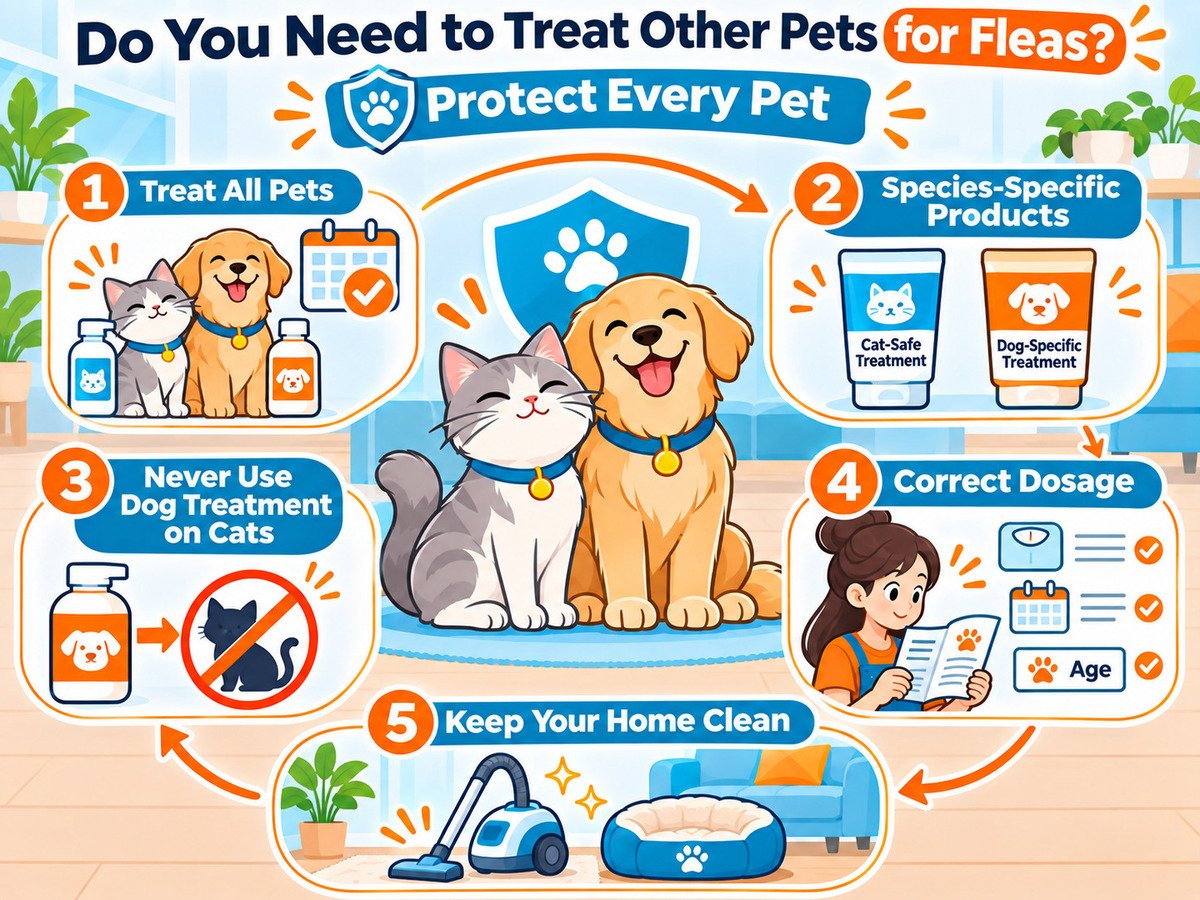
Yes, every cat and dog in a household with fleas should be treated with an appropriate flea-control product, even if only one pet is showing visible signs. Treating only the affected pet can allow fleas to continue moving between animals and the home.
- Treat all household pets simultaneously.
- Use species-specific flea treatments.
- Never use dog flea products on cats.
- Follow the correct dosage for each pet’s age and weight.
- Continue cleaning the home to prevent reinfestation.
How Long Does It Take to Get Rid of Fleas on Cats?
It can take 2–3 months to fully control a flea infestation, although the timeline varies depending on the flea life cycle and conditions in the home.
You may still see fleas after treating your cat because eggs, larvae, and pupae can remain in the environment and emerge later. Seeing a few fleas does not necessarily mean the treatment has failed, but if fleas continue to appear despite following the treatment instructions and cleaning the home, talk to your veterinarian about reassessing the flea-control plan.
How to Get Rid of Fleas on Kittens
Fleas can be more serious for kittens because heavy infestations may cause blood loss, so treatment should be appropriate for the kitten’s age and weight. Flea combing and gentle bathing may help remove fleas from very young kittens, while older kittens may be eligible for a kitten-safe flea treatment recommended by a veterinarian.
For detailed steps and safety precautions, learn more about [How To Get Rid of Fleas on Kittens].
Are Home Remedies Safe for Cats With Fleas?
Not all home or natural flea remedies are safe for cats, so flea combing and regular cleaning are safer supportive methods than using unverified treatments.
A flea comb can help remove fleas, while cleaning helps reduce fleas in the environment, but these methods should not replace proven flea-control treatments. Avoid essential oils and products not specifically made for cats, as some can be harmful or toxic to them.
When Should You See a Veterinarian About Fleas?
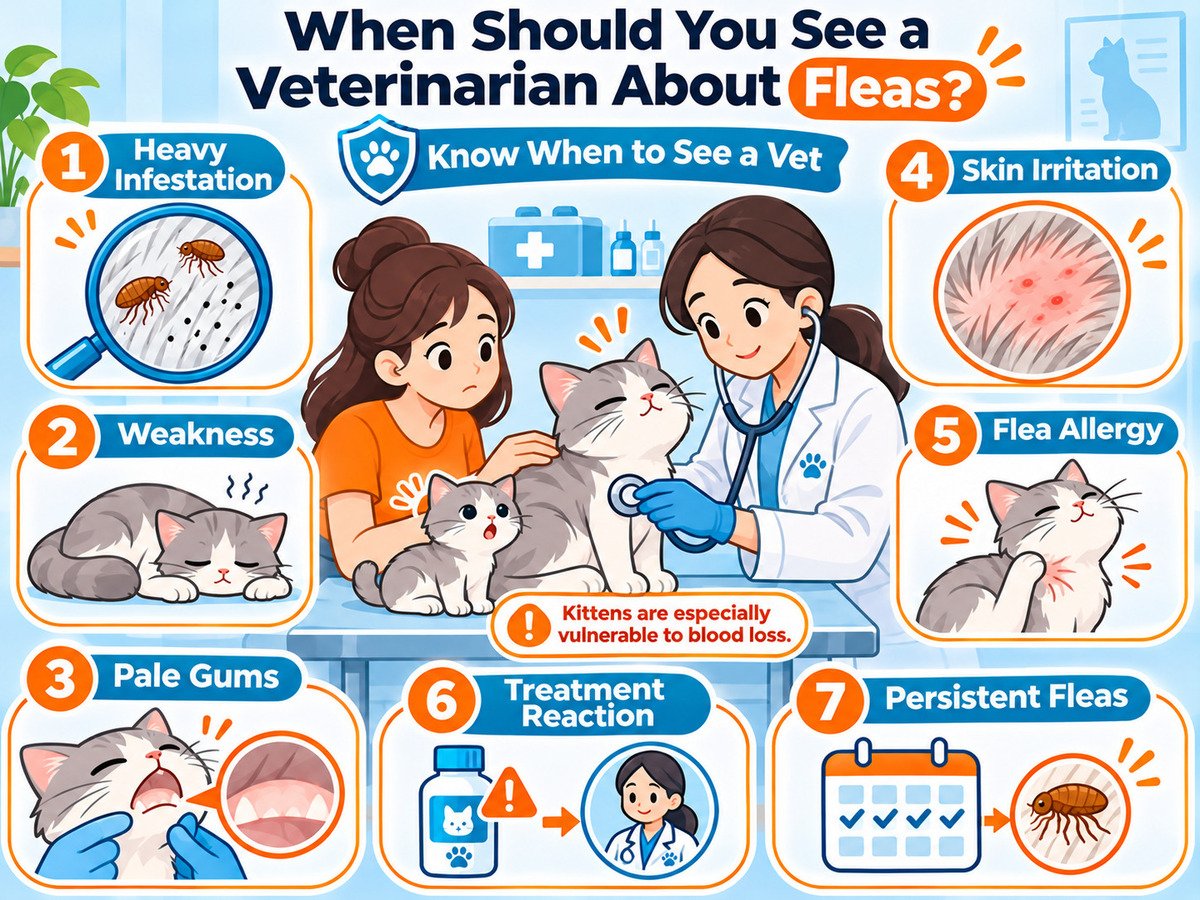
You should see a veterinarian if your cat shows signs of a severe flea infestation, significant irritation, or a reaction to flea treatment. This is especially important for kittens, which can be more vulnerable to blood loss from heavy infestations.
Seek veterinary care if you notice:
- Heavy flea infestation
- Weakness or lethargy
- Pale gums
- Significant hair loss or skin irritation
- Signs of a flea allergy
- A reaction after flea treatment
- Fleas that persist despite following treatment directions
How to Prevent Fleas From Coming Back
To prevent fleas from coming back, keep your cat on regular flea prevention and continue cleaning the home and treating household pets as recommended. Consistent prevention is important because flea eggs and pupae can remain in the environment and emerge later.
- Use regular flea prevention.
- Treat all household pets appropriately.
- Keep bedding and sleeping areas clean.
- Vacuum carpets and furniture regularly.
- Follow the recommended re-treatment schedule.
- Check your cat regularly for fleas or flea dirt.
Common Mistakes When Getting Rid of Fleas on Cats
Avoid these common mistakes when treating fleas, as they can make the infestation harder to control or put your cat at risk. Flea control works best when you treat both the cat and its environment consistently.
- Treating the cat but ignoring the home
- Treating only one pet
- Using a dog flea product on a cat
- Applying more medication than directed
- Reapplying treatment too soon
- Stopping prevention as soon as fleas disappear
- Relying entirely on home remedies
Frequently Asked Questions About Fleas on Cats
Do fleas go away on their own?
No, fleas are unlikely to go away on their own. They can continue reproducing and developing through eggs, larvae, and pupae in the environment, so treatment of both the cat and home is usually needed.
Why does my cat still have fleas after treatment?
You may still see fleas because immature flea stages can remain in the home and emerge after treatment. Improper application, incomplete home treatment, or exposure to other infested pets can also contribute to continued fleas.
How often should I treat my cat for fleas?
The frequency depends on the specific flea product, as some treatments are given monthly while others last longer. Always follow the product label and your veterinarian’s recommendations rather than applying treatments more frequently than directed.
Getting rid of fleas on cats requires more than treating the fleas you can see. Use a cat-safe flea treatment as directed, clean your home regularly, treat other pets when needed, and continue prevention to help break the flea life cycle.
If fleas persist despite following the treatment directions and cleaning your home, consult your veterinarian to reassess the flea-control plan and make sure your cat is receiving appropriate treatment.

Anipet Team
Anipet Team is dedicated to sharing reliable information about pet health, veterinary care, and animal wellbeing. Our content is researched and reviewed by veterinary professionals to provide pet owners with trusted, practical information for caring for their pets.