
Bravecto vs. Bravecto Plus
Bravecto and Bravecto Plus both use fluralaner to provide protection against fleas and ticks, but Bravecto Plus adds moxidectin for heartworm prevention and treatment of roundworm and hookworm infections. They also differ in dosing intervals and age requirements. Bravecto is applied every 12 weeks for flea protection and for several tick species, while Bravecto Plus is applied every 2 months and combines flea and tick control with additional internal parasite protection. These differences can help you determine which option better matches your cat’s parasite prevention needs.
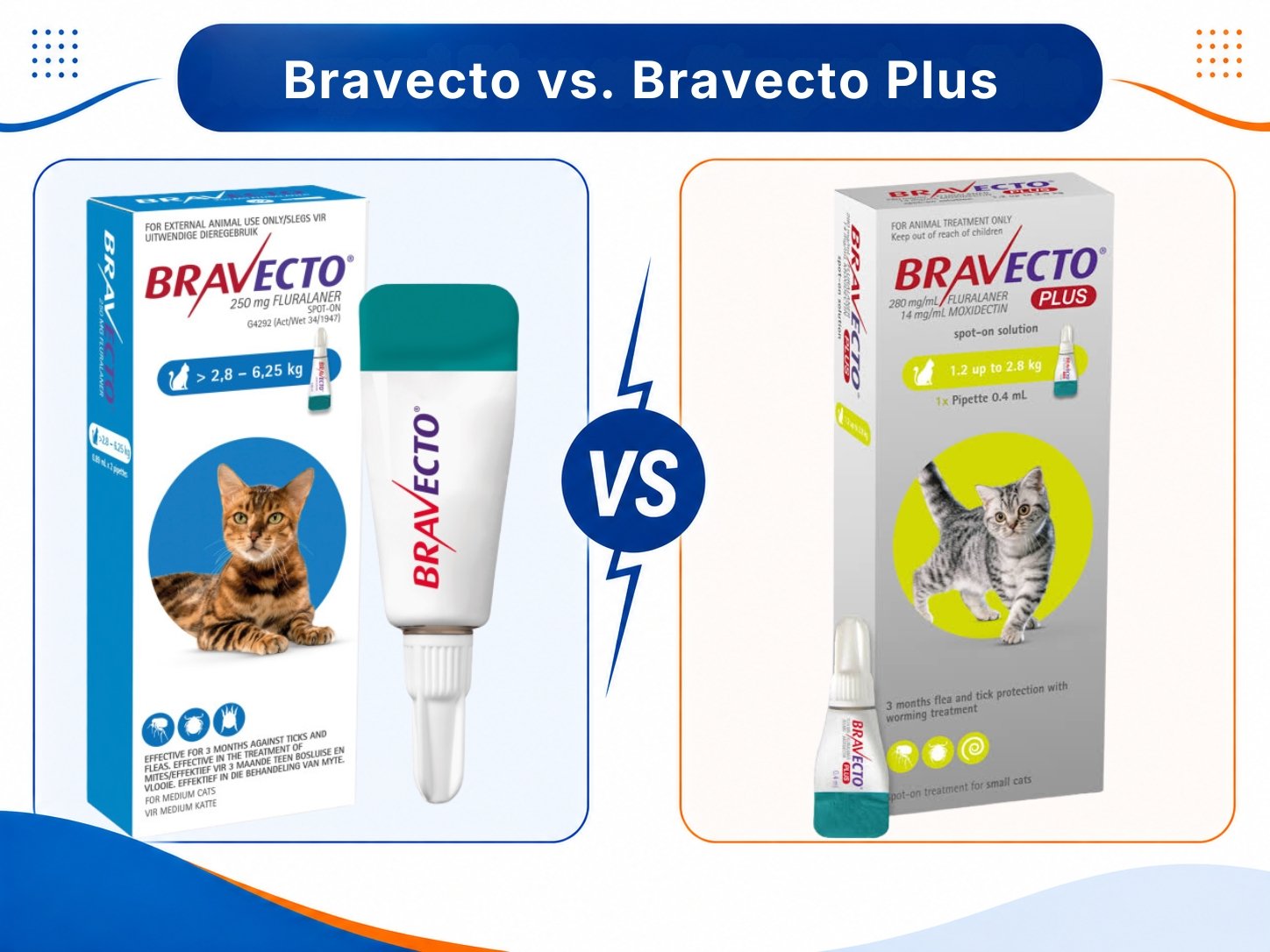
Here’s a side-by-side comparison of Bravecto and Bravecto Plus, including their active ingredients, parasite coverage, dosing schedule, age and weight requirements, and key label differences.
| Features | BRAVECTO | Bravecto Plus |
| Active Ingredients | Fluralaner | Fluralaner + moxidectin |
| Route of Administration | Topical | Topical |
| Flea Protection | Yes | Yes |
| Tick Protection | Yes | Yes |
| Heartworm Prevention | No | Yes |
| Roundworm Treatment | No | Yes |
| Hookworm Treatment | No | Yes |
| Protection Interval | 12 weeks for fleas and several tick species; 8 weeks for Dermacentor variabilis | 2 months |
| Minimum Age for Flea Indication | 12 weeks | 6 months |
| Minimum Age for Tick Indication | 6 months | 6 months |
| Minimum Weight | 2.6 lb | 2.6 lb |
| Dosage Frequency | Every 12 weeks; may be given every 8 weeks when exposure to Dermacentor variabilis is expected | Every 2 months |
| Form | Topical solution | Topical solution |
| Broad-Spectrum Coverage | Fleas + ticks | Fleas + ticks + heartworm + roundworms + hookworms |
| Best Fit | Flea and tick protection with fewer applications | Flea and tick protection plus heartworm and intestinal parasite coverage |
| Key Ingredient Difference | Fluralaner only | Adds moxidectin |
| Veterinary Status | Prescription animal drug | Prescription animal drug |
Bravecto is indicated to treat and prevent flea infestations for 12 weeks and to control several tick species, with Dermacentor variabilis covered for 8 weeks. Bravecto Plus is indicated for flea and tick control for 2 months, while also preventing heartworm disease and treating roundworm and hookworm infections.
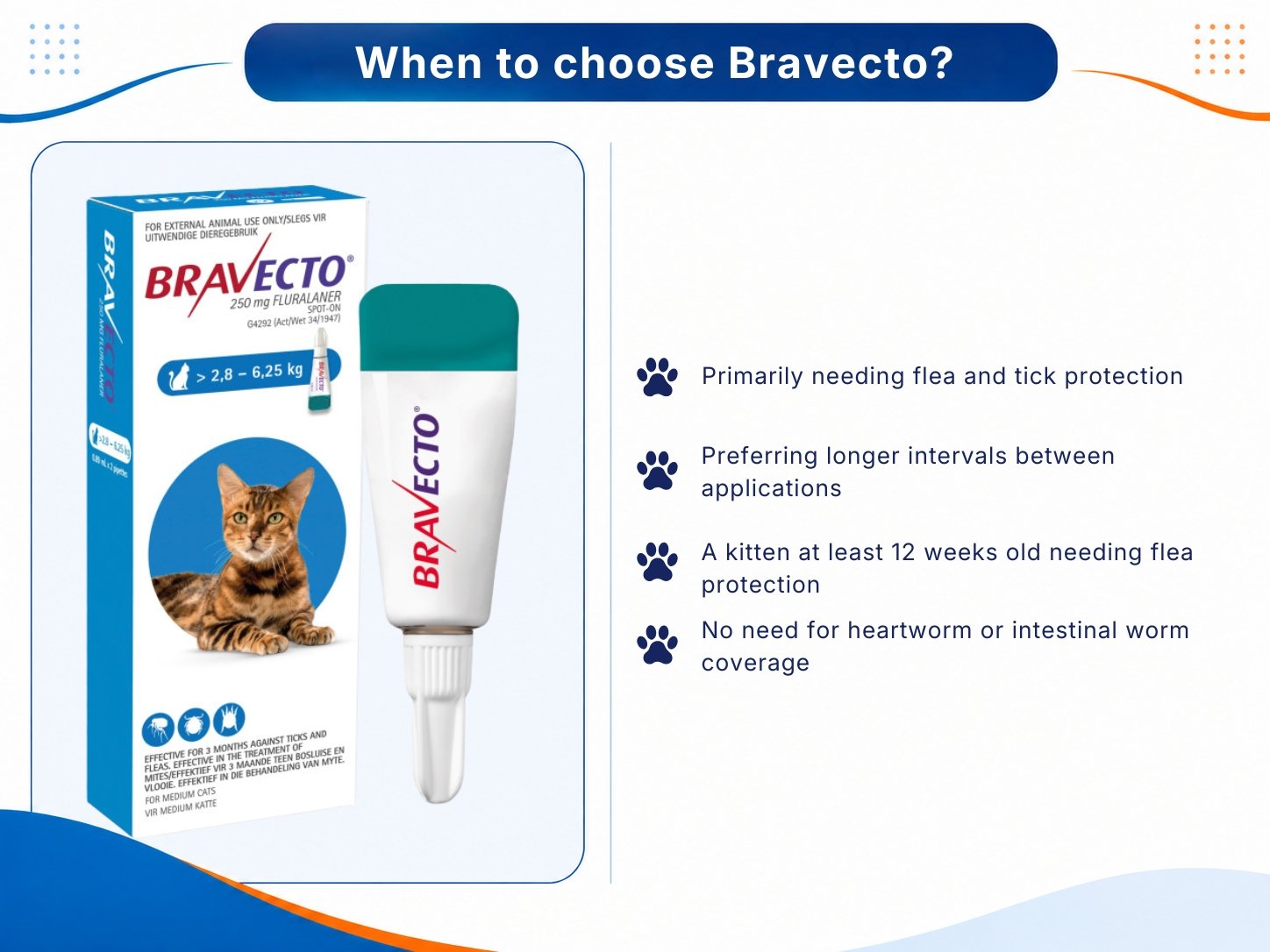
When to choose Bravecto?
Primarily needing flea and tick protection: Bravecto is specifically indicated for the treatment and prevention of flea infestations and the treatment and control of several tick species, without heartworm, roundworm, or hookworm indications.
Preferring longer intervals between applications: Bravecto is administered every 12 weeks for its main flea and tick indications, although protection against Dermacentor variabilis is indicated for 8 weeks.
A kitten at least 12 weeks old needing flea protection: Bravecto has a flea indication for cats and kittens 12 weeks of age and older weighing at least 2.6 lb. Its tick indications require cats and kittens to be at least 6 months old and weigh at least 2.6 lb.
No need for heartworm or intestinal worm coverage: Bravecto contains fluralaner and its labeled indications focus on fleas and ticks, while Bravecto Plus adds moxidectin for heartworm prevention and roundworm and hookworm treatment.
When to choose Bravecto Plus?
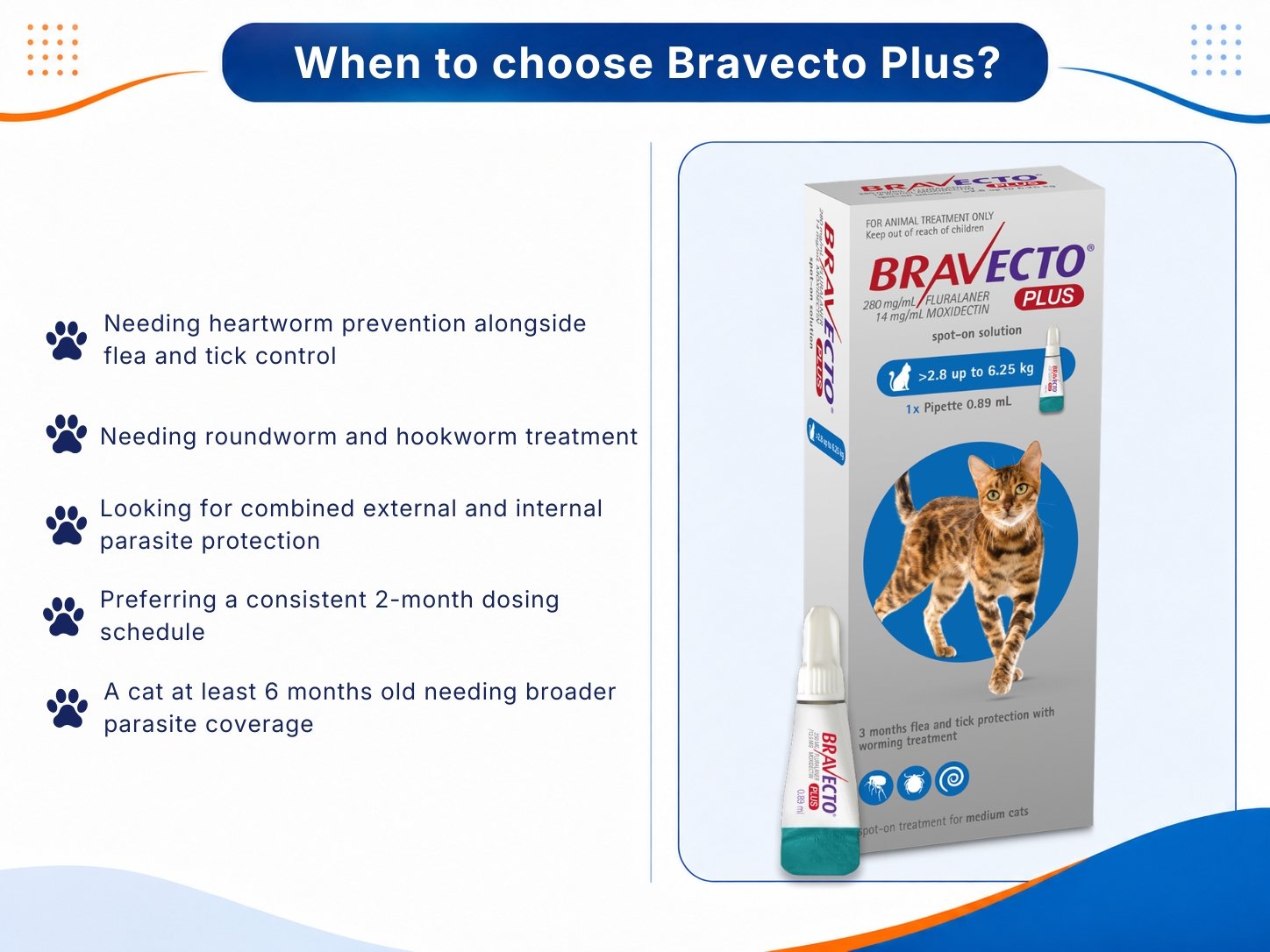
Needing heartworm prevention alongside flea and tick control: Bravecto Plus combines fluralaner and moxidectin to provide protection against heartworm disease while treating fleas and controlling several tick species.
Needing roundworm and hookworm treatment: Bravecto Plus is indicated for the treatment of specific stages of Toxocara cati and Ancylostoma tubaeforme.
Looking for combined external and internal parasite protection: The combination of fluralaner and moxidectin gives Bravecto Plus broader labeled parasite coverage than Bravecto.
Preferring a consistent 2-month dosing schedule: Bravecto Plus is administered as a topical dose every 2 months for its labeled indications.
A cat at least 6 months old needing broader parasite coverage: Bravecto Plus is indicated for cats and kittens 6 months of age and older weighing at least 2.6 lb.
Which is better for your cat?
Neither product is the right choice for every cat. The better option depends on the parasites your cat needs protection against, the cat’s age and weight, and the dosing schedule recommended by your veterinarian.
Bravecto may be a better fit if:
- Your cat primarily needs protection against fleas and ticks.
- You prefer a 12-week dosing interval for the flea and applicable tick indications.
- You have a kitten 12 weeks or older that meets the 2.6 lb minimum weight and needs flea protection.
Bravecto Plus may be a better fit if:
- Heartworm prevention is needed alongside flea and tick protection.
- Your cat also needs treatment for roundworms or hookworms.
- You want to combine external and selected internal parasite protection in one topical treatment.
Both products contain fluralaner, an isoxazoline compound, and their labels warn that this drug class has been associated with neurologic adverse reactions such as tremors, ataxia, and seizures; caution is advised in cats with a history of neurologic disorders. The safety of both products has also not been established in breeding, pregnant, and lactating cats.
The main distinction is therefore what you need the product to cover. Bravecto focuses on flea and tick control with longer intervals between applications, while Bravecto Plus combines flea and tick protection with heartworm prevention and roundworm and hookworm treatment on a 2-month schedule. Your veterinarian can help determine which product is appropriate based on your cat’s age, weight, parasite exposure, and overall health.

Anipet Team
Anipet Team is dedicated to sharing reliable information about pet health, veterinary care, and animal wellbeing. Our content is researched and reviewed by veterinary professionals to provide pet owners with trusted, practical information for caring for their pets.