
How To Get Rid of Fleas on Kittens
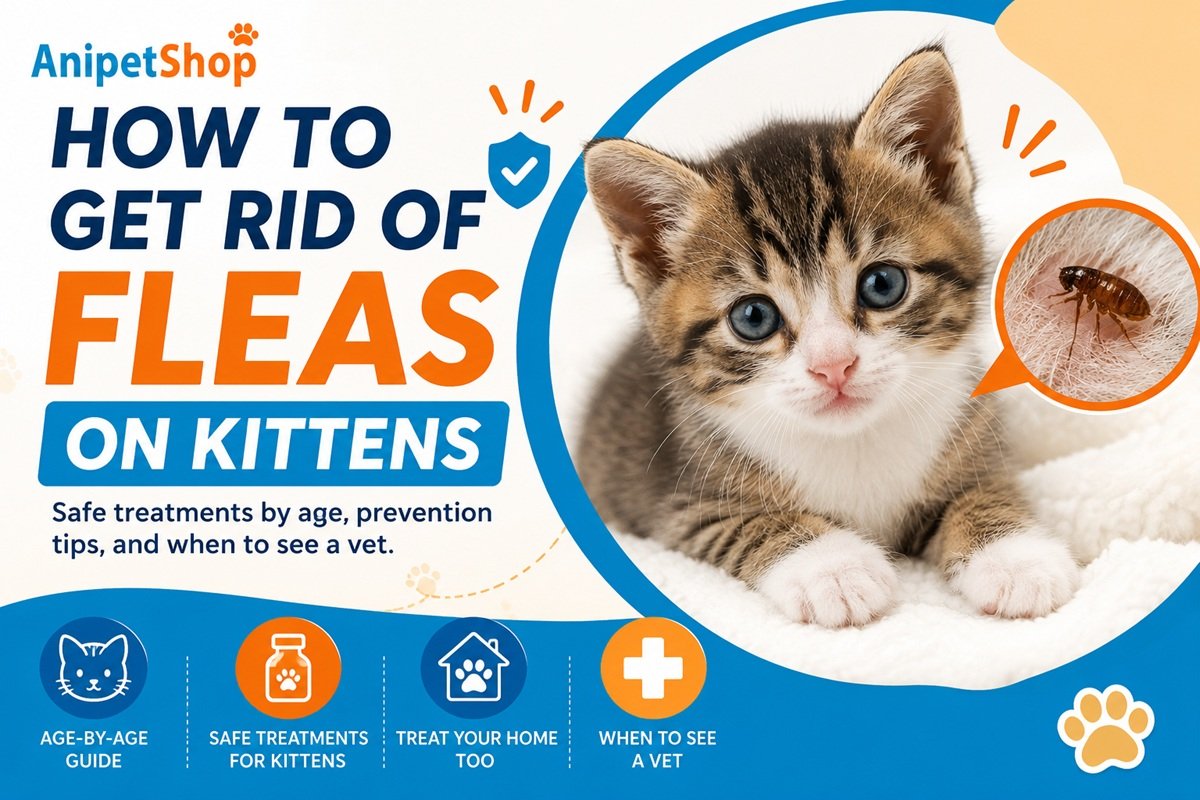
The safest way to get rid of fleas on kittens is to remove the fleas from the kitten, use an age- and weight-appropriate flea treatment when available, and treat the home to prevent reinfestation. Because young kittens are small and can develop anemia from heavy flea infestations, the right approach depends largely on the kitten’s age, weight, and overall health.
Below, we’ll explain how to safely remove fleas from kittens at different ages, which flea treatments may be appropriate, how to deal with fleas in your home, and when a flea infestation requires veterinary care.
How Can You Safely Remove Fleas From a Kitten?
You can safely remove fleas from a kitten by using a flea comb, bathing when appropriate, and choosing a flea treatment only when the kitten meets the product’s age and weight requirements.
For very young kittens, physical removal is often the safest starting point because many chemical flea products are not labeled for use at that age. As kittens grow, more treatment options become available, but every product has its own minimum age and weight requirements.
Kittens Under 4 Weeks Old
For kittens under 4 weeks old, focus on physically removing fleas rather than using flea medication unless directed by a veterinarian.
- Use a flea comb: Slowly comb through the kitten’s fur, especially around the neck, belly, and base of the tail. Place removed fleas in soapy water.
- Give a carefully managed bath: Use warm water, keep the bath short, avoid the kitten’s face, and dry them immediately to prevent chilling.
If the kitten has a heavy flea infestation, appears weak, or has pale gums, contact a veterinarian promptly.
Kittens 4 Weeks and Older
For kittens 4 weeks and older, some flea treatments may be available if the kitten meets the product’s age and weight requirements.
- Continue flea combing: Use a flea comb to remove visible adult fleas and reduce the flea burden.
- Consider an oral flea treatment: Some products, such as Capstar (nitenpyram), are labeled in some markets for kittens from 4 weeks when they meet the required minimum weight.
- Ask your veterinarian about treatment: A veterinarian can recommend an appropriate option based on the kitten’s age, weight, and health.
Always check the specific product label, as minimum age and weight requirements vary.
Kittens 8 Weeks and Older
For kittens 8 weeks and older, more flea treatment options may be available, including certain oral and topical products.
- Use a topical flea treatment: Some spot-on products are labeled for kittens from 8 weeks, but minimum weight requirements vary by product.
- Consider an oral flea treatment: Some oral products may be appropriate for older kittens depending on their age, weight, and the specific product.
- Start ongoing flea prevention: Once the kitten meets the requirements for an appropriate preventive, consistent treatment can help reduce future infestations.
Always check the product’s minimum weight and follow its label instructions before use.
Which Flea Treatments Are Safe for Kittens?
The safest flea treatment for a kitten depends on the product’s minimum age and weight requirements, with oral and topical treatments being two common options for kittens that are old enough to use them.
Because each product has different requirements, always check the label before treatment and choose a product specifically approved for cats or kittens. The two main types of flea treatment are:
Oral Flea Treatment for Kittens
Oral flea treatments can provide fast flea control, but the appropriate product depends on the kitten’s age, weight, and the product’s specific label.
- Capstar (nitenpyram): An oral tablet labeled for cats and kittens 4 weeks and older and weighing at least 2 lbs. It starts killing adult fleas within about 30 minutes, making it useful for quickly reducing an existing flea infestation. However, it only kills adult fleas and does not provide long-term protection.
- Credelio CAT (lotilaner): A monthly oral chewable treatment labeled for cats and kittens 8 weeks and older and weighing 2–17 lbs for flea treatment and prevention. It also provides protection against black-legged ticks.
- Comfortis for Cats (spinosad): An oral chewable treatment indicated for cats and kittens 14 weeks and older and weighing at least 4.1 lbs. It kills adult fleas and provides flea protection for one month.
Always check the current product label for your country before giving an oral flea treatment, as approved ages, weights, dosing, and availability can vary.
Topical Flea Treatment for Kittens
Topical flea treatments are applied directly to the kitten’s skin and can provide longer-lasting flea control, with several options available once a kitten reaches the required age and weight.
- Stronghold For Puppies & Kittens Up To 5 lbs (Up to 2.5 kg): A selamectin-based spot-on listed in the provided information for kittens from 6 weeks of age and weighing up to 5 lbs, with flea activity and additional parasite protection.
- Revolution for Puppies & Kittens up to 5 lbs (up to 2.5 kg): A selamectin-based topical treatment listed in the provided information for kittens 8 weeks and older weighing up to 5 lbs.
- Revolution Plus Topical Solution for Cats 2.8-5.5 lbs (1.25-2.5 kg): A topical treatment labeled for kittens 8 weeks and older and weighing at least 2.8 lbs. In addition to fleas, it provides protection against several other parasites, including ticks, ear mites, and certain intestinal worms.
- Advantage II: A topical spot-on treatment labeled for kittens 8 weeks and older and weighing 2–5 lbs. It works against adult fleas as well as flea eggs and larvae.
- Frontline Plus: A topical spot-on treatment labeled for kittens 8 weeks and older and weighing at least 1.5 lbs. It targets fleas and their immature stages and also provides tick control.
The minimum age and weight requirements are product-specific, so choose a topical treatment only when the kitten meets all requirements on the current label.
How Long Does It Take To Kill Fleas on a Kitten?
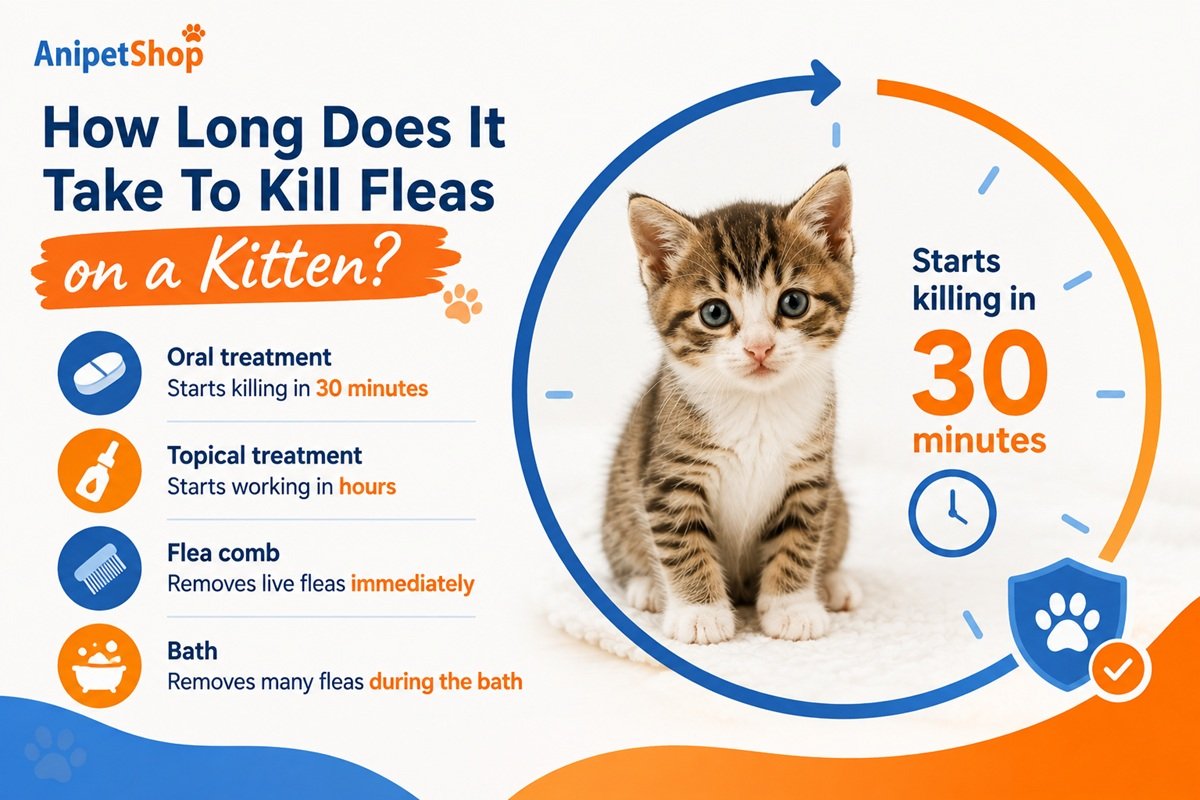
Most flea treatments can start killing adult fleas within 30 minutes to a few hours, but completely getting rid of a flea infestation can take longer because flea eggs, larvae, and pupae may remain in the kitten’s environment. The time also depends on the method you use:
- Oral flea treatment: Some fast-acting products, such as Capstar (nitenpyram), can begin killing adult fleas within 30 minutes. Other oral treatments may take longer or provide ongoing protection for up to a month, depending on the product.
- Topical flea treatment: Topical products generally begin working within hours, with some providing continued flea control for around 30 days. The exact onset and duration depend on the product and active ingredient.
- A flea comb: A flea comb can remove live adult fleas immediately as you comb, but it only removes the fleas physically present on the kitten. It does not kill or eliminate flea eggs, larvae, or pupae in the environment.
- A bath: A warm bath with an appropriate mild cleansing product can physically remove many adult fleas during the bath itself. However, it does not provide lasting flea protection, so new fleas can still get onto the kitten from the environment.
For this reason, seeing a few fleas after treatment does not necessarily mean the treatment has failed. Flea eggs, larvae, and pupae can remain in bedding, carpets, furniture, and other areas of the home and continue developing into adult fleas. Treating the kitten and cleaning the environment at the same time is key to breaking the flea life cycle.
Tips To Getting Rid Of Fleas On A Kitten
Getting rid of fleas safely means choosing the right treatment, removing existing fleas, and keeping the kitten’s environment clean.
- Check the label first: Make sure the product is approved for your kitten’s age, weight, and species. Follow the dosage and application instructions exactly.
- Use only one treatment at a time: Do not combine flea products unless your veterinarian tells you to. Using multiple treatments can increase the risk of side effects.
- Apply products correctly: Keep topical treatments away from the kitten’s eyes, mouth, and nose. Do not let the kitten or other pets lick the treated area until it is dry.
- Monitor for reactions: Watch for drooling, vomiting, weakness, skin irritation, tremors, or unusual behavior after treatment. Contact a veterinarian immediately if any of these occur.
- Keep the kitten warm and dry: Young kittens can become chilled easily, especially after bathing or using a damp flea comb.
- Treat the environment safely: Wash bedding and vacuum regularly, but keep the kitten away from cleaning products and freshly treated areas until they are safe.
- Ask a veterinarian when unsure: If the kitten is very young, sick, underweight, or heavily infested, get professional advice before using any flea treatment.
Flea Treatments To Avoid for Kittens
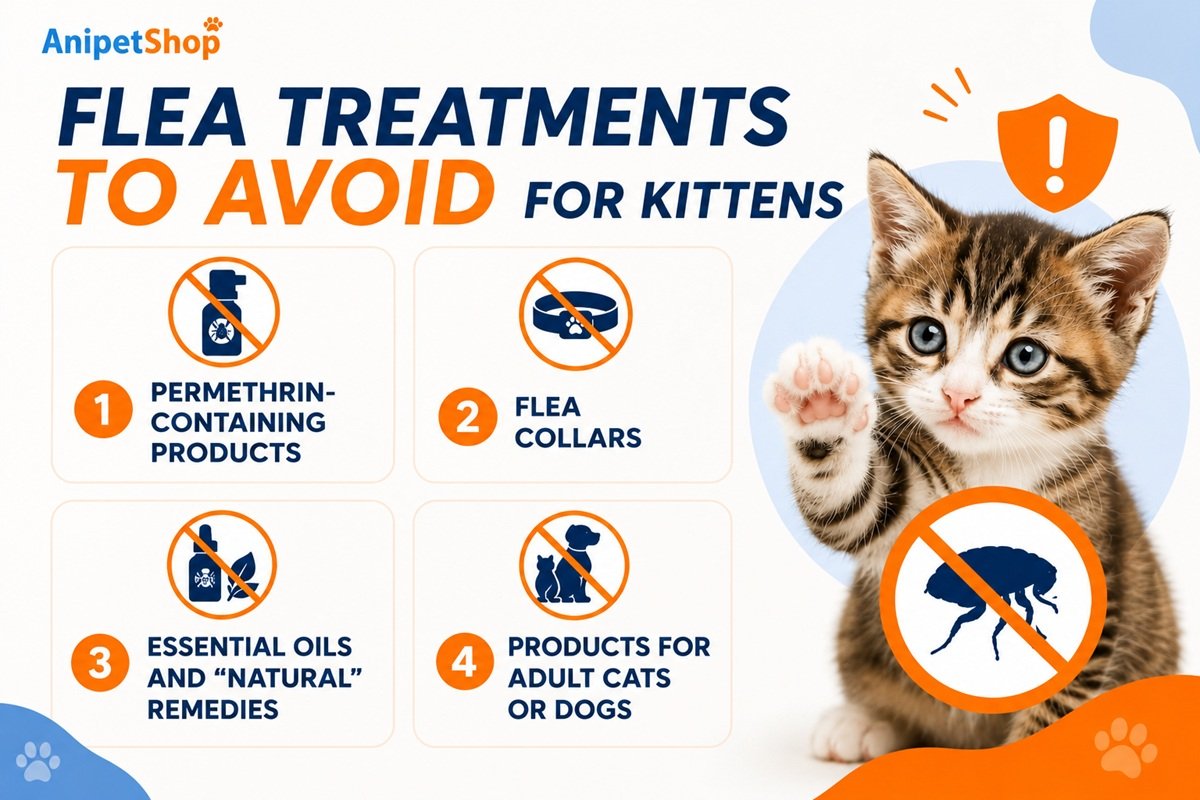
Some flea treatments are unsafe for kittens because of their small size and sensitivity to certain chemicals. Avoid these products:
- Permethrin-Containing Products: Never use flea products made for dogs or containing permethrin on kittens. Permethrin is highly toxic to cats and can cause tremors, seizures, and other serious reactions.
- Flea Collars: Avoid flea collars unless they are specifically labeled for your kitten and recommended by your veterinarian. Some can irritate a kitten’s skin or cause other health problems.
- Essential Oils and “Natural” Remedies: Do not use essential oils such as tea tree, eucalyptus, peppermint, or citrus oils to treat fleas. They can be toxic to cats, especially when kittens lick them from their fur.
- Products for Adult Cats or Dogs: Never split an adult flea treatment or use a product made for a larger pet on a kitten. Always choose a product that matches your kitten’s age and weight.
How To Prevent Fleas on Kittens
The best way to prevent fleas on kittens is to use an age- and weight-appropriate preventive consistently while keeping the kitten’s environment clean.
Once a kitten is old enough for an approved preventive, maintaining regular protection can help break the flea life cycle and reduce the chance of another infestation. The appropriate starting age varies by product, so follow the label or your veterinarian’s recommendation.
Prevention should also include the rest of the household:
- Treat every susceptible pet with a species-appropriate flea preventive.
- Wash bedding regularly, especially where the kitten sleeps.
- Vacuum carpets, floors, furniture, and resting areas frequently.
- Dispose of vacuum contents outside to reduce the chance of fleas emerging inside the home.
- Continue prevention year-round if recommended for your area and pets.
Treating only the kitten can provide temporary relief because immature flea stages can remain in the environment and later develop into adults.
When To See a Vet for Kitten Fleas
You should contact a veterinarian promptly if a kitten with fleas is very young, heavily infested, weak, lethargic, not eating, or showing pale or white gums.
Fleas feed on blood, and a heavy infestation can cause anemia in a small kitten. Signs such as lethargy, pale gums, decreased appetite, weakness, rapid breathing, feeling cold, collapse, or difficulty standing can indicate a serious problem requiring urgent veterinary care.
A veterinarian can also help determine which flea treatment is appropriate for the kitten’s exact age, weight, and health status. This is particularly important when the kitten is close to a product’s minimum age or weight, or when you are considering combining different flea products.
If a dog flea product has accidentally been applied to a kitten, contact a veterinarian immediately rather than waiting for symptoms to appear. Permethrin exposure can be dangerous to cats.
FAQs
What is the safest way to get rid of fleas on a kitten?
The safest way to get rid of fleas on a kitten is to use a flea comb and other age-appropriate physical flea removal methods for very young kittens, then introduce a labeled flea treatment when the kitten reaches the product’s required age and weight.
Can I use Dawn dish soap to kill fleas on a kitten?
Dawn or another mild dish soap can help remove live adult fleas during a carefully managed bath, but it does not provide ongoing flea prevention or eliminate flea eggs and immature stages in the home. For very young kittens, keeping the kitten warm and drying them immediately after the bath is especially important.
At what age can kittens get flea treatment?
Some flea treatments can be used from around 4 weeks of age when the kitten meets the product’s weight requirement, while many longer-lasting topical preventives begin at 8 weeks. There is no universal starting age, so check the specific product label.
Can I use a flea treatment made for dogs on my kitten?
No. Never use a dog flea treatment on a kitten unless a veterinarian specifically confirms that the product is safe for that species. Some dog products contain permethrin, which can be highly toxic to cats.
How do I know if my kitten has fleas?
Common signs include visible small brown fleas, black flea dirt in the fur or bedding, frequent scratching or biting, hair loss, irritated skin, and restlessness. Pale gums, weakness, lethargy, or rapid breathing can indicate a more serious flea-related problem.
Why does my kitten still have fleas after treatment?
Your kitten may still have fleas because eggs, larvae, and pupae can remain in carpets, bedding, furniture, and other parts of the environment. Treating the kitten without addressing the home can allow newly emerged adult fleas to reinfest the kitten.
How quickly can fleas make a kitten sick?
A heavy flea infestation can make a young kitten seriously ill because fleas consume blood, and small kittens have a limited blood volume. Signs of anemia such as pale gums, weakness, lethargy, poor appetite, or difficulty standing require prompt veterinary attention.
Conclusion
Getting rid of fleas on a kitten starts with choosing a safe method for their age and weight. Use a flea comb or carefully managed bath for young kittens, and only use oral or topical treatments when the kitten meets the product’s requirements. At the same time, clean bedding and living areas to help prevent fleas from coming back.
When in doubt, check the product label or ask your veterinarian before treating your kitten, especially if they are very young, heavily infested, or showing signs of weakness or illness.

Anipet Team
Anipet Team is dedicated to sharing reliable information about pet health, veterinary care, and animal wellbeing. Our content is researched and reviewed by veterinary professionals to provide pet owners with trusted, practical information for caring for their pets.