
Puppy Parasite Prevention Guide: Worm, Flea & Tick Protection
Puppies are vulnerable to parasites such as worms, fleas, and ticks, which can affect their health and development. Proper prevention helps protect your puppy from infections and reduces the risk of parasites spreading to other pets and family members.
This guide covers parasite prevention schedules, treatment options, home hygiene, warning signs, and common mistakes to help you keep your puppy healthy and protected.
What Parasites Do Puppies Need Protection From?
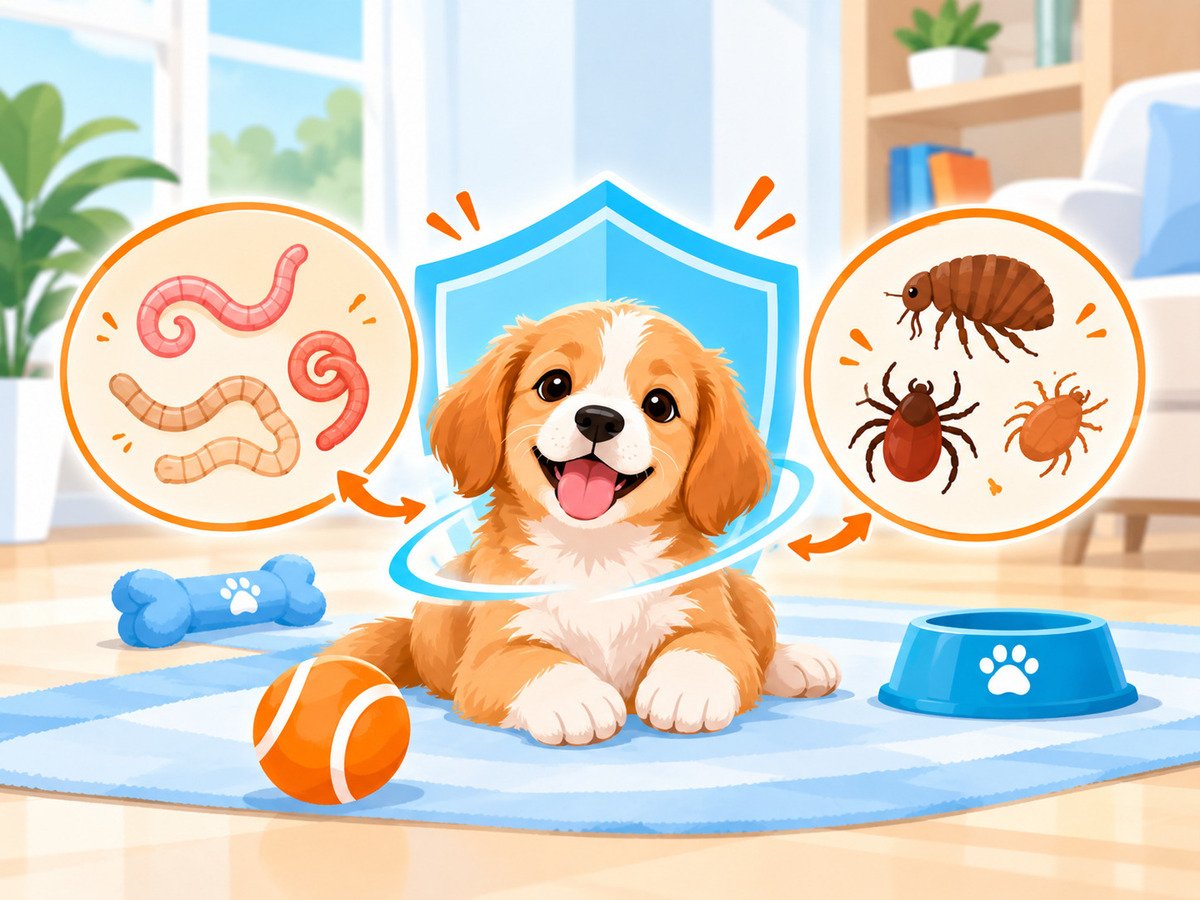
Puppies need protection from two main types of parasites: internal parasites, which live inside the body, and external parasites, which affect the skin and fur.
|
Comparison |
Internal Parasites |
External Parasites |
| Common types | Roundworms, hookworms, heartworms, tapeworms, and whipworms. | Fleas, ticks, and mites. |
| Transmission | From the mother, contaminated soil, water, grass, or animal feces; tapeworms can spread through infected fleas. | Through infested environments and contact with parasites. |
| Health effects | Diarrhea, weight loss, a swollen belly, anemia, digestive problems, and heart or lung damage. | Itching, hair loss, allergic reactions, anemia, skin infections, and tick-borne diseases. |
Puppies can acquire parasites before birth, through their mother’s milk, or by swallowing parasite eggs and larvae in contaminated environments. Infected mosquitoes can transmit heartworms, while ticks may attach in tall grass.
Because puppies have developing immune systems and grow rapidly, they need close monitoring and regular weight checks. Veterinary visits help ensure that prevention medication and dosages remain appropriate as they grow.
Puppy Parasite Prevention Schedule by Age
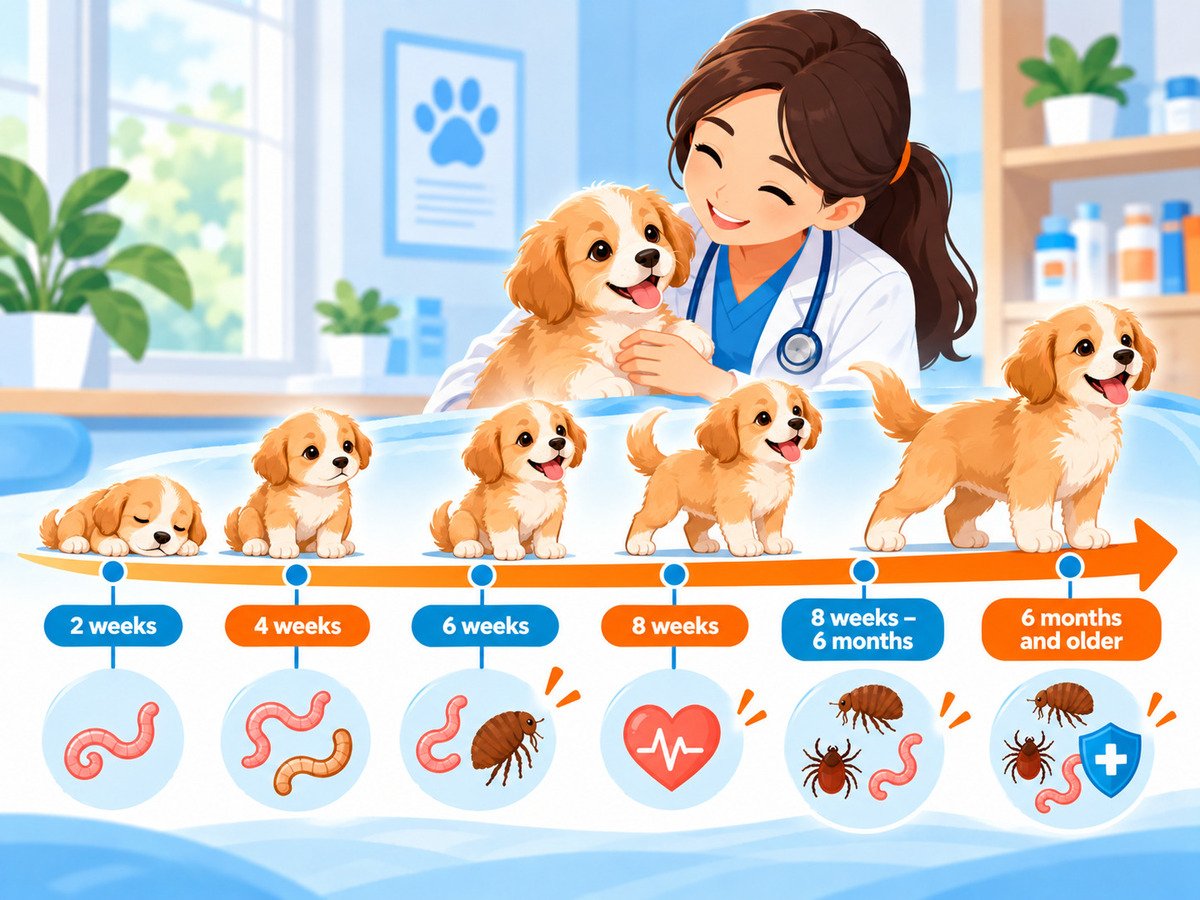
A puppy’s parasite prevention schedule changes with age, from early deworming to ongoing parasite control. According to the Companion Animal Parasite Council (CAPC), early and regular prevention helps protect puppies from common parasites.
| Puppy’s Age | Recommended Prevention |
| 2 weeks | Begin deworming against roundworms and hookworms. |
| 4 weeks | Repeat deworming. |
| 6 weeks | Deworm again; consider flea and tick prevention if age and weight requirements are met. |
| 8 weeks | Give the fourth deworming treatment and begin heartworm prevention as advised by a veterinarian. |
| 8 weeks–6 months | Continue monthly parasite prevention and schedule at least 4 fecal exams during the first year.
. |
| 6 months and older | Maintain year-round prevention, arrange the first heartworm blood test at 7–12 months, and schedule fecal exams 1–2 times yearly. |
During the first eight weeks, deworming is typically repeated every two weeks because puppies can acquire worms from their mother. From eight weeks onward, prevention may include heartworms, fleas, ticks, and intestinal worms, depending on product age and weight limits.
As puppies grow, continue veterinary check-ups and adjust treatment to their weight and risk. Follow your veterinarian’s guidance on medication and testing schedules.
How to Choose the Right Parasite Prevention for Your Puppy
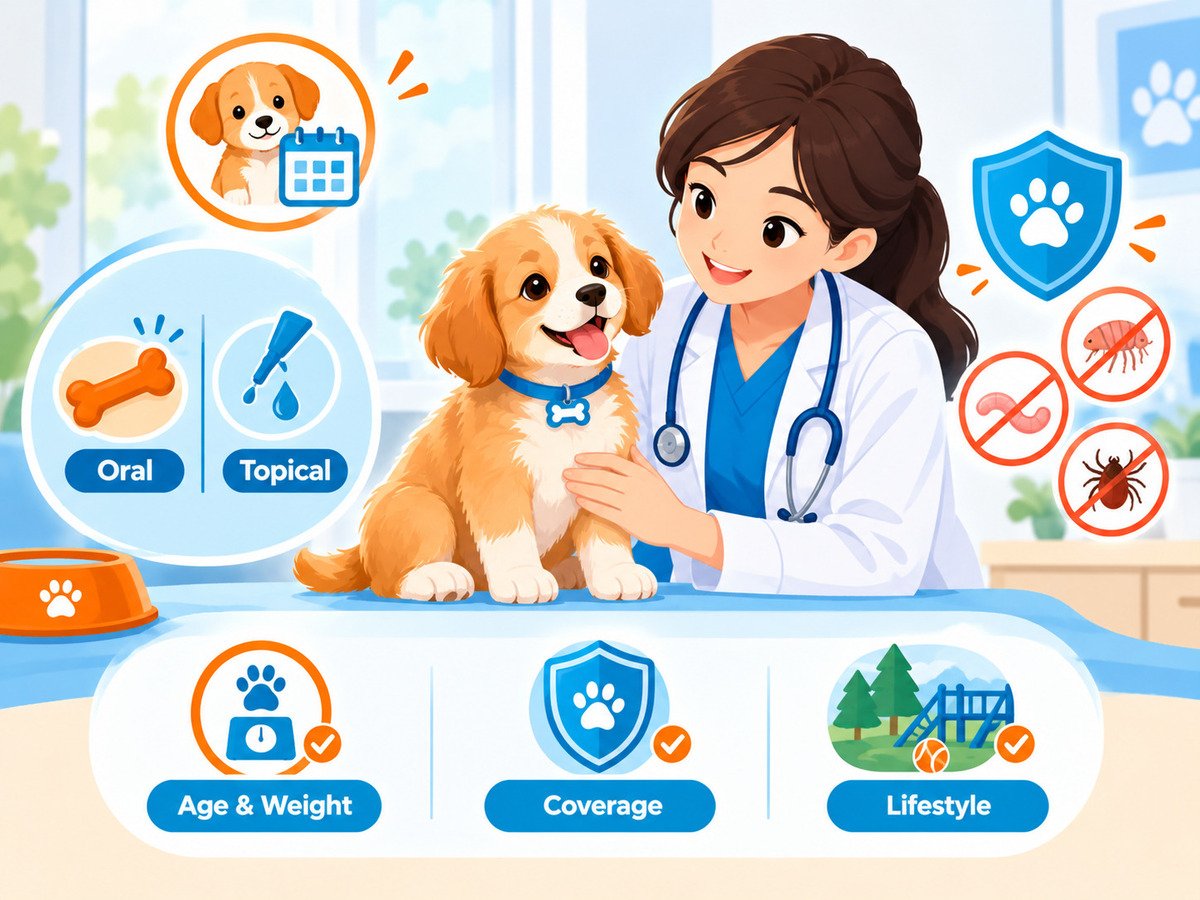
Choose parasite prevention based on your puppy’s age, weight, lifestyle, and household needs, with guidance from a veterinarian.
Oral and topical treatments differ in application, convenience, and household safety:
| Factor | Oral Chewables | Topical Treatments |
| Application | Given by mouth, often as flavored chews. | Applied directly to the skin. |
| Bathing | Generally unaffected. | May require temporary water restrictions. |
| Household safety | No medication residue on the fur. | Prevent accidental contact or licking by children and pets. |
Check parasite coverage: Combination products target multiple parasites, while separate treatments cover specific pests. Choose based on local risks and veterinary advice.
Follow age and weight limits: Check product labels, monitor your puppy’s weight, and never share doses between pets.
Consider lifestyle: Puppies exploring wooded areas may need tick protection, while those attending dog parks or daycare may face greater exposure to intestinal parasites.
How to Prevent Parasites at Home
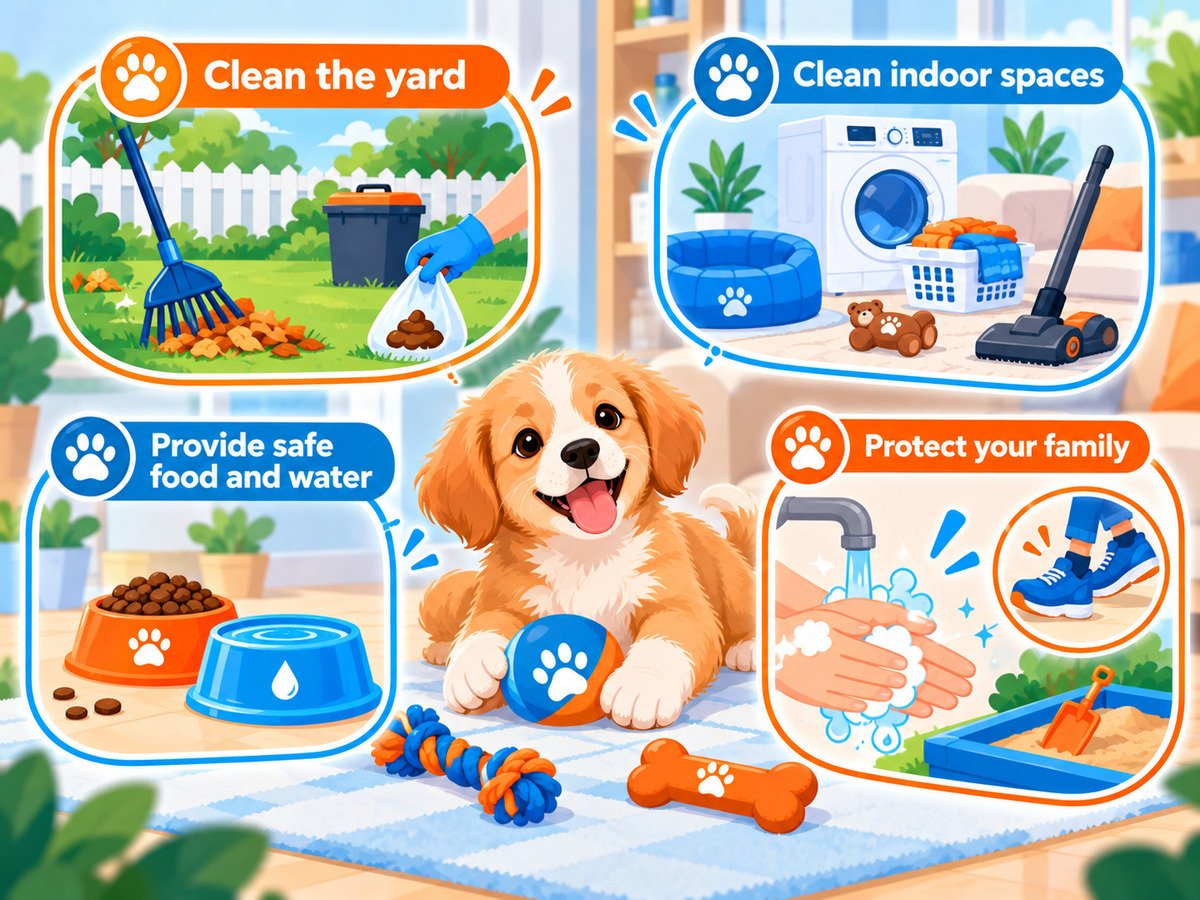
Prevent parasites at home by keeping your puppy’s environment clean, providing safe food and water, and maintaining good hygiene.
- Clean the yard: Remove feces daily, trim grass, secure trash, and eliminate standing water.
- Clean indoor spaces: Wash bedding and toys weekly in hot water, vacuum floors and furniture, and steam-clean carpets during flea infestations.
- Provide safe food and water: Offer clean drinking water, avoid stagnant water, raw meat, and animal carcasses, and store food securely.
- Protect your family: Wash hands after handling your puppy or its waste, wear shoes in elimination areas, and cover children’s sandboxes.
Signs Your Puppy May Have Parasites
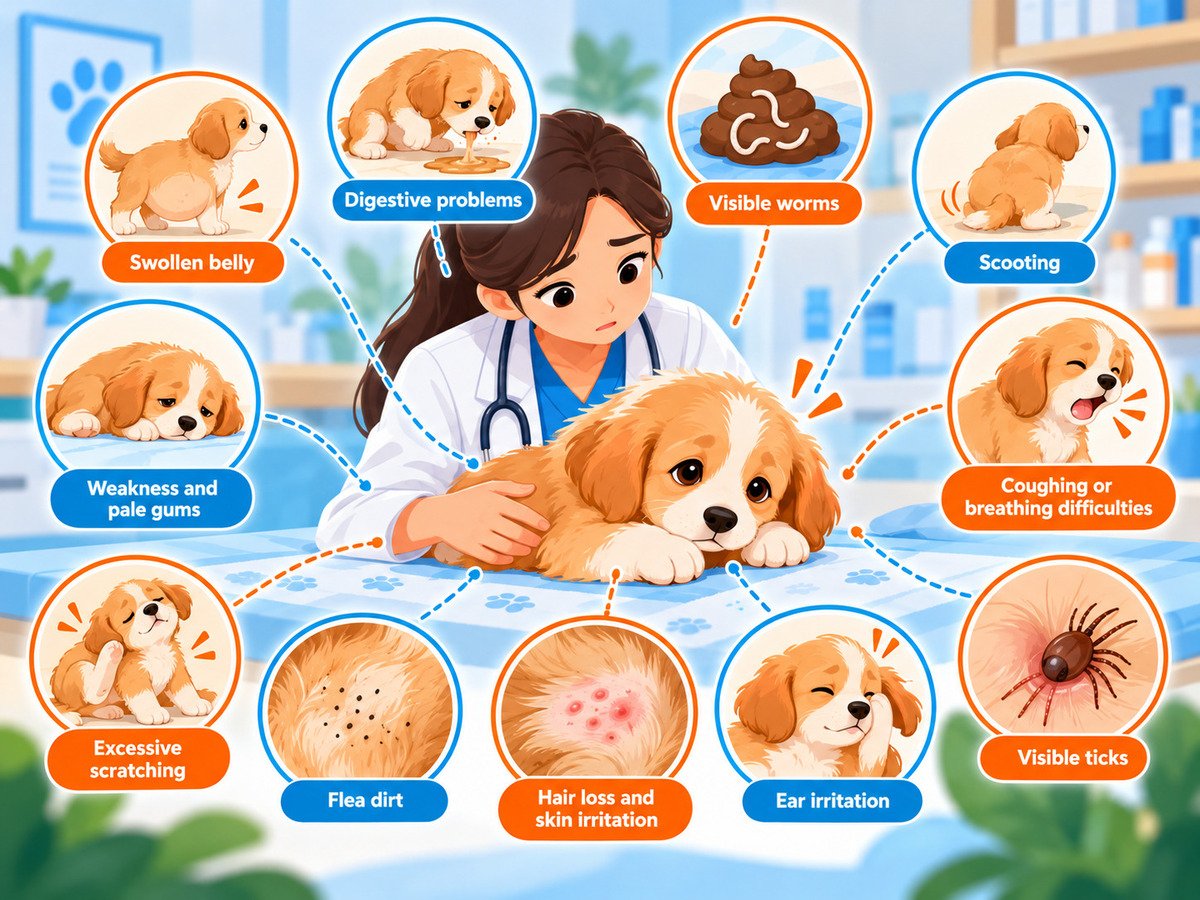
Common signs include digestive issues, weakness, skin irritation, and visible parasites. Watch for these symptoms:
- Swollen belly: An enlarged abdomen despite poor muscle development.
- Digestive problems: Diarrhea, vomiting, blood or mucus in stool, or reduced appetite.
- Visible worms: Worms in stool or vomit, or rice-like tapeworm segments near the anus.
- Scooting: Dragging the hindquarters across the floor.
- Weakness and pale gums: Possible signs of anemia.
- Coughing or breathing difficulties: Persistent coughing, rapid breathing, or tiring easily.
- Excessive scratching: Frequent scratching, biting, or licking the skin.
- Flea dirt: Tiny black specks in the fur that turn reddish-brown when wet.
- Hair loss and skin irritation: Bald patches, redness, sores, or scabs.
- Ear irritation: Head shaking, ear scratching, or dark discharge.
- Visible ticks: Attached bumps, especially around the head, ears, neck, and between the toes.
Common Puppy Parasite Prevention Mistakes
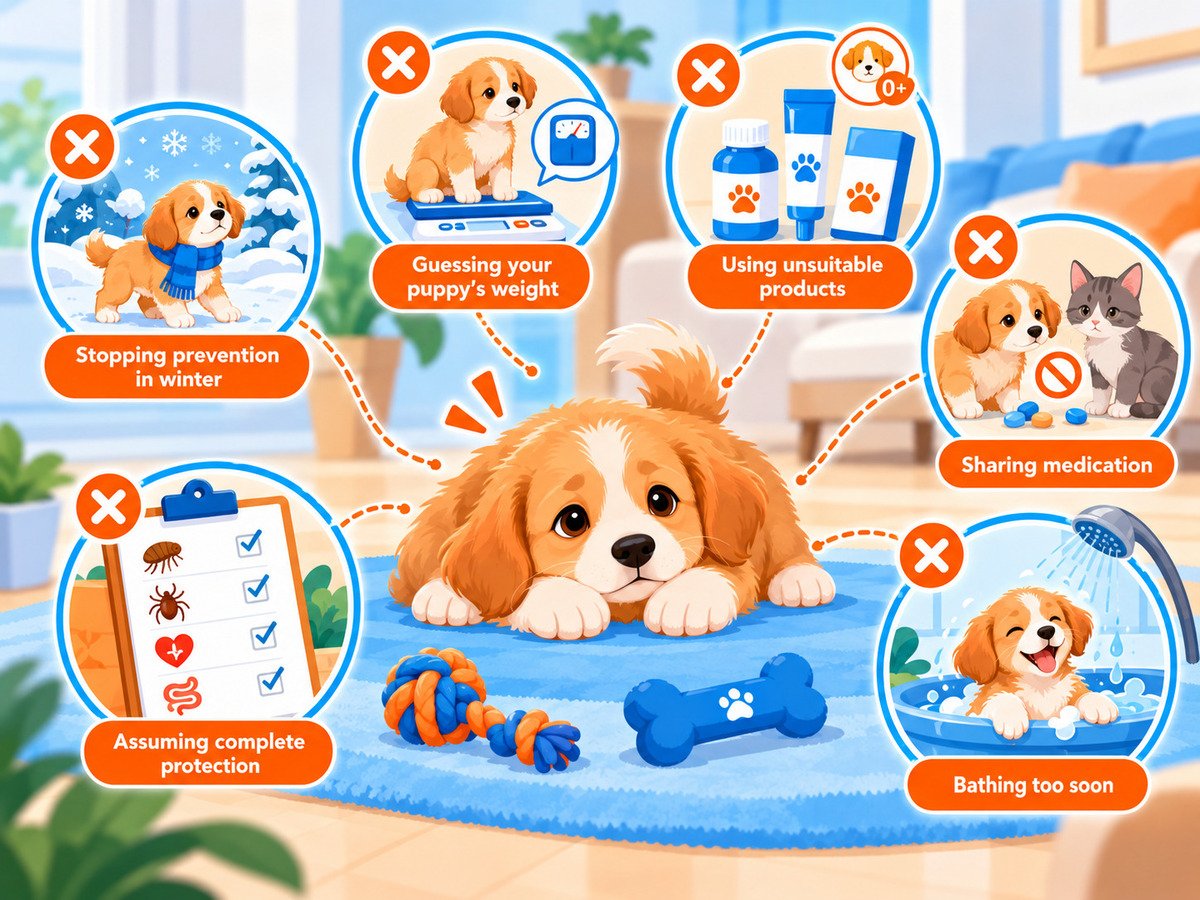
Common mistakes include inconsistent treatment, incorrect dosing, and choosing unsuitable products. Avoid these errors to keep your puppy protected:
- Stopping prevention in winter: Parasites may remain active year-round.
- Guessing your puppy’s weight: Weigh your puppy regularly to ensure correct dosing.
- Using unsuitable products: Choose treatments approved for your puppy’s age and weight.
- Sharing medication: Never split doses between pets.
- Assuming complete protection: Check whether the product covers fleas, ticks, heartworms, and intestinal worms.
- Bathing too soon: Follow product instructions on bathing and swimming after topical treatment.
Puppy Parasite Prevention Checklist
Use this puppy parasite prevention checklist to track veterinary care, maintain a clean environment, and reduce daily exposure to parasites.
- Deworming: Follow the recommended schedule at 2, 4, 6, and 8 weeks of age.
- Heartworm prevention: Start at around 8 weeks, as advised by your veterinarian.
- Flea and tick prevention: Choose age- and weight-appropriate products.
- Monthly weight checks: Check your puppy’s weight before dosing.
- Parasite testing: Schedule at least 4 fecal exams during the first year and the first heartworm blood test at 7–12 months, as recommended by your veterinarian.
- Daily waste removal: Pick up feces promptly to prevent soil contamination.
- Weekly cleaning: Wash bedding and toys in hot water and vacuum carpets and furniture.
- Yard maintenance: Keep grass short and remove standing water.
- Safe drinking water: Prevent access to puddles, ponds, and potentially contaminated public bowls.
- Family hygiene: Wash hands after handling your puppy or cleaning up waste, and wear shoes in areas where your puppy eliminates.
- Flea and tick checks: Inspect your puppy’s skin, belly, ears, and between the toes after outdoor activities.
Protecting your puppy from parasites requires consistent prevention, good hygiene, and regular veterinary care. By following an age-appropriate prevention schedule, choosing suitable products, recognizing early warning signs, and avoiding common mistakes, you can reduce parasite risks as your puppy grows. Consult your veterinarian to create a safe, effective prevention plan tailored to your puppy’s needs.

Anipet Team
Anipet Team is dedicated to sharing reliable information about pet health, veterinary care, and animal wellbeing. Our content is researched and reviewed by veterinary professionals to provide pet owners with trusted, practical information for caring for their pets.