
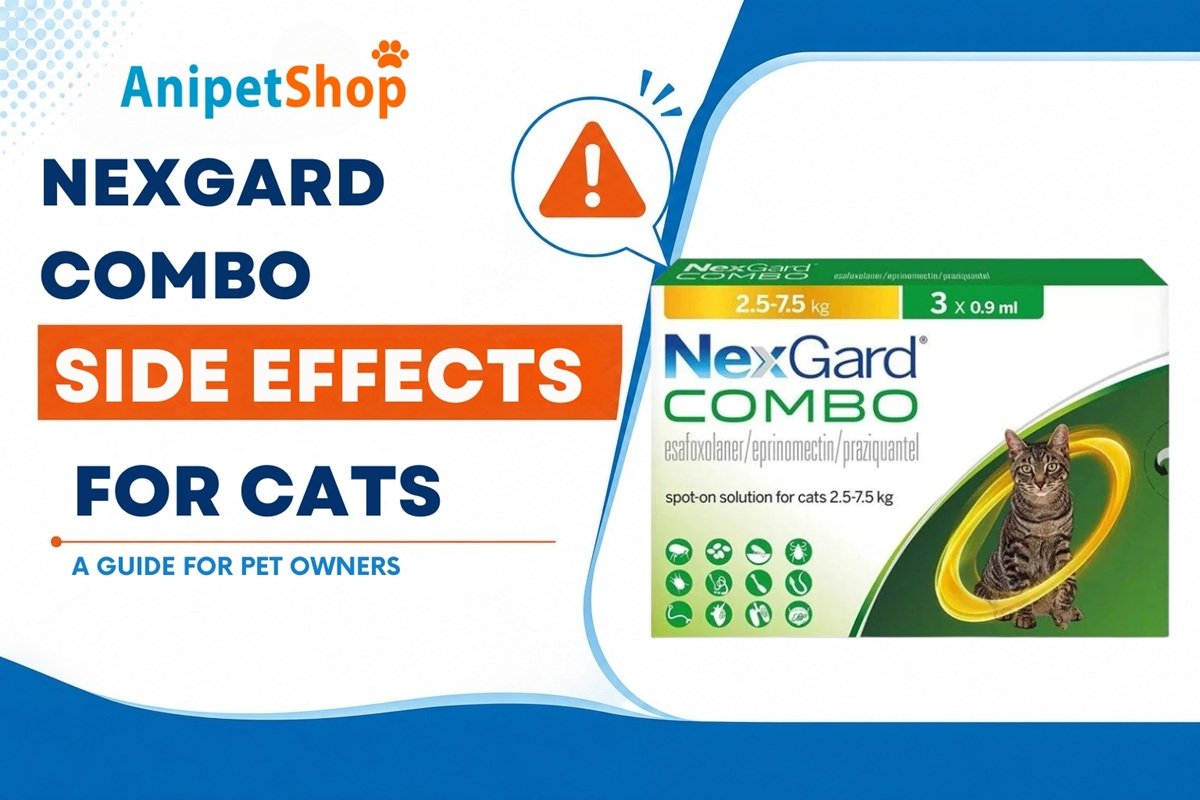
NexGard COMBO for Cats Side Effects: A Guide for Pet Owners
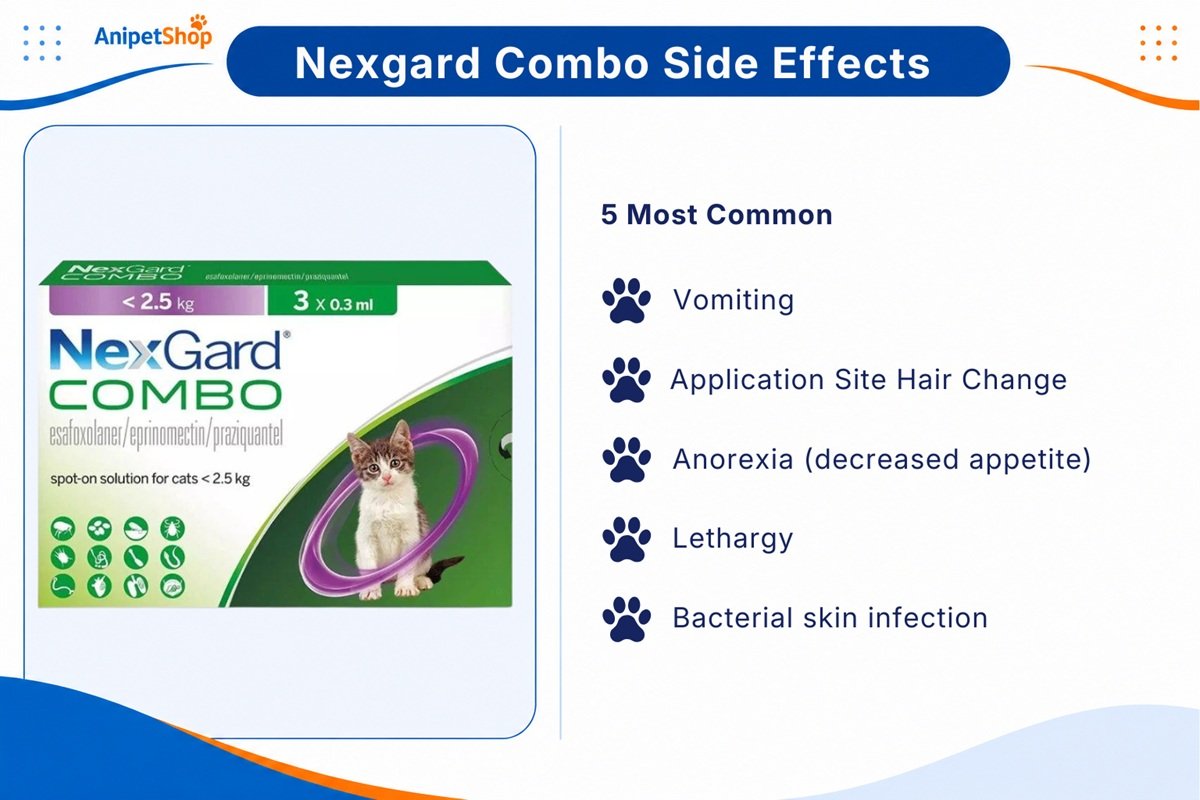
Vomiting occurred in 6.56% of cats treated with NexGard COMBO in a 90-day field safety and effectiveness study, making it the most frequently reported reaction. Decreased appetite occurred in 2.87% and lethargy in 2.46% of treated cats. NexGard COMBO contains esafoxolaner, eprinomectin, and praziquantel, and esafoxolaner belongs to the isoxazoline class, which has been associated with neurological adverse reactions including tremors, ataxia, and seizures. These neurological reactions are less commonly reported than digestive signs, but they warrant faster veterinary attention.
This guide walks through what’s common, what’s more serious, which cats may need extra caution, and what to do if your cat develops a reaction after NexGard COMBO.
What side effects can NexGard COMBO cause in cats?
Vomiting is the most frequently reported adverse reaction in cats treated with NexGard COMBO, followed by decreased appetite and lethargy. Other reactions reported during the field study included bacterial skin infection, itching, sneezing, skin peeling, diarrhea, excessive tearing, hypersalivation, increased body temperature, hair loss, skin thickening, ear itching, application-site hair change, application-site redness, and conjunctivitis.
The study included 201 households and 380 treated cats, with 244 cats receiving NexGard COMBO and 136 receiving an active control. Cats were monitored for 90 days through veterinary examinations or owner reports of abnormalities.
The table below shows the most frequently reported reactions in cats treated with NexGard COMBO:
|
Adverse Reaction |
% of Treated Cats (n=244) |
| Vomiting | 6.56% |
| Application Site Hair Change | 3.69% |
| Anorexia (decreased appetite) | 2.87% |
| Lethargy | 2.46% |
| Bacterial skin infection | 1.64% |
| Itching | 1.64% |
| Sneezing | 1.64% |
| Skin peeling | 1.23% |
| Diarrhea | 1.23% |
| Excessive tearing (epiphora) | 1.23% |
| Hypersalivation | 1.23% |
| Increased body temperature (hyperthermia) | 1.23% |
| Hair loss (alopecia) | 0.82% |
| Skin thickening | 0.82% |
| Ear itching | 0.82% |
| Application-site redness | 0.82% |
| Conjunctivitis | 0.41% |
These percentages come from the NexGard COMBO field study and describe reported reactions rather than proving that NexGard COMBO caused every event.
Which side effects of NexGard COMBO are considered serious?
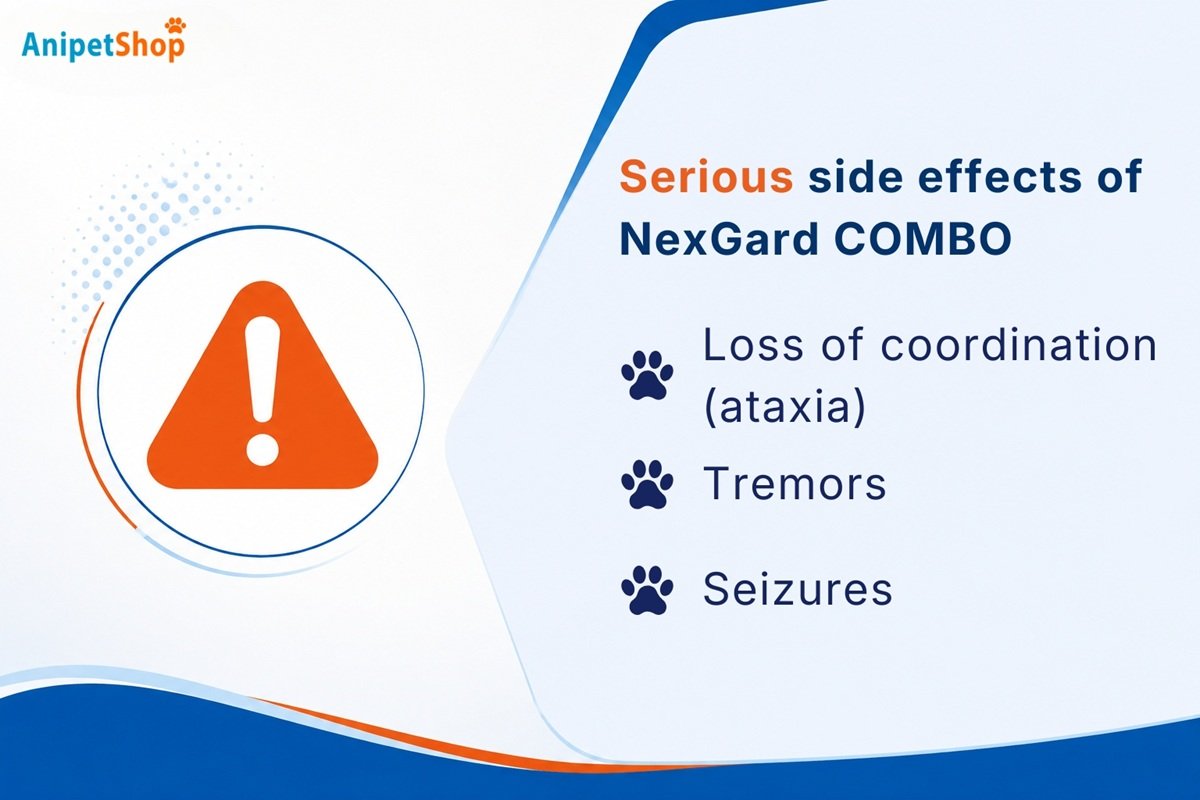
The most important serious reactions for cat owners to recognize are neurological signs such as tremors, loss of coordination (ataxia), and seizures. Esafoxolaner, one of the active ingredients in NexGard COMBO, belongs to the isoxazoline class. The product information warns that neurological adverse reactions have been reported with isoxazoline-class drugs in cats, including cats with no previous history of neurological disorders.
Cats with a history of neurological disorders should therefore receive extra caution before treatment.
Here are some signs to watch for:
- Loss of coordination (ataxia): Your cat may wobble, stagger, or have difficulty walking normally.
- Tremors: Your cat may shake, twitch, or develop unusual muscle movements.
- Seizures: Your cat may suddenly stiffen, shake, lose awareness, or show unusual body movements.
These reactions are not among the most frequently reported reactions in the field study, but they deserve prompt veterinary attention because of their potential severity.
What rare side effects should cat owners be aware of?
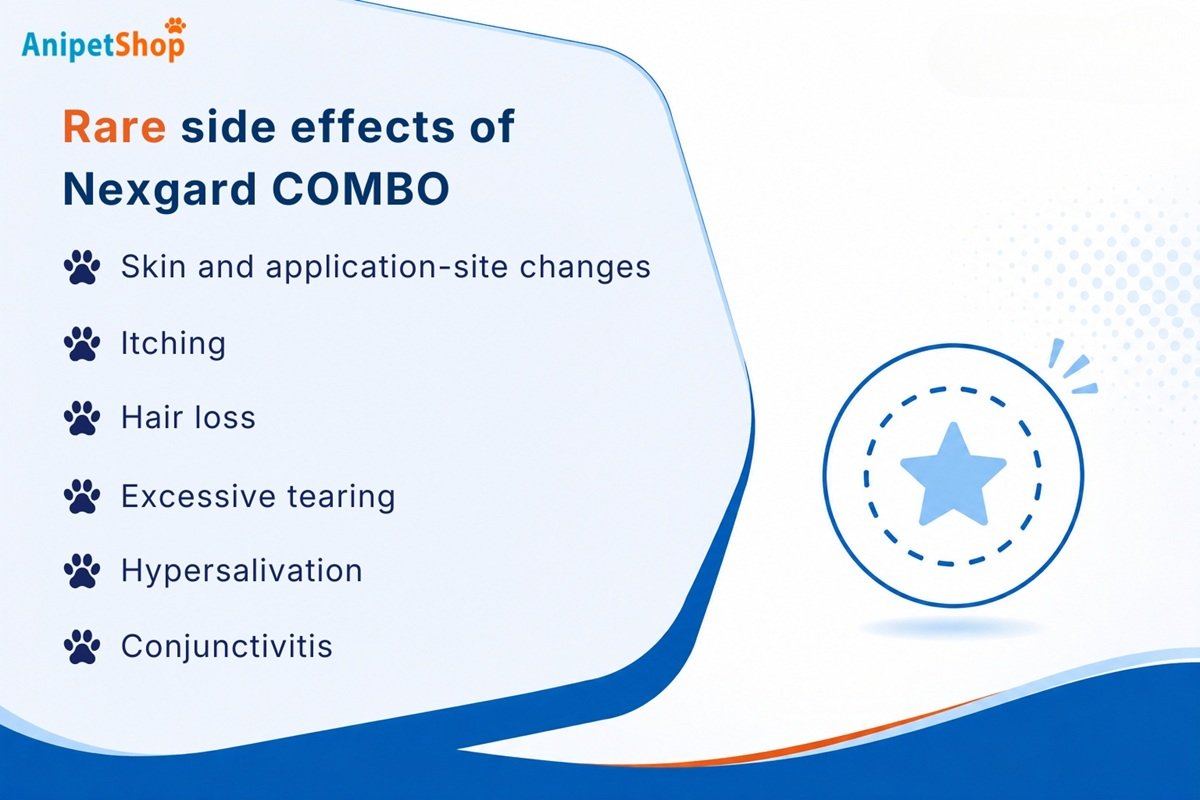
Less frequently reported reactions in the field study included skin and application-site changes, itching, hair loss, excessive tearing, hypersalivation, and conjunctivitis. Application-site redness was reported in 0.82% of treated cats, while conjunctivitis was reported in 0.41%.
Some signs to watch for include:
- Application-site changes: Your cat may develop redness, hair changes, or other irritation around the area where the product was applied.
- Skin reactions: Itching, skin peeling, hair loss, or skin thickening may occur.
- Eye-related signs: Excessive tearing or conjunctivitis may appear.
- Hypersalivation: Excessive drooling can occur if a cat accidentally ingests the product by licking or grooming the application site.
Accidental oral exposure is particularly relevant with a topical medication because cats may groom themselves after application. The product should not be administered orally, and owners should apply it where the cat cannot lick it off.
Which cats may have a higher risk of side effects?
Certain cats may need extra caution when using NexGard COMBO. These factors do not automatically mean the product is unsafe, but they are reasons to discuss treatment with a veterinarian first.
Cats that may need extra attention include:
- Cats with neurological disorders: Because esafoxolaner belongs to the isoxazoline class, cats with a history of neurological disorders should use NexGard COMBO with caution. Neurological reactions have also been reported in cats without a previous neurological history.
- Breeding, pregnant, or lactating cats: The safety of NexGard COMBO has not been fully evaluated in these cats.
- Kittens under 8 weeks old or weighing less than 1.8 lb (0.8 kg): The safety of NexGard COMBO has not been tested in these kittens.
Having one of these factors does not necessarily mean your cat cannot receive NexGard COMBO. It simply means your veterinarian should consider your cat’s age, weight, medical history, and circumstances before treatment.
How can you avoid side effects when using NexGard COMBO?
The best way to reduce administration-related problems is to use the correct weight-based product and apply the topical solution exactly as directed.
Keep these points in mind:
- Check your cat’s age and weight: NexGard COMBO has not been tested in kittens younger than 8 weeks or weighing less than 1.8 lb (0.8 kg).
- Use the correct dose: The product is supplied in different applicator volumes according to the cat’s weight. Make sure you use the strength intended for your cat. To choose the appropriate NexGard COMBO strength based on your cat’s weight, consider these options:
- Apply it to the skin, not the fur: Part the hair along the midline of the neck between the base of the skull and shoulder blades until the skin is visible, then apply the entire contents directly onto the skin.
- Use dry skin: The product should be applied to dry skin in an area where your cat cannot lick it off.
- Prevent licking or grooming: Cats may drool excessively if they lick the application site and ingest the product.
- Follow the monthly schedule: NexGard COMBO should be administered once monthly for heartworm prevention, with year-round monthly administration also recommended for flea and tick prevention.
- Ask your veterinarian to demonstrate the application technique: The product information recommends that a veterinarian or veterinary technician demonstrate or instruct the owner on proper topical application before first use.
What should you do if your cat experiences a reaction?
If your cat develops an unusual symptom after NexGard COMBO, monitor the reaction closely and consider how severe and persistent it is. Mild reactions may resolve, while worsening, persistent, or neurological signs warrant veterinary attention.
- Monitor mild symptoms: Watch for vomiting, decreased appetite, diarrhea, lethargy, or mild skin changes.
- Contact your veterinarian: Seek veterinary advice if a reaction persists, worsens, or is accompanied by multiple symptoms.
- Watch for neurological signs: Pay particular attention to tremors, loss of coordination, or seizures because of the isoxazoline-class warning.
- Watch for excessive drooling: If your cat licks the application site, hypersalivation can occur. The label specifically warns against oral administration.
- Prevent further exposure: Keep your cat from licking the application site and avoid administering another dose until you have discussed the reaction with your veterinarian.
- Seek urgent veterinary care: Get immediate veterinary help for seizures, severe neurological abnormalities, collapse, difficulty breathing, or another severe or rapidly worsening reaction.
When should you contact your veterinarian right away?
Contact your veterinarian right away if your cat develops severe, persistent, or neurological symptoms after using NexGard COMBO.
- Seizures: Any seizure should be taken seriously.
- Tremors or trouble walking: Ongoing shaking, wobbling, or loss of coordination warrants prompt veterinary assessment.
- Severe or persistent vomiting: Contact your veterinarian if vomiting continues or occurs with other concerning symptoms.
- Marked lethargy or loss of appetite: Persistent weakness or refusal to eat deserves veterinary attention, particularly if other symptoms develop.
- Significant skin or application-site reactions: Contact your veterinarian if redness, itching, hair loss, or irritation becomes severe or does not improve.
- Possible accidental ingestion: Excessive salivation can occur after oral exposure, so contact your veterinarian if you believe your cat has swallowed the product.
The product information reports no known contraindications for NexGard COMBO, but it specifically advises caution in cats with a history of neurological disorders and notes that safety has not been fully evaluated in breeding, pregnant, or lactating cats.
FAQs about NexGard COMBO side effects in cats
Are NexGard COMBO side effects common in cats?
Most reactions reported in the field study were not frequent. Among 244 cats treated with NexGard COMBO, vomiting was the most commonly reported reaction at 6.56%, followed by application site hair change at 3.69%, decreased appetite at 2.87%, and lethargy at 2.46%.
Can NexGard COMBO cause seizures in cats with no seizure history?
Neurological adverse reactions, including tremors, ataxia, and seizures, have been reported with isoxazoline-class drugs in cats, including cats without a previous history of neurological disorders. Because esafoxolaner is an isoxazoline, the product label recommends caution in cats with a history of neurological disorders.
Can NexGard COMBO cause vomiting in cats?
Yes. Vomiting was the most frequently reported adverse reaction in the 90-day field study, occurring in 6.56% of cats treated with NexGard COMBO.
What should I do if my cat drools after NexGard COMBO?
Excessive salivation can occur if a cat accidentally ingests NexGard COMBO by licking or grooming the application site. The product should not be administered orally, so prevent further licking and contact your veterinarian if the drooling is significant, persistent, or accompanied by other symptoms.
Is NexGard COMBO safe for pregnant or breeding cats?
The safety of NexGard COMBO has not been fully evaluated in breeding, pregnant, or lactating cats. Owners should therefore consult a veterinarian before using it in these cats rather than assuming that the product is safe for reproduction.
Can kittens use NexGard COMBO?
NexGard COMBO has not been tested in kittens younger than 8 weeks of age or weighing less than 1.8 lb (0.8 kg). For kittens outside these parameters, consult a veterinarian about an appropriate parasite-prevention option.
NexGard COMBO can cause mild reactions such as vomiting, decreased appetite, and lethargy in some cats, while skin and application-site reactions are reported less often. Neurological reactions such as tremors, ataxia, and seizures are an important isoxazoline-class warning and deserve prompt attention. Using the correct weight-based dose, applying the product directly to dry skin where the cat cannot lick it, and discussing neurological or reproductive concerns with a veterinarian are practical steps for using NexGard COMBO appropriately.

Anipet Team
Anipet Team is dedicated to sharing reliable information about pet health, veterinary care, and animal wellbeing. Our content is researched and reviewed by veterinary professionals to provide pet owners with trusted, practical information for caring for their pets.