
Simparica Side Effects in Dogs: A Guide for Pet Owners
Vomiting, diarrhea, and lethargy were among the adverse reactions recorded in the U.S. field study of Simparica, although each occurred in fewer treated dogs than in the active control group. Simparica contains sarolaner, an isoxazoline-class parasiticide. This drug class has been associated with neurological adverse reactions including tremors, ataxia, and seizures, and these reactions have been reported even in dogs with no previous history of seizures.
This guide explains what side effects have been reported with Simparica, which reactions are more serious, which dogs may need extra caution, and what owners should do if a reaction occurs.

What side effects can Simparica cause in dogs?
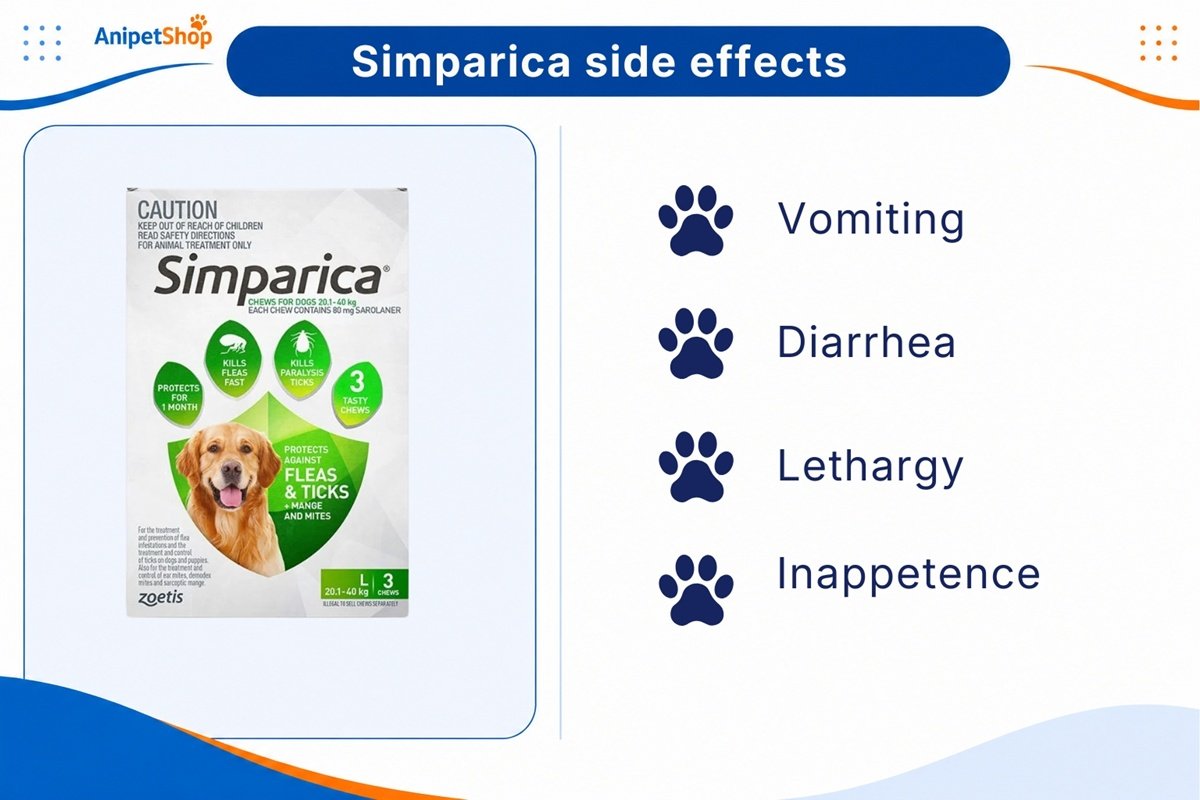
The controlled U.S. field study recorded vomiting, diarrhea, lethargy, and inappetence among dogs receiving Simparica. The study included 479 dogs, with 315 treated with Simparica and 164 receiving an active control once monthly for three treatments.
The table below shows the adverse reactions reported during the 90-day study:
| Adverse Reaction | Simparica (n=315) | Active Control (n=164) |
| Vomiting |
0.95% |
5.50% |
| Diarrhea |
0.63% |
1.20% |
| Lethargy |
0.32% |
1.20% |
| Inappetence |
0% |
1.80% |
These field-study results should be interpreted in context. The rates above were observed during this specific controlled study and do not mean that every dog receiving Simparica will experience these reactions.
Which side effects of Simparica are considered serious?
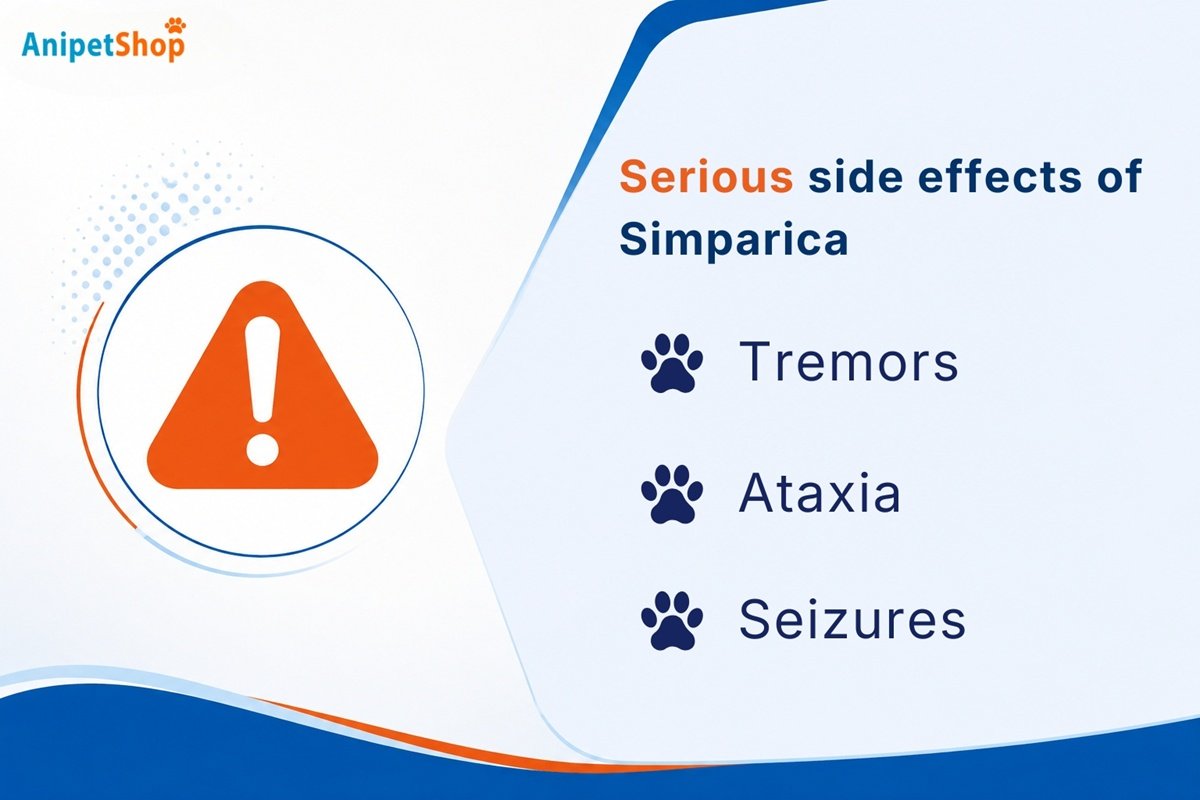
The most important serious reactions associated with Simparica are neurological. Because sarolaner belongs to the isoxazoline class, Simparica’s label warns about neurological adverse reactions including tremors, ataxia, and seizures. Seizures have been reported in dogs receiving isoxazoline-class drugs even when they had no previous seizure history.
Here are some neurological signs to watch for:
- Tremors: Your dog may develop involuntary shaking or trembling.
- Loss of coordination (ataxia): Your dog may appear unsteady or have difficulty coordinating normal movements.
- Seizures: Your dog may experience abnormal seizure activity, which requires prompt veterinary attention.
The Simparica label also reports abnormal neurological signs including decreased conscious proprioception, decreased or absent menace response, ataxia, tremors, and seizures in dogs receiving Simparica.
These reactions are clinically more concerning than mild digestive signs and should not be ignored.
What rare side effects should dog owners be aware of?
Post-approval reports for Simparica have included several additional adverse events. These reports list vomiting, tremors, lethargy, seizures, diarrhea with or without blood, anorexia, ataxia, pruritus, hypersalivation, and hyperactivity in decreasing order of reporting frequency.
However, these post-approval reports cannot be used to determine how often each reaction occurs. The label specifically notes that not all adverse events are reported to the FDA and that it is not always possible to reliably estimate frequency or establish a causal relationship between the product and an event.
Signs reported after approval include:
- Pruritus: Your dog may scratch or show signs of itching.
- Hypersalivation: Excessive drooling may occur.
- Diarrhea: Diarrhea has been reported both with and without blood.
- Anorexia: Some dogs have been reported to lose their appetite.
- Hyperactivity: Increased or unusual activity has also been reported.
Because these events come from voluntary post-approval reporting, they should be viewed as reported adverse events rather than precise estimates of risk.

Which dogs may have a higher risk of side effects?
Dogs with a history of seizures or neurological disorders may need extra caution when using Simparica. The label specifically recommends using Simparica with caution in these dogs because sarolaner belongs to the isoxazoline class, which has been associated with neurological adverse reactions.
Dogs that may need extra attention include:
- Dogs with a history of seizures: Simparica should be used with caution because seizures have been reported with isoxazoline-class drugs, including in dogs without a previous seizure history.
- Dogs with neurological disorders: Dogs with existing neurological problems may require additional veterinary consideration before treatment.
- Breeding, pregnant, or lactating dogs: The safe use of Simparica has not been evaluated in these dogs.
Simparica is also not labeled for dogs younger than 6 months. The product is indicated for dogs 6 months of age or older and weighing at least 2.8 lb.
Having one of these factors does not automatically mean a dog cannot receive Simparica. However, the dog’s age, health history, and reproductive status should be considered before treatment.
How can you avoid side effects when giving your dog Simparica?
The best way to use Simparica safely is to follow the labeled dosing schedule and make sure your dog receives the complete dose. Simparica is given orally once a month at a minimum dosage of 0.91 mg/lb (2 mg/kg).
Keep these points in mind:
- Check your dog’s age and weight: Simparica is indicated for dogs 6 months of age or older weighing at least 2.8 lb (1.3 kg).
- Choose the correct dose: Simparica is available in six strengths based on body weight: 5, 10, 20, 40, 80, and 120 mg. Dogs weighing more than 132.1 lb require an appropriate combination of tablets.
- Give Simparica once a month: The label recommends administering Simparica at monthly intervals.
- Make sure your dog consumes the complete dose: Simparica can be offered by hand, given in food, or administered like another tablet medication. Observe your dog for a few minutes to make sure the dose was not lost or refused.
- Tell your veterinarian about seizure or neurological history: Extra caution is recommended for dogs with a history of seizures or neurological disorders.
- Follow the monthly schedule: If a dose is missed, administer Simparica and resume the monthly dosing schedule.
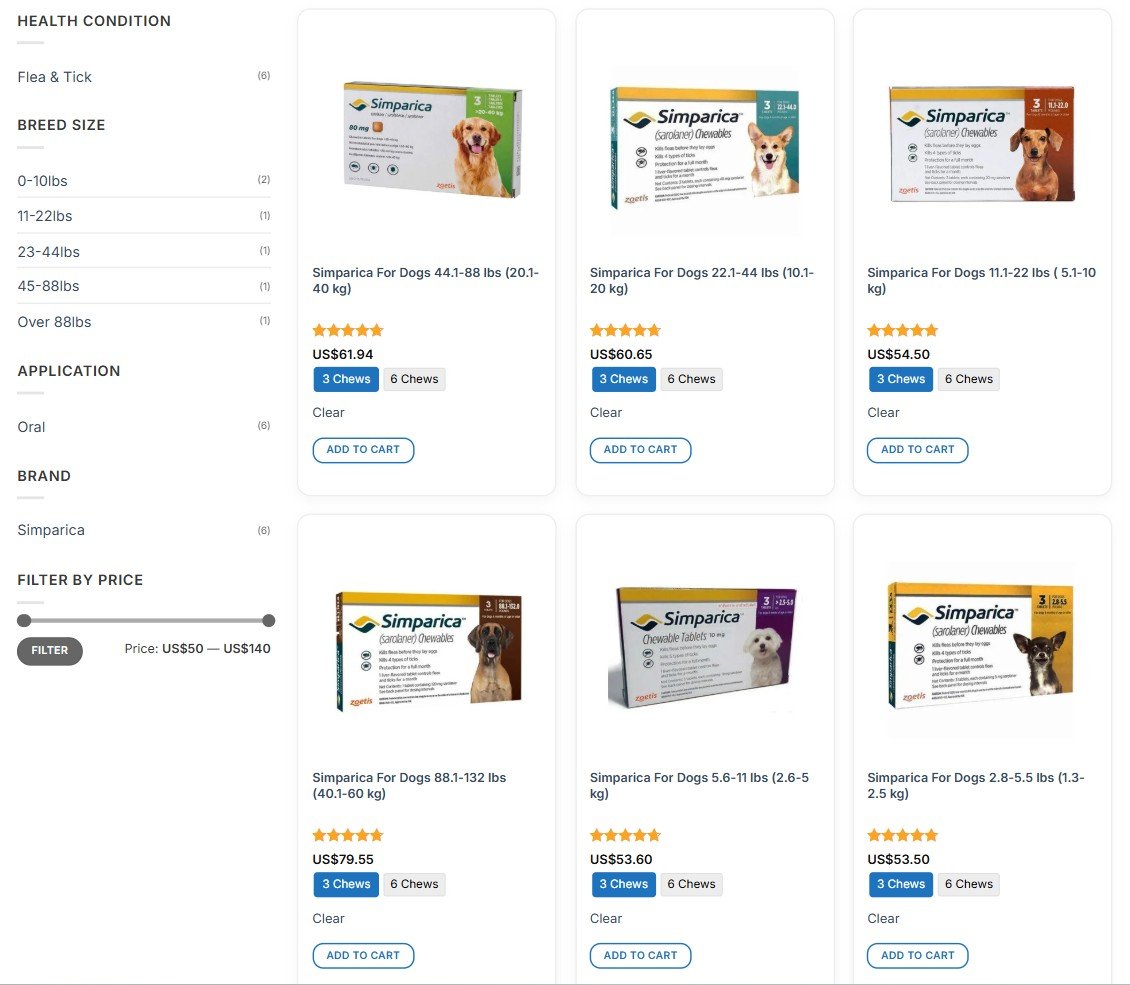
Simparica is available in different strengths based on your dog’s body weight. Choosing the correct weight range helps ensure your dog receives the appropriate monthly dose. You can check the available Simparica options below:
- Simparica For Dogs 2.8–5.5 lbs (1.3–2.5 kg)
- Simparica For Dogs 5.6–11 lbs (2.6–5 kg)
- Simparica For Dogs 11.1–22 lbs (5.1–10 kg)
- Simparica For Dogs 22.1–44 lbs (10.1–20 kg)
- Simparica For Dogs 44.1–88 lbs (20.1–40 kg)
- Simparica For Dogs 88.1–132 lbs (40.1–60 kg)
What should you do if your dog experiences a reaction?
If your dog develops an unusual symptom after receiving Simparica, pay attention to the type and severity of the reaction. Mild digestive signs were recorded in the controlled field study, while neurological reactions have also been reported and require greater concern.
- Monitor mild symptoms: Watch for vomiting, diarrhea, lethargy, or changes in appetite.
- Contact your veterinarian: Seek veterinary advice if symptoms persist, worsen, or are accompanied by other unusual signs.
- Watch for neurological signs: Look for tremors, loss of coordination, abnormal awareness, or seizures.
- Watch for additional reported reactions: Itching, excessive drooling, bloody or non-bloody diarrhea, anorexia, and hyperactivity have been reported after approval.
- Seek urgent veterinary care: Seizures or significant neurological abnormalities should receive prompt veterinary attention.
- Discuss the next dose: If your dog experiences a suspected adverse reaction, consult your veterinarian before continuing treatment.
When should you contact your veterinarian right away?
Contact your veterinarian promptly if your dog develops severe, persistent, or neurological symptoms after receiving Simparica.
- Seizures: Seizures have been reported with Simparica and other isoxazoline-class drugs, including in dogs without a previous seizure history.
- Tremors or trouble coordinating movement: These are among the neurological signs reported with Simparica.
- Significant changes in awareness or coordination: Decreased conscious proprioception and decreased or absent menace response have been reported.
- Persistent vomiting or diarrhea: These reactions were recorded in the field study and should be discussed with your veterinarian if they continue or become severe.
- Blood in diarrhea: Bloody diarrhea has been reported in post-approval adverse-event reports.
- Multiple symptoms at the same time: A combination of neurological, digestive, or other unusual signs deserves prompt veterinary evaluation.
A single mild digestive symptom does not necessarily indicate a serious reaction, but any symptom that persists, worsens, or occurs alongside neurological abnormalities warrants veterinary attention.
FAQs about Simparica side effects in dogs
Are Simparica side effects common in dogs?
Most dogs in the controlled U.S. field study did not have a recorded adverse reaction. Among the 315 dogs treated with Simparica, vomiting occurred in 0.95%, diarrhea in 0.63%, lethargy in 0.32%, and inappetence in 0%.
Can Simparica cause seizures in dogs with no seizure history?
Yes. The Simparica label states that seizures have been reported in dogs receiving isoxazoline-class drugs even when they had no history of seizures. Simparica should be used with caution in dogs with a history of seizures or neurological disorders.
Is Simparica safe for dogs with seizures?
The label recommends caution when using Simparica in dogs with a history of seizures or neurological disorders. This does not establish that every dog with a seizure history will experience a reaction, but veterinary guidance is appropriate before treatment.
Is Simparica safe for pregnant or breeding dogs?
The safe use of Simparica has not been evaluated in breeding, pregnant, or lactating dogs. Owners of dogs in these categories should discuss treatment with their veterinarian.
What should I do if my dog vomits after taking Simparica?
Vomiting was recorded in 0.95% of Simparica-treated dogs in the controlled U.S. field study. If your dog vomits after treatment, monitor the dog and contact your veterinarian if vomiting persists, becomes severe, or occurs with other concerning symptoms.
Can Simparica cause diarrhea?
Yes. Diarrhea was reported in the controlled U.S. field study and has also appeared in post-approval adverse-event reports. Post-approval reports included diarrhea both with and without blood, although the frequency of these events cannot be reliably estimated from those reports.
Does Simparica need to be given with food?
No specific food requirement is stated in the label. Simparica can be offered by hand, given in food, or administered like another tablet medication. The important point is to make sure the dog consumes the complete dose.
Simparica is generally well tolerated in the controlled U.S. field study, where the recorded adverse reactions in treated dogs included vomiting, diarrhea, lethargy, and inappetence. However, neurological reactions such as tremors, ataxia, and seizures are an important safety consideration because sarolaner belongs to the isoxazoline class. Dogs with seizure histories or neurological disorders require extra caution, while the safe use of Simparica has not been evaluated in breeding, pregnant, or lactating dogs. Correct weight-based dosing, complete dose administration, and prompt veterinary attention for serious reactions are the key practical steps for safer use.

Anipet Team
Anipet Team is dedicated to sharing reliable information about pet health, veterinary care, and animal wellbeing. Our content is researched and reviewed by veterinary professionals to provide pet owners with trusted, practical information for caring for their pets.