
Bravecto Side Effects in Dogs: Chews vs. Topical Solution
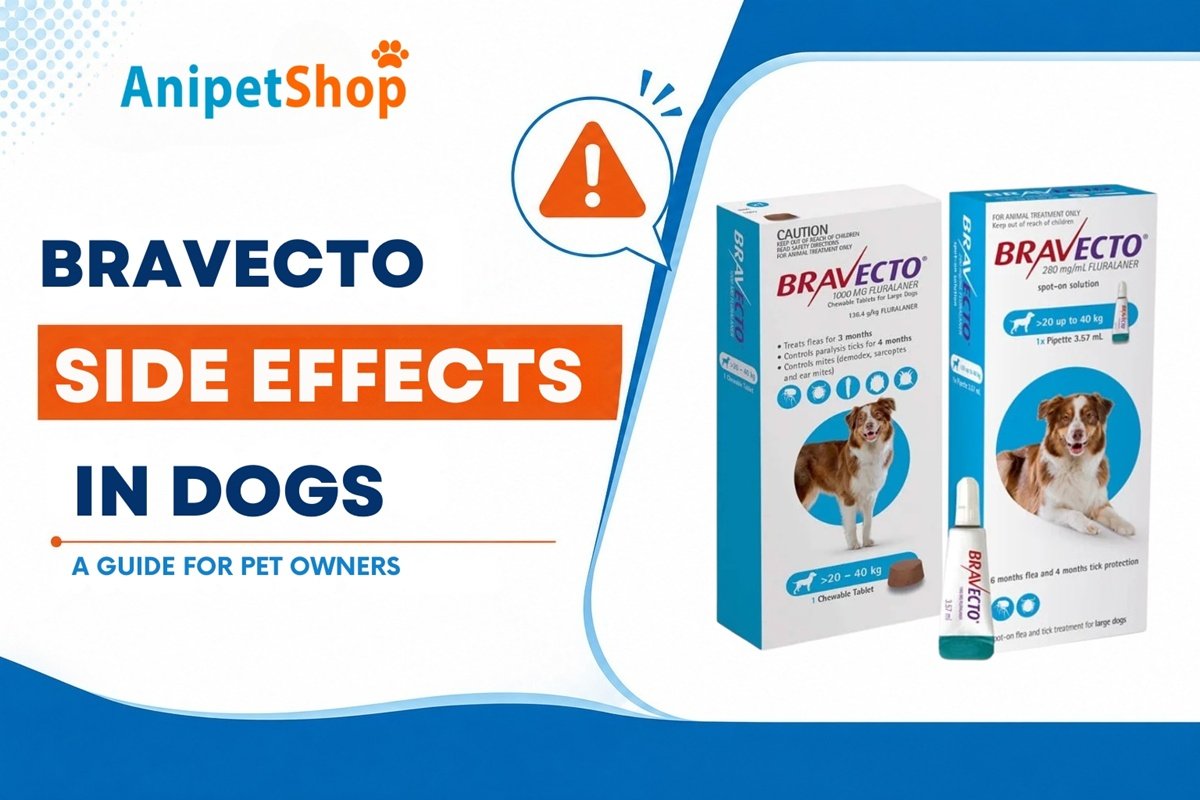
Bravecto is available for dogs as an oral Chew and a Topical Solution, and both contain the active ingredient fluralaner. The two formulations deliver the drug differently, so their reported adverse reactions are not identical. In the U.S. field study for Bravecto Chews, vomiting occurred in 7.1% of treated dogs, followed by decreased appetite at 6.7%, lethargy at 5.4%, and diarrhea at 4.9%.
For Bravecto Topical, vomiting was reported in 6.3% of treated dogs, while alopecia occurred in 4.1%, diarrhea and lethargy in 2.7% each, and decreased appetite in 1.4%. Application site reactions and neurological events have also been reported.
This guide explains what side effects have been reported with each formulation, which reactions are more serious, which dogs may need extra caution, and what to do if your dog develops a reaction.
What Side Effects Can Bravecto Cause in Dogs?
The side effects reported with Bravecto vary somewhat between the Chews and Topical Solution. Gastrointestinal reactions were among the most frequently reported reactions with the Chews, while the Topical Solution also had local skin and application site reactions.
The table below summarizes the main reactions reported in the product labels and clinical studies:
|
Adverse Reaction |
Bravecto Chews |
Bravecto Topical |
| Vomiting |
7.1% |
6.3% |
| Decreased appetite |
6.7% |
1.4% |
| Diarrhea |
4.9% |
2.7% |
| Lethargy |
5.4% |
2.7% |
| Alopecia |
Not reported in field study |
4.1% |
| Moist dermatitis/rash |
Not reported in field study |
0.9% |
| Polydipsia |
1.8% |
Not reported in field study |
| Flatulence |
1.3% |
Not reported in field study |
The Chew percentages come from a 182-day U.S. field study involving 224 treated dogs. The Topical percentages come from a 105-day U.S. field study involving 221 treated dogs. Because the studies used different formulations and study designs, these percentages should not be treated as a direct head-to-head safety comparison.
Which Side Effects of Bravecto Are Considered Serious?
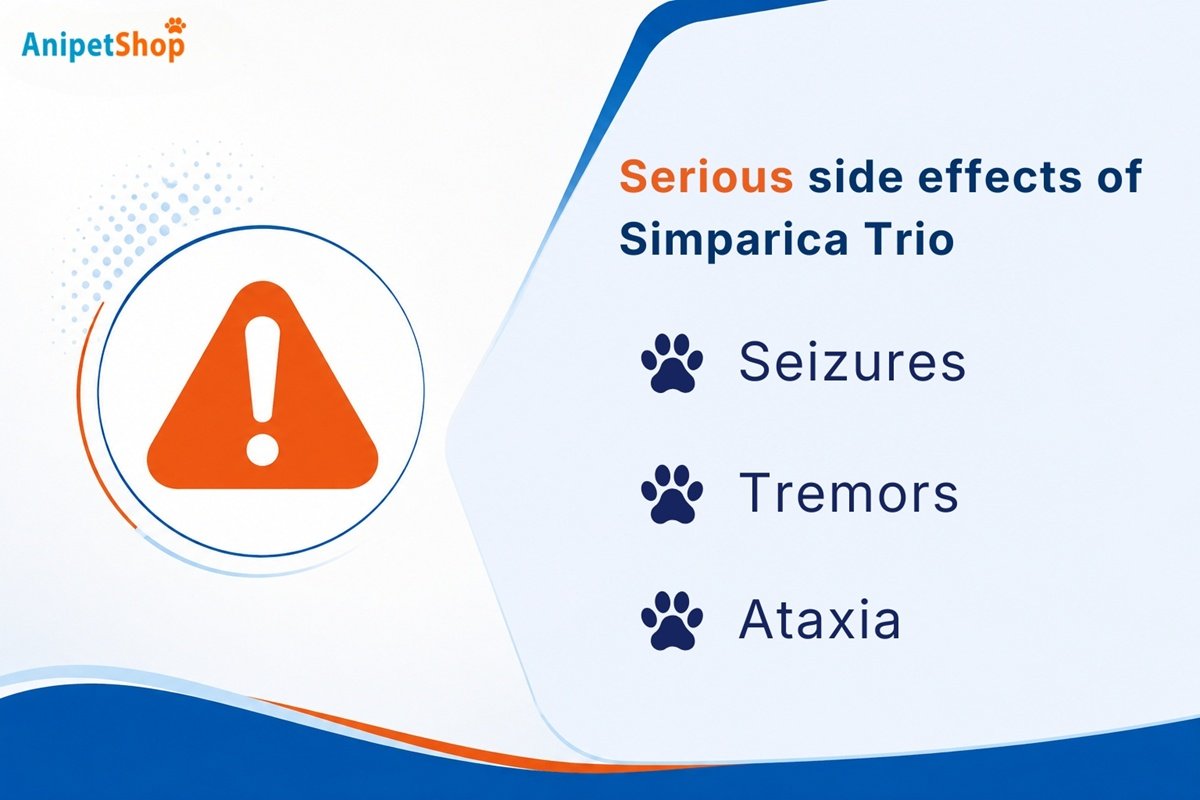
Neurological reactions are among the most important potential adverse effects to recognize with Bravecto. Fluralaner belongs to the isoxazoline class, which has been associated with tremors, ataxia, and seizures. The labels state that seizures have been reported even in dogs without a previous history of seizures and recommend caution in dogs with a history of seizures or neurological disorders.
Bravecto Chews
Neurological reactions reported after fluralaner use include seizures, tremors, and ataxia. In the Chews field study, no serious adverse reactions were reported. However, post-approval reports have included seizures, tremors, and ataxia.
The label also describes one dog in a reproductive safety study that experienced a seizure 46 days after its third treatment. This type of report does not establish that every seizure was caused by Bravecto, but it reinforces the need to take neurological signs seriously.
Bravecto Topical
The Topical Solution carries the same isoxazoline neurological warning. In its U.S. field study, two dogs with no previous seizure history experienced seizures after receiving Bravecto. One dog experienced two seizures about 18 days after the first dose, while another had a seizure 76 days after the first dose.
One additional dog was observed to be off balance for about 30 minutes five days after the first dose, with no similar observation after its second dose.
These neurological reactions are uncommon compared with the more frequently reported reactions, but tremors, difficulty walking, loss of coordination, or seizures should not be ignored.
What Rare Side Effects Should Dog Owners Be Aware Of?
Rare or less frequently reported reactions can involve the skin, digestive system, behavior, or nervous system. Post-approval reports are useful for identifying potential reactions, but they cannot reliably establish how often a reaction occurs or whether the product caused it in every case.
Bravecto Chews
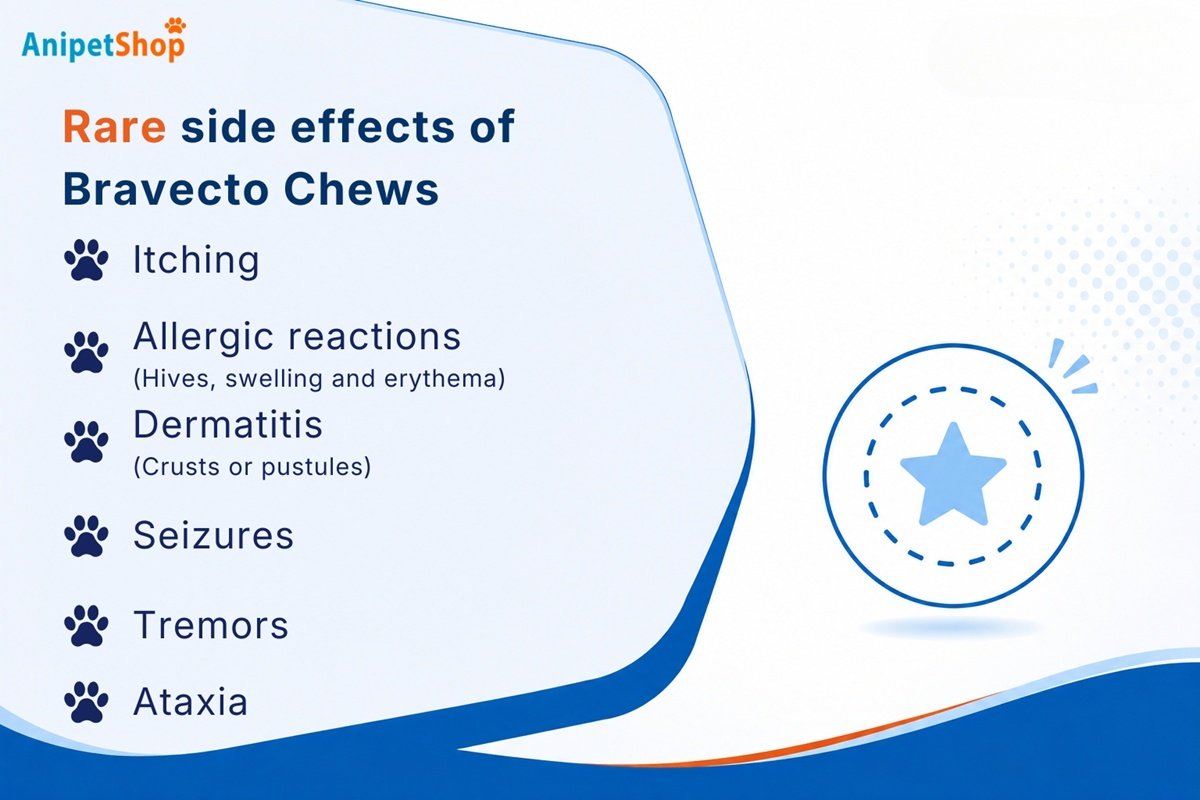
Post-approval reports for fluralaner in dogs include itching, allergic reactions such as hives, swelling and erythema, dermatitis with crusts or pustules, seizures, tremors, and ataxia.
A laboratory study also reported one dog that developed swelling and redness of the upper lips within one hour of receiving Bravecto. The swelling improved during the day and had resolved by the following morning without medical treatment.
Bravecto Topical
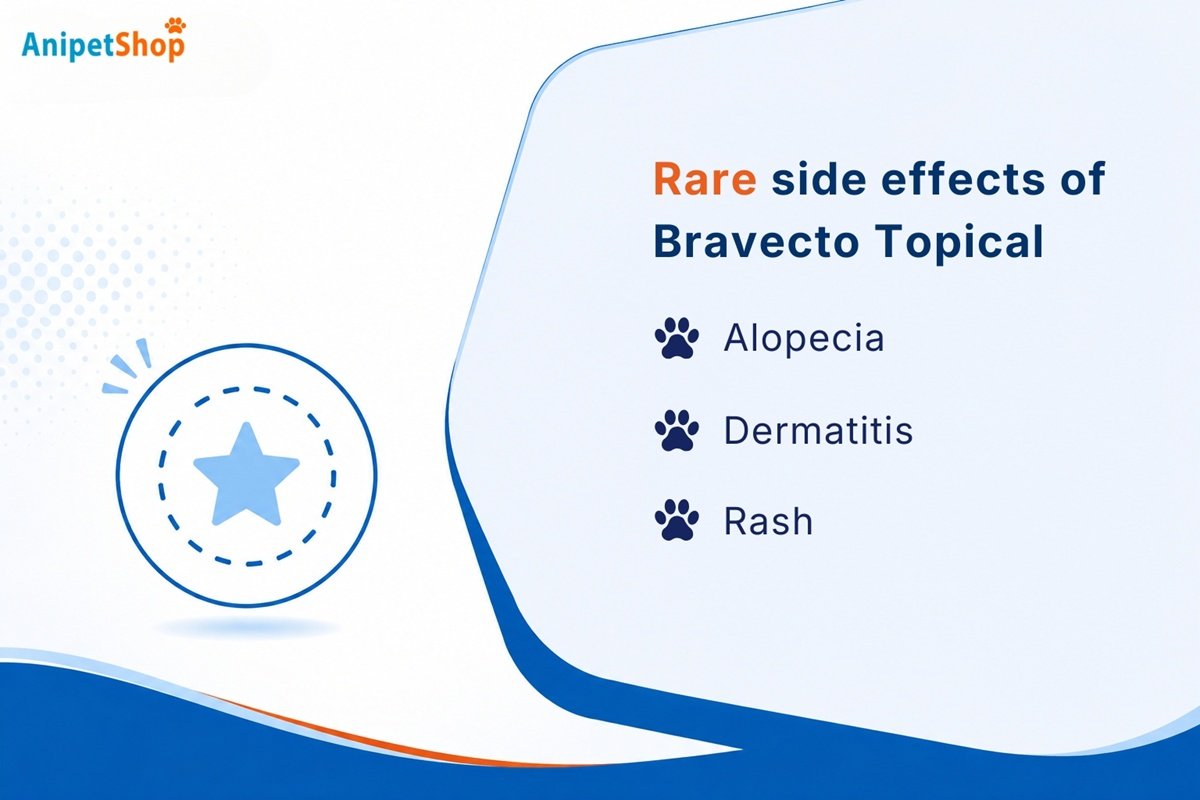
The Topical Solution has additional reactions related to the treatment site. In the field study, alopecia occurred in 4.1% of treated dogs, while moist dermatitis or rash occurred in 0.9%.
In laboratory dose confirmation studies, one dog developed mild to moderate redness, flaking, crusts or scabs, and hair loss at the treatment site from Day 1 through Day 14. Another dog developed generalized redness one day after treatment that was considered a possible allergic reaction and resolved on its own.
Post-approval reports have also included application site disorders such as alopecia, itching, and erythema, along with generalized itching and behavioral changes.
Which Dogs May Have a Higher Risk of Side Effects?
Certain dogs may need additional veterinary guidance before receiving Bravecto. A risk factor does not automatically mean the product cannot be used, but it may change how your veterinarian approaches treatment.
Bravecto Chews
Dogs that may need extra caution include:
- Dogs with a history of seizures or neurological disorders: The label recommends using Bravecto with caution because isoxazoline products have been associated with tremors, ataxia, and seizures.
- Breeding females: Adverse events have been reported following use of Bravecto in breeding females. Post-approval reports include birth defects, stillbirth, and abortion.
- Dogs outside the labeled age or weight range: Bravecto is labeled for dogs and puppies 6 months of age and older weighing at least 4.4 lb (2 kg).
Bravecto Topical
The Topical Solution also requires caution in dogs with a history of seizures or neurological disorders because of the isoxazoline class warning.
Bravecto Topical is labeled for dogs and puppies 6 months of age and older weighing at least 4.4 lb (2 kg). The label also states that its safety in breeding, pregnant, and lactating dogs was evaluated using the oral formulation, so reproductive safety information should not simply be assumed to come from a separate topical reproductive study.
How Can You Use Bravecto Safely?
The safest approach is to use the formulation according to its current product label and choose the correct dose for your dog’s body weight.
Bravecto Chews
- Check your dog’s weight: Bravecto Chews are available in different strengths for dogs from 4.4 to 123 lb.
- Choose the correct strength: Each chew provides a minimum dose of 11.4 mg/lb (25 mg/kg) of body weight.
- Give the chew with food: The label states that Bravecto should be administered with food because fluralaner has reduced bioavailability when given to a fasted dog.
- Make sure your dog receives the full dose: If your dog refuses or only partially consumes the chew, contact your veterinarian for guidance rather than guessing how much medication was received.
- Mention neurological history: Tell your veterinarian if your dog has experienced seizures or has another neurological disorder.
Bravecto Topical
- Choose the correct tube for your dog’s weight: The labeled weight ranges are 4.4–9.9 lb, >9.9–22 lb, >22–44 lb, >44–88 lb, and >88–123 lb.
- Apply directly to the skin: Part the fur and place the tube tip against the skin between the shoulder blades, then apply the solution in one or more spots along the dog’s back.
- Avoid applying too much solution in one spot: The label notes that an excessive amount in one location may cause the product to run or drip off.
- Follow handling precautions: Do not allow children to contact the application site for 2 hours after application, and wash hands and contacted skin after handling the product.
- Tell your veterinarian about neurological problems: Dogs with a history of seizures or neurological disorders should receive extra consideration before treatment.
What Should You Do If Your Dog Experiences a Reaction?
If your dog develops symptoms after Bravecto, pay attention to the type, severity, and progression of the reaction. Not every reported adverse event requires emergency treatment, but persistent, worsening, or serious signs deserve veterinary attention.
After Bravecto Chews
For mild vomiting, diarrhea, decreased appetite, or lethargy, monitor your dog closely and make sure fresh water is available. If the symptoms persist, become more severe, or occur together with other concerning signs, contact your veterinarian.
If your dog develops tremors, loss of coordination, or a seizure, seek veterinary advice promptly. Do not assume that a neurological reaction will resolve on its own.
After Bravecto Topical
For a mild, localized change at the application site, such as temporary redness, itching, or hair changes, monitor the area closely. The Topical Solution label documents treatment-site redness, flaking, crusting, scabbing, and hair loss in laboratory studies.
Contact your veterinarian if the skin reaction becomes severe, spreads, persists, or is accompanied by systemic symptoms.
For either formulation, seizures, tremors, severe loss of coordination, collapse, facial swelling, or breathing difficulty require prompt veterinary attention.
When Should You Contact Your Veterinarian Right Away?
Contact your veterinarian promptly if your dog develops severe, persistent, worsening, or neurological symptoms after Bravecto.
- Seizures: Seizures have been reported with fluralaner and other isoxazoline products, including in dogs without a previous seizure history.
- Tremors or loss of coordination: Ongoing shaking, wobbling, or difficulty walking should be evaluated.
- Facial swelling or hives: These may indicate an allergic reaction.
- Difficulty breathing or collapse: These are emergency signs.
- Persistent vomiting or diarrhea: Contact your veterinarian if digestive symptoms continue or become severe.
- Severe skin reactions: With Bravecto Topical, seek advice for rapidly worsening redness, swelling, itching, or other significant changes at the application site.
- Other unusual neurological or behavioral changes: Post-approval reports for Topical Solution include behavioral changes, seizures, tremors, and ataxia.
If your dog experiences a reaction, consult your veterinarian before giving another dose.
How Long Do Bravecto Side Effects Last?
There is no single duration that applies to every Bravecto side effect. The available product labels report individual reactions and study observations, but they do not establish one standard time frame for all adverse reactions.
Bravecto Chews
The Chews label does not give a typical duration for vomiting, diarrhea, appetite changes, or lethargy. In one laboratory study, a dog developed swelling and redness of the upper lips within one hour of dosing, and the reaction resolved by the following morning without treatment.
This does not mean every reaction will resolve that quickly. Persistent or worsening symptoms should be discussed with a veterinarian.
Bravecto Topical
The duration of topical reactions can vary. In laboratory studies, one dog developed treatment-site redness, flaking, crusting, scabbing, and hair loss from Day 1 through Day 14 after application. Another dog developed generalized redness one day after treatment that was self-limiting.
These observations describe individual dogs in controlled studies and should not be treated as a guaranteed timeline for every dog.
When Is a Side Effect Lasting Too Long?
A reaction deserves more attention when it is persistent, worsening, severe, or accompanied by additional symptoms. Neurological signs, facial swelling, breathing difficulty, or collapse should be addressed promptly rather than waiting for them to resolve.
Bravecto Chews vs. Topical: Which Has More Side Effects?
It is not accurate to say that Bravecto Chews or Topical Solution is universally safer based only on the reported percentages. The two formulations have different routes of administration, study populations, study durations, and adverse reaction profiles.
|
Bravecto Chews |
Bravecto Topical |
|
| Route |
Oral |
Topical |
| Most frequently reported field-study reaction |
Vomiting, 7.1% |
Vomiting, 6.3% |
| Other notable reactions |
Decreased appetite, diarrhea, lethargy |
Alopecia, diarrhea, lethargy |
| Application-site reactions |
Not applicable |
Reported |
| Neurological reactions |
Reported |
Reported |
| Food requirement |
Give with food |
No oral food requirement |
| Main practical consideration |
Correct oral dose and administration |
Correct application and monitoring the treatment site |
The Chews field study reported vomiting, decreased appetite, diarrhea, and lethargy most frequently. The Topical field study reported vomiting, alopecia, diarrhea, lethargy, decreased appetite, and moist dermatitis/rash.
The two formulations therefore have different reported reaction profiles, but the available studies should not be used to declare one formulation safer for every dog.
How to Help Prevent Bravecto Side Effects
Using Bravecto correctly can help reduce the risk of problems related to incorrect dosing or administration. Choose the Bravecto product and strength that matches your dog’s current body weight, and follow the instructions for the specific formulation.
If you are choosing between formulations, you can shop Bravecto products and compare the available Chews and Topical Solutions below.
| Product | Price for 1 Dose | Price for 2 Doses | Pack Color |
| Bravecto Chews | |||
| Bravecto Chews for Dogs 4.4–9.9 Lbs (2–4.5 kg) | $57.70 | $110.60 | Yellow |
| Bravecto Chews for Dogs 9.9–22 Lbs (4.5–10 kg) | $58.90 | $114.60 | Orange |
| Bravecto Chews for Dogs 22–44 Lbs (10–20 kg) | $62.50 | $119.50 | Green |
| Bravecto Chews for dogs 88 – 123 Lbs (40 – 56 kg) | $68.95 | $124.53 | Blue |
| Bravecto Chews for Dogs 88–123 Lbs (40–56 kg) | $73.50 | $137.67 | Pink |
| Bravecto Topical Solution | |||
| Bravecto Topical Solution for Dogs 4.4–9.9 Lbs (2–4.5 kg) | $62.84 | $120.78 | Yellow |
| Bravecto Topical Solution for Dogs 9.9–22 Lbs (4.5–10 kg) | $63.45 | $108.00 | Orange |
| Bravecto Topical Solution for Dogs 22–44 Lbs (10–20 kg) | $65.77 | $127.54 | Green |
| Bravecto Topical Solution for Dogs 44–88 Lbs (20–40 kg) | $70.77 | $137.53 | Blue |
| Bravecto Topical Solution for Dogs 88–123 Lbs (40–56 kg) | $71.95 | $139.22 | Pink |
For Bravecto Chews, make sure your dog receives the strength appropriate for their weight and give the chew with food, as recommended on the label. For Bravecto Topical, select the correct weight range and apply the solution directly to the skin as instructed rather than placing it on the fur.
Frequently Asked Questions About Bravecto Side Effects
Are Bravecto side effects common in dogs?
Most adverse reactions reported in the Bravecto field studies were not serious. With Bravecto Chews, vomiting was the most frequently reported reaction at 7.1%, followed by decreased appetite at 6.7%, lethargy at 5.4%, and diarrhea at 4.9%.
With Bravecto Topical, vomiting occurred in 6.3% of treated dogs, followed by alopecia at 4.1%.
Can Bravecto cause seizures in dogs?
Yes. Seizures have been reported with fluralaner and are included in the isoxazoline class warning. The labels state that seizures have occurred even in dogs without a previous seizure history.
Can Bravecto cause vomiting?
Yes. Vomiting was the most frequently reported adverse reaction in the U.S. field study for Bravecto Chews, occurring in 7.1% of treated dogs. It was also the most frequently reported reaction in the Bravecto Topical field study, occurring in 6.3% of treated dogs.
Can Bravecto Topical cause skin irritation?
Yes. Skin and application-site reactions have been reported with Bravecto Topical. These include alopecia, pruritus, erythema, moist dermatitis, rash, flaking, and crusting or scabbing.
How long do Bravecto side effects last?
There is no single duration for all Bravecto side effects. In one laboratory study of the Topical Solution, treatment-site reactions were observed from Day 1 through Day 14. Individual reactions can vary, so persistent or worsening symptoms should be discussed with a veterinarian.
Is Bravecto Chew safer than Bravecto Topical?
The available field studies do not support a simple conclusion that one formulation is safer overall. They were conducted separately and reported different adverse reaction profiles. Both formulations contain fluralaner and carry the isoxazoline class warning for neurological reactions.
What should I do if my dog vomits after Bravecto?
Monitor your dog if the vomiting is mild and isolated. Make sure fresh water is available and watch for additional symptoms. Contact your veterinarian if vomiting persists, becomes severe, or occurs with diarrhea, marked lethargy, loss of appetite, neurological signs, or other concerning symptoms.
Can dogs with a history of seizures take Bravecto?
Dogs with a history of seizures or neurological disorders require extra caution. Both Bravecto labels warn that fluralaner is an isoxazoline and recommend caution in dogs with a history of seizures or neurological disorders. Discuss the dog’s medical history with a veterinarian before treatment.
Should I give another Bravecto dose after a reaction?
Do not automatically give another dose after a suspected adverse reaction. Contact your veterinarian first, especially if the reaction involved seizures, tremors, loss of coordination, severe gastrointestinal symptoms, facial swelling, or another serious sign.
Bravecto Chews and Bravecto Topical both contain fluralaner, but their reported adverse reaction profiles are different. Chews most commonly reported vomiting, decreased appetite, lethargy, and diarrhea, while Topical Solution also has application-site reactions such as alopecia, itching, erythema, and rash.

Anipet Team
Anipet Team is dedicated to sharing reliable information about pet health, veterinary care, and animal wellbeing. Our content is researched and reviewed by veterinary professionals to provide pet owners with trusted, practical information for caring for their pets.