
Simparica Trio Side Effects in Dogs – A Guide for Pet Owners
Vomiting occurred in 14.3% of dogs and diarrhea in 13.2% in the pivotal U.S. field study of Simparica Trio. Lethargy was reported in 8.5% of treated dogs, followed by anorexia at 5.1%. These were the most frequently reported adverse reactions in a study of 272 dogs treated monthly for 11 treatments over 330 days.
This guide explains the most common side effects, serious and less common reactions, which dogs may need extra caution, and when to contact your veterinarian.

What side effects can Simparica Trio cause in dogs?
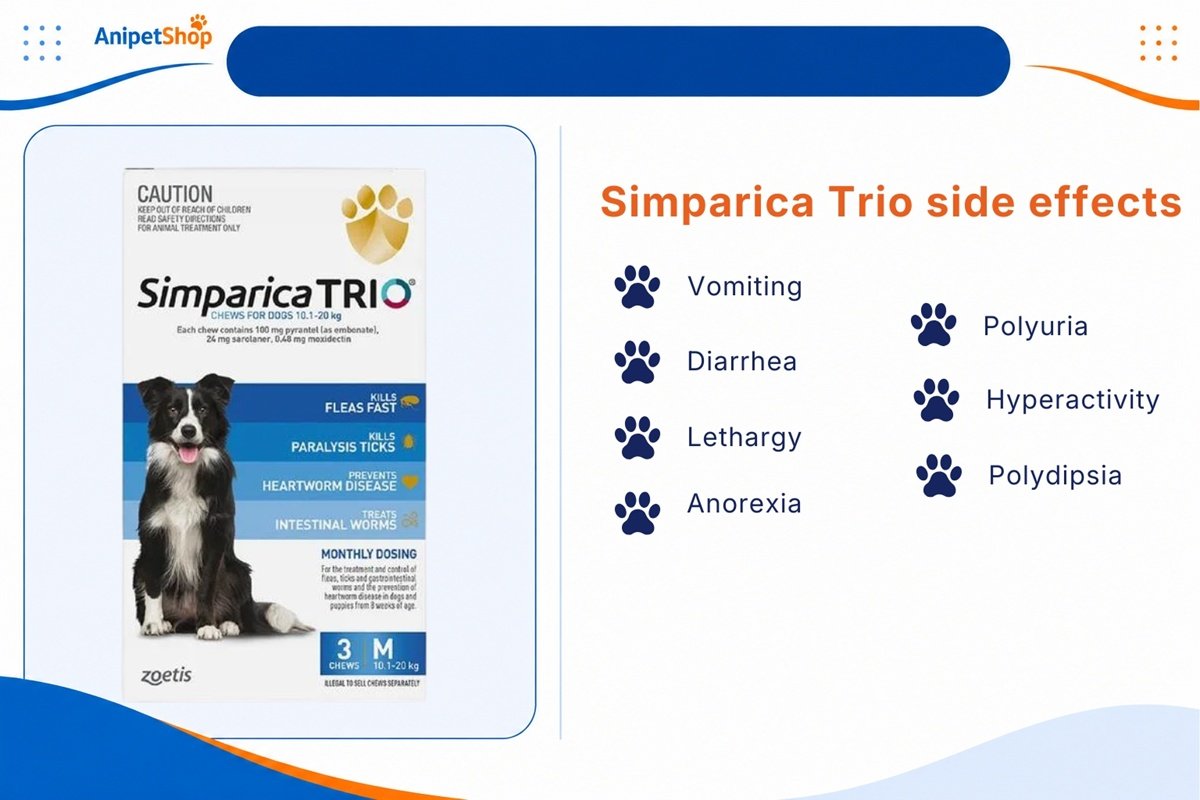
The most frequently reported adverse reactions with Simparica Trio are vomiting, diarrhea, lethargy, anorexia, increased urination, hyperactivity, and increased thirst.
In the main field safety and effectiveness study, 272 dogs received Simparica Trio once monthly for 11 treatments. The table below shows the adverse reactions reported in the treated group.
|
Adverse Reaction |
% of Treated Dogs (n=272) |
| Vomiting |
14.3% |
| Diarrhea |
13.2% |
| Lethargy |
8.5% |
| Anorexia |
5.1% |
| Polyuria (increased urination) |
3.7% |
| Hyperactivity |
2.2% |
| Polydipsia (increased thirst) |
2.2% |
Vomiting and diarrhea were the two most frequently reported reactions. In a separate field study involving 278 dogs with fleas, diarrhea was reported in treated dogs. In another study involving 120 dogs with roundworms, reported reactions included diarrhea and vomiting.
These study results show that gastrointestinal signs are among the main reported adverse reactions associated with Simparica Trio. They do not mean that every dog will experience these reactions.
Which side effects of Simparica Trio are considered serious?
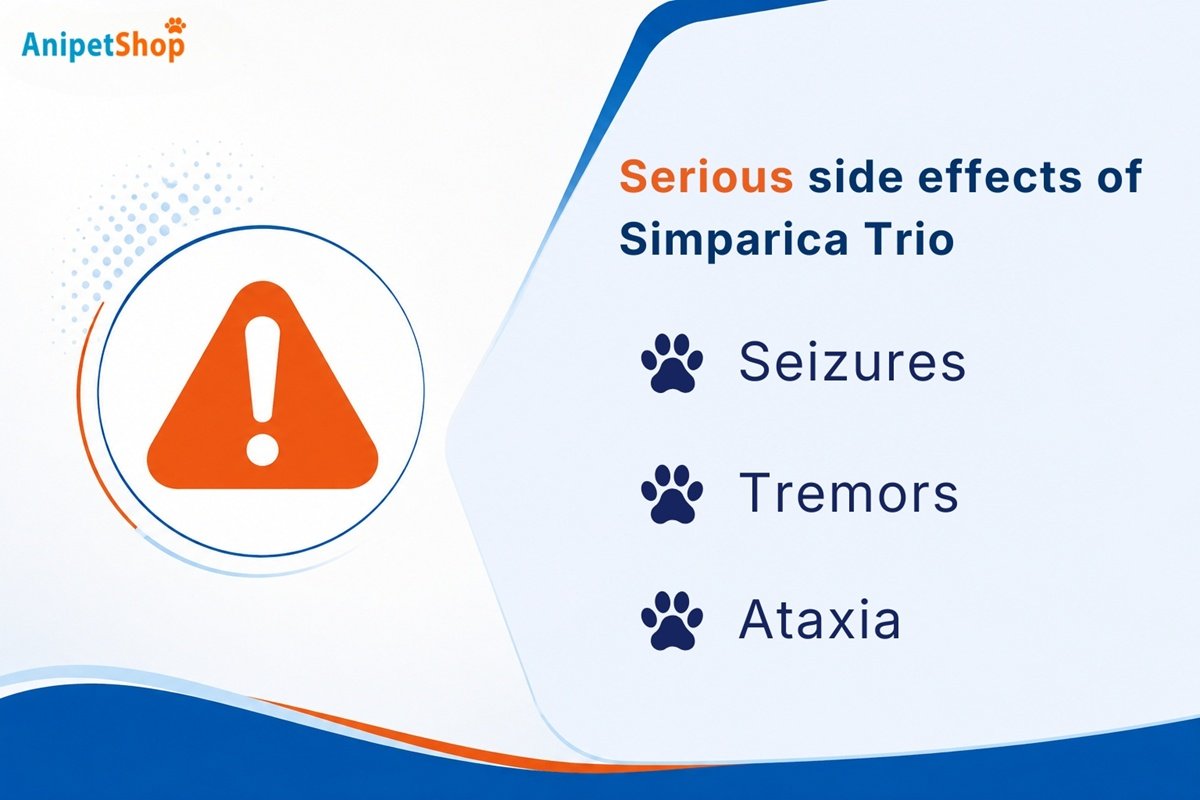
Serious reactions may include neurologic signs such as tremors, ataxia, and seizures.
Simparica Trio contains sarolaner, an isoxazoline. The product label states that this drug class has been associated with neurologic adverse reactions, including tremors, ataxia, and seizures. Seizures have been reported in dogs receiving isoxazoline products even when they had no previous history of seizures.
Signs that require particular attention include:
- Seizures: Your dog may suddenly shake, stiffen, fall, lose awareness, or show unusual body movements.
- Tremors: Your dog may develop repeated or uncontrolled shaking or muscle movements.
- Ataxia: Your dog may appear unsteady, stagger, wobble, or have difficulty walking normally.
These neurologic reactions are not among the most frequent reactions reported in the main field study. However, they are clinically important because the label specifically warns about this potential risk.
One well-controlled laboratory study reported a seizure in one dog 16 days after administration of Simparica Trio. This single observation should not be interpreted as a seizure rate for dogs using the product.
What rare or less common side effects should dog owners be aware of?
Post-approval reports have included vomiting, diarrhea with or without blood, seizures, lethargy, anorexia, muscle tremors, ataxia, nonspecific behavioral changes, and pruritus.
These reports provide important safety information, but they cannot be used to determine how frequently these events occur. The Simparica Trio label states that not all adverse events are reported to FDA and that it is not always possible to reliably estimate their frequency or establish whether the product caused the event.
Some of the reported reactions include:
- Diarrhea with or without blood: Bloody diarrhea has been included among post-approval reports.
- Muscle tremors: Uncontrolled or unusual muscle movements have been reported.
- Ataxia: Loss of coordination or difficulty walking has been reported.
- Behavioral changes: Nonspecific behavioral changes have been reported after the product was marketed.
- Pruritus: Increased itching has also been reported.
Because these events come from spontaneous post-approval reporting, they should not be presented as established percentages or proof that Simparica Trio caused each individual event.

Which dogs may have a higher risk of side effects?
Dogs with a history of seizures or neurologic disorders may require extra caution when using Simparica Trio. The label specifically recommends caution in these dogs because sarolaner belongs to the isoxazoline class.
Dogs that may need additional veterinary consideration include:
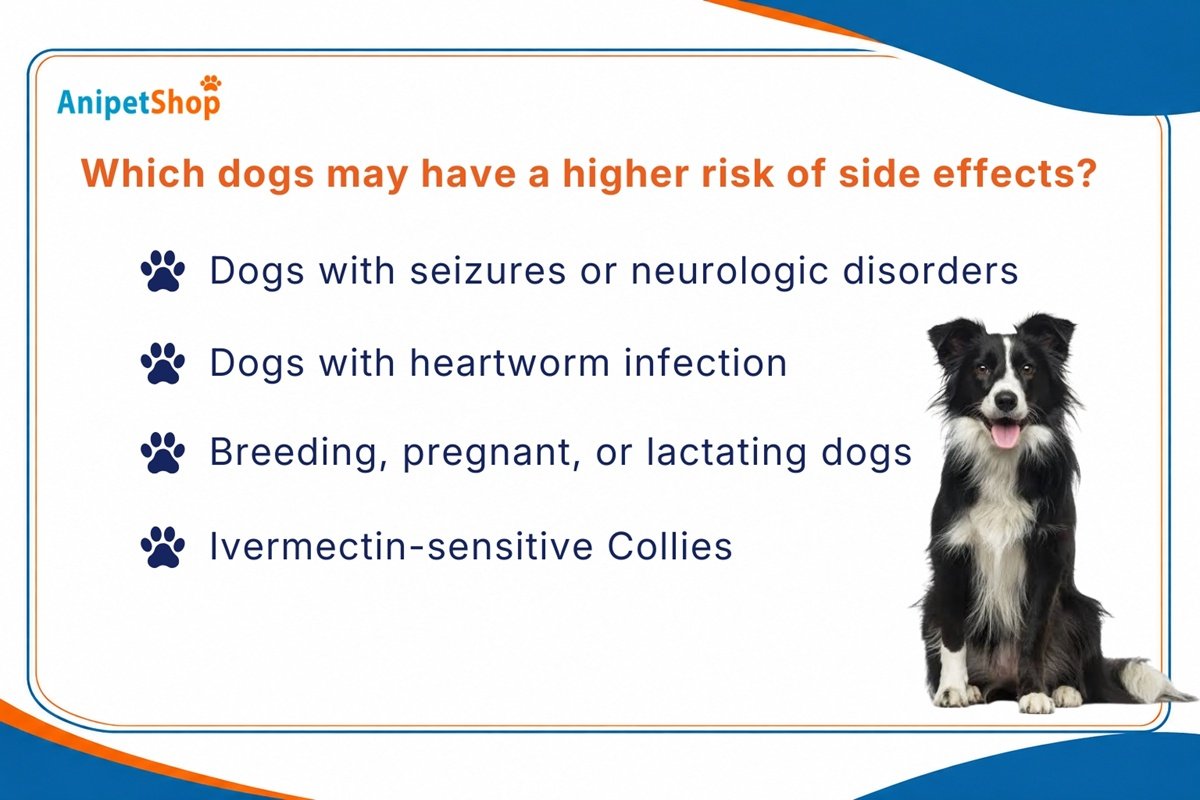
- Dogs with seizures or neurologic disorders: Discuss Simparica Trio with your veterinarian before treatment, particularly if your dog has previously experienced seizures or other neurologic problems.
- Dogs with heartworm infection: Dogs should be tested for existing heartworm infection before receiving Simparica Trio. The product is not effective against adult heartworms, and infected dogs should be treated to remove adult heartworms.
- Breeding, pregnant, or lactating dogs: The safe use of Simparica Trio has not been evaluated in these dogs.
- Ivermectin-sensitive Collies: In a safety study, clinical signs associated with avermectin sensitivity, including ataxia, muscle fasciculations, and dilated pupils, were observed in Collies receiving five times the maximum labeled dose. All dogs recovered by the third day of the study.
Having one of these characteristics does not automatically mean that a dog cannot receive Simparica Trio. It means the dog’s individual health history should be considered before treatment.
How can you reduce the risk of side effects when giving your dog Simparica Trio?
The most practical steps are to use the correct weight-based dose, follow the monthly dosing schedule, and make sure your dog receives the complete tablet.
Keep these points in mind:
- Check your dog’s age and weight: Simparica Trio is labeled for dogs and puppies 8 weeks of age and older that weigh at least 2.8 lb (1.25 kg).
- Choose the correct strength: Simparica Trio is available in different tablet strengths according to body weight. Dogs weighing 2.8 to 132 lb have specific weight bands, while dogs over 132 lb require an appropriate combination of tablets.
- Give it once a month: Simparica Trio is administered orally at monthly intervals.
- Food is optional: Unlike some medications that require food for administration, Simparica Trio can be given with or without food.
- Make sure your dog receives the entire dose: Check that the dog consumes the complete chewable tablet and does not refuse or lose part of the dose.
- Test for heartworm before starting: Because Simparica Trio prevents heartworm disease but does not eliminate adult heartworms, dogs should be tested for existing heartworm infection before administration.
To make sure your dog receives the correct dose, choose the Simparica Trio strength that matches your dog’s body weight. Each weight range has a specific sarolaner, moxidectin, and pyrantel dose, so you should not guess or substitute a different strength.
You can check the available Simparica Trio for dogs based on your dog’s weight:
- Simparica Trio 2.8–5.5 lbs (1.25–2.5 kg)
- Simparica Trio 5.6–11 lbs (2.6–5 kg)
- Simparica Trio 11.1–22 lbs (5.1–10 kg)
- Simparica Trio 22.1–44 lbs (10.1–20 kg)
- Simparica Trio 44.1–88 lbs (20.1–40 kg)
- Simparica Trio 88.1–132 lbs (40.1–60 kg)

For dogs weighing more than 132 lbs (60 kg), the product label recommends using an appropriate combination of tablets to reach the correct total dose. Always follow the product label or your veterinarian’s instructions when selecting the strength and number of tablets.
What should you do if your dog experiences a reaction?
If your dog develops a possible reaction after receiving Simparica Trio, monitor the signs closely and consider their severity.
- Monitor mild gastrointestinal signs: A single episode of vomiting or mild diarrhea may be monitored, but continued or worsening symptoms should be discussed with your veterinarian.
- Watch for dehydration: Repeated vomiting or diarrhea can cause fluid loss, particularly if your dog is also refusing food or water.
- Contact your veterinarian: Ask for veterinary advice if vomiting, diarrhea, lethargy, appetite loss, or another reaction persists or becomes more severe.
- Watch for neurologic signs: Tremors, loss of coordination, unusual movements, or seizures require prompt veterinary attention.
- Seek urgent veterinary care: Severe or rapidly worsening symptoms, especially seizures, collapse, difficulty breathing, or severe weakness, warrant immediate veterinary evaluation.
- Discuss the next dose: If your dog has experienced a suspected adverse reaction, speak with your veterinarian before giving the next monthly dose.
The FDA also advises pet owners to consult their veterinarian if a dog experiences an adverse event while using an isoxazoline product.
When should you contact your veterinarian right away?
Contact your veterinarian promptly if your dog develops severe, persistent, or neurologic symptoms after receiving Simparica Trio.
- Seizures: Any seizure after treatment should be taken seriously, particularly because seizures are among the neurologic reactions associated with the isoxazoline class.
- Tremors or difficulty walking: Persistent shaking, muscle movements, wobbling, or loss of coordination should be evaluated.
- Repeated vomiting or diarrhea: Contact your veterinarian if gastrointestinal symptoms are persistent, severe, or accompanied by weakness, dehydration, or poor appetite.
- Bloody diarrhea: Bloody diarrhea has been included in post-approval adverse event reports and should not be ignored.
- Significant behavioral changes: Unusual or persistent behavioral changes have also been reported after approval.
Mild vomiting, diarrhea, lethargy, or appetite changes are among the reactions reported in clinical studies. However, persistent, worsening, or neurologic signs deserve greater attention and should be discussed with a veterinarian.
FAQs about Simparica Trio side effects in dogs
Are Simparica Trio side effects common in dogs?
The most frequently reported adverse reactions in the main field study were vomiting and diarrhea, followed by lethargy and anorexia. Vomiting occurred in 14.3% and diarrhea in 13.2% of the 272 treated dogs in that study.
These percentages describe observations in a specific clinical field study. They do not mean that every dog receiving Simparica Trio has a 14.3% or 13.2% individual risk.
Can Simparica Trio cause seizures in dogs with no seizure history?
Yes. The Simparica Trio label states that seizures have been reported in dogs receiving isoxazoline-class drugs even without a previous seizure history. Because sarolaner is an isoxazoline, the label recommends caution in dogs with a history of seizures or neurologic disorders.
One seizure was also reported in a dog 16 days after administration in a well-controlled laboratory study.
Is Simparica Trio safe for pregnant or breeding female dogs?
The safe use of Simparica Trio has not been evaluated in breeding, pregnant, or lactating dogs according to the product label. Owners of dogs in these groups should discuss the product with their veterinarian before administration.
Can Simparica Trio cause diarrhea?
Yes. Diarrhea was reported in 13.2% of treated dogs in the main field study and was also reported in separate field studies involving dogs with fleas and dogs with roundworms.
Post-approval reports have also included diarrhea with and without blood, although those reports cannot be used to establish a reliable frequency.
Can Simparica Trio cause vomiting?
Yes. Vomiting was the most frequently reported adverse reaction in the main field study, occurring in 14.3% of treated dogs. Vomiting was also reported in the field study involving dogs with roundworms.
A single mild episode may not indicate a serious reaction, but repeated or severe vomiting should be discussed with a veterinarian.
Does Simparica Trio need to be given with food?
No. The label states that Simparica Trio can be administered with or without food. The important point is to make sure the dog consumes the complete dose.
What should I do if my dog has a seizure after Simparica Trio?
Contact a veterinarian promptly. Seizures are among the neurologic adverse reactions associated with the isoxazoline class, and the Simparica Trio label recommends caution in dogs with a history of seizures or neurologic disorders.
Do not assume that a seizure is a normal side effect or wait for repeated episodes before seeking professional advice.
Can Simparica Trio cause lethargy?
Yes. Lethargy was reported in 8.5% of dogs treated in the main field study. It was the third most frequently reported adverse reaction in that study, after vomiting and diarrhea.
If lethargy is severe, persistent, or occurs together with vomiting, diarrhea, neurologic signs, or other concerning symptoms, contact your veterinarian.
Simparica Trio’s most frequently reported adverse reactions in its main field study were vomiting and diarrhea, followed by lethargy and anorexia. Neurologic reactions such as tremors, ataxia, and seizures are less prominent in the clinical trial data but are important because of the known isoxazoline-class warning. Dogs with a seizure or neurologic history require extra caution, while the safety of Simparica Trio has not been evaluated in breeding, pregnant, or lactating dogs. Correct weight-based dosing, complete administration of the tablet, pre-treatment heartworm testing, and prompt veterinary attention for serious or persistent reactions are the key safety steps.

Anipet Team
Anipet Team is dedicated to sharing reliable information about pet health, veterinary care, and animal wellbeing. Our content is researched and reviewed by veterinary professionals to provide pet owners with trusted, practical information for caring for their pets.