Free Shipping on Orders Over $99*



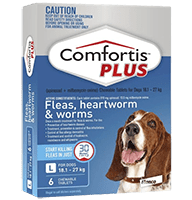

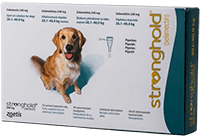
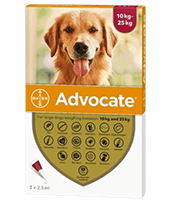
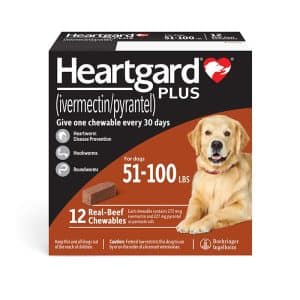
Price range: US$68.80 through US$128.50
This product has multiple variants. The options may be chosen on the product page
Sale!
Price range: US$78.20 through US$255.98
This product has multiple variants. The options may be chosen on the product page
Price range: US$57.50 through US$100.50
This product has multiple variants. The options may be chosen on the product page
Sale!
Price range: US$79.95 through US$137.95
This product has multiple variants. The options may be chosen on the product page
Sale!

Price range: US$72.55 through US$125.50
This product has multiple variants. The options may be chosen on the product page
Sale!

Price range: US$76.90 through US$247.99
This product has multiple variants. The options may be chosen on the product page
Price range: US$63.50 through US$121.70
This product has multiple variants. The options may be chosen on the product page
Sale!
Price range: US$73.70 through US$239.77
This product has multiple variants. The options may be chosen on the product page
Sale!

Price range: US$80.73 through US$276.22
This product has multiple variants. The options may be chosen on the product page
Sale!

Price range: US$70.88 through US$118.68
This product has multiple variants. The options may be chosen on the product page
Sale!
Price range: US$62.65 through US$109.50
This product has multiple variants. The options may be chosen on the product page
Sale!
Price range: US$62.67 through US$117.65
This product has multiple variants. The options may be chosen on the product page
This collection covers oral chewables, topical spot-ons, and combination parasiticides formulated to prevent Dirofilaria immitis infection in dogs across all life stages and weight ranges. Products include Heartgard Plus, Valuheart, Simparica Trio, NexGard Spectra, Credelio Plus, Revolution, Stronghold, Advocate, and Interceptor Spectrum.
All are available without a veterinary prescription through Anipetshop, a licensed online pharmacy operating under APVMA regulations in Australia. Their active ingredients, dosage concentrations, and formulations are identical to the prescription-only equivalents sold in the U.S. market.
Do You Need a Prescription for Heartworm Medicine?
Heartworm preventatives are available through Anipetshop without a veterinary prescription. Anipetshop operates as a licensed online pharmacy under APVMA (Australian Pesticides and Veterinary Medicines Authority) regulations, which classify most monthly heartworm preventatives as over-the-counter medications.
Whether a prescription is required depends on the regulatory framework of the dispensing country, not on the formulation of the medication itself. In the United States, the FDA classifies macrocyclic lactones such as ivermectin and milbemycin oxime as prescription-only. This classification exists because U.S. veterinarians are required to confirm a negative Dirofilaria immitis antigen test before initiating prevention: administering these drugs to a dog with an active heartworm infection can trigger life-threatening adverse reactions from rapid microfilarial die-off.
The APVMA applies a different risk-based scheduling system. Under Australian regulation, most monthly heartworm preventatives are classified as over-the-counter products, based on their established safety margin at labeled dosages for prophylactic use. Long-acting injectable formulations, such as annual moxidectin injections, remain veterinarian-restricted under Australian scheduling.
Products dispensed through Anipetshop are sourced from original manufacturers and contain the same active ingredients and dosage concentrations as their U.S. prescription counterparts. The regulatory classification differs; the pharmacological composition does not.
Heartworm preventatives currently available through Anipetshop include:
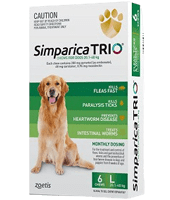
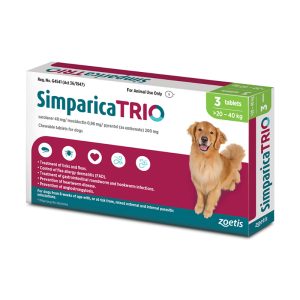
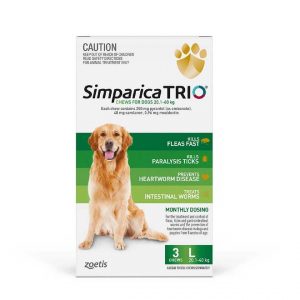
- Simparica Trio
- Advocate
- Credelio Plus
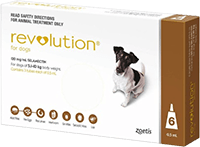
- Revolution
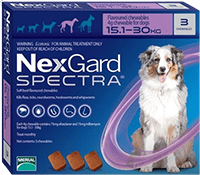
- NexGard Spectra
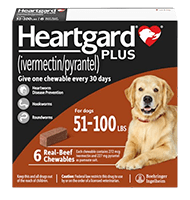
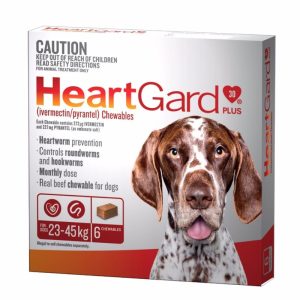
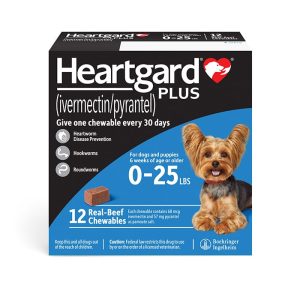
- Heartgard Plus
- Stronghold
- Valuheart
- Interceptor Spectrum
Why Do You Need To Buy Heartworm Medication For Dogs?
Heartworm disease has no over-the-counter cure, and prevention is the only intervention available without veterinary involvement. Dogs are natural definitive hosts for Dirofilaria immitis, meaning larvae that enter the bloodstream can complete their full life cycle, mature into adult worms up to 30 cm in length, and establish permanent residence in the pulmonary arteries and right side of the heart. Once adult worms are present, clearance requires a staged veterinary treatment protocol using melarsomine dihydrochloride, which carries significant clinical risk and costs widely.
The following consequences explain why consistent prevention is the standard of care:
- Heartworm causes permanent organ damage even after treatment: Adult worms cause mechanical obstruction and inflammatory scarring in the pulmonary vasculature and cardiac tissue. This structural damage does not fully resolve even after successful adulticide therapy.
- Untreated infection is fatal: Heartworm disease progresses to right-sided heart failure without intervention. In advanced cases, worm burden in the vena cava triggers caval syndrome, an acute cardiovascular collapse that is fatal without emergency surgical removal.
- Treatment carries significant cost and clinical risk: Adulticide therapy uses melarsomine dihydrochloride, an arsenic-based compound administered by deep intramuscular injection, with a full protocol typically costing between $1,000 and $1,500. Monthly prevention through Anipetshop ranges from approximately $5,5 to nearly $20 per dose, putting annual prevention costs between roughly $33 and $120. That makes treatment up to more than 12 times more expensive than a full year of prevention, before accounting for the clinical risk of pulmonary thromboembolism from dying worms during recovery.
- Recovery from treatment requires weeks of strict confinement: Dogs must be kept on crate rest for several weeks following each melarsomine injection. Physical activity elevates heart rate and blood flow, increasing the risk of fatal pulmonary emboli from dead worm fragments.
Choosing the Right Heartworm Prevention Format
Heartworm preventatives for dogs are available in three formats: oral chewables, topical spot-on solutions, and long-acting injectable formulations. Oral and topical products are administered monthly. Injectable formulations provide coverage for 6 or 12 months and must be administered by a veterinarian.
The table below compares the three available formats across criteria relevant to product selection:
|
Oral Chewable |
Topical Spot-On |
Injectable |
|
| Mechanism | Absorbed systemically via gastrointestinal tract after ingestion | Absorbed transdermally into bloodstream at application site | Sustained-release microsphere injection; moxidectin released continuously from deposit site |
| Speed of Action | Heartworm larval elimination works retroactively, clearing L3 and L4 larvae acquired in the prior 30-day window; no immediate kill upon ingestion | Varies by product; selamectin and moxidectin require 24 to 48 hours for full dermal absorption | Not applicable for external parasites; heartworm larval coverage begins within hours of injection |
| Duration | 30 days per dose | 30 days per dose | 6 months (ProHeart 6) or 12 months (ProHeart 12) |
| Water Resistance | Not affected; active ingredient is already systemic at time of water exposure | Compromised if water exposure occurs within 48 hours of application | Not applicable; no topical component |
| Tick Coverage | Product-dependent: Simparica Trio, NexGard Spectra, and Credelio Plus cover ticks; Heartgard Plus, Valuheart, and Interceptor Spectrum do not | Advocate does not cover ticks | None |
| Best For | Dogs that can tolerate oral administration and require monthly heartworm prevention | Dogs with confirmed food allergies or that refuse oral medication | Dogs whose owners cannot maintain monthly dosing schedules; requires veterinary administration |
1. Oral Preventatives (Chewables and Tablets)
Oral chewables are absorbed systemically after ingestion, meaning the active ingredient enters the bloodstream through the gastrointestinal tract rather than through the skin. Because the full dose must be ingested and digested to achieve therapeutic blood levels, a dog that vomits within a short period after administration should receive a replacement dose. Most oral formulations are flavored to facilitate administration.
Key characteristics of oral heartworm preventatives:
- Administration interval: Dosed once every 30 days. Administering late or missing a dose creates a gap in larval coverage during which L3 and L4 larvae may survive and develop.
- Water resistance: Not affected by bathing or swimming, as the active ingredient is already absorbed systemically at the time of contact with water.
- Gastrointestinal risk: Dogs with sensitive gastrointestinal tracts may experience vomiting or diarrhea following administration. If vomiting occurs within an hour of dosing, consult a veterinarian before redosing.
Oral heartworm preventatives currently available through Anipetshop include:
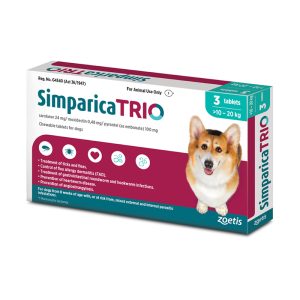
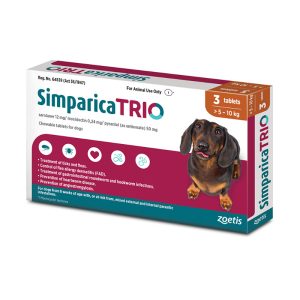
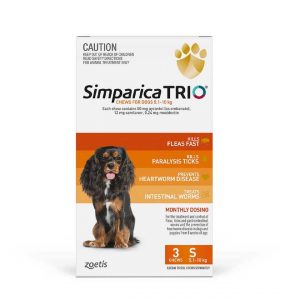
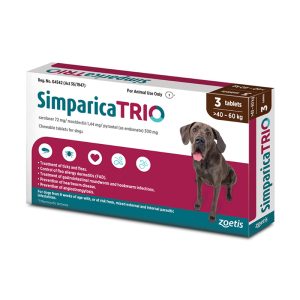
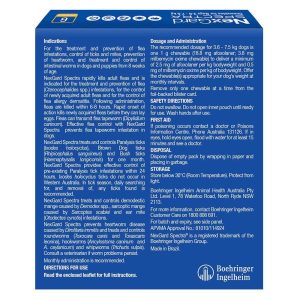
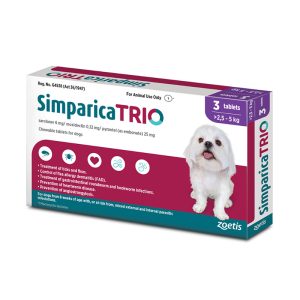
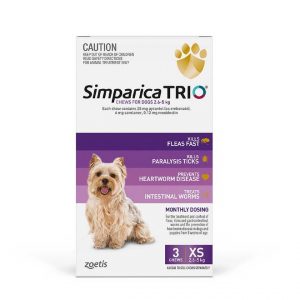
- Simparica Trio: A monthly liver-flavored chewable containing sarolaner, moxidectin, and pyrantel. Covers heartworm, fleas, five tick species, roundworms, and hookworms.
- Credelio Plus: A monthly beef-flavored chewable containing lotilaner and milbemycin oxime. Covers heartworm, fleas, ticks, mites, and intestinal worms.
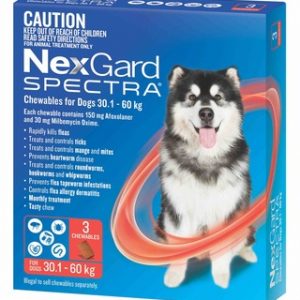
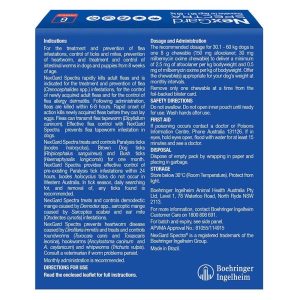
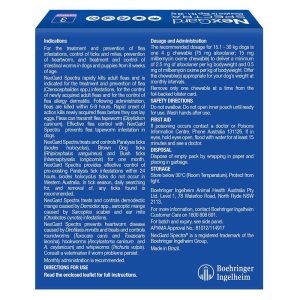
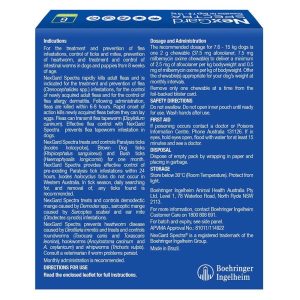
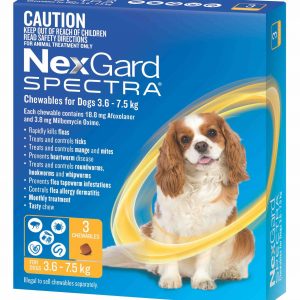
- NexGard Spectra: A monthly beef-flavored chewable containing afoxolaner and milbemycin oxime. Covers heartworm, fleas, ticks, roundworms, and hookworms.
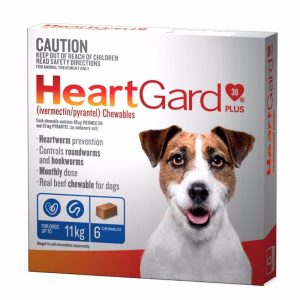
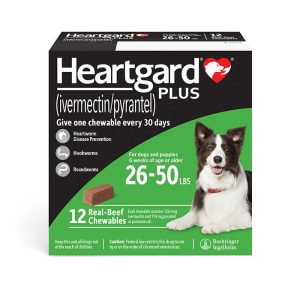
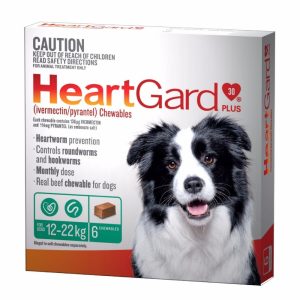
- Heartgard Plus: A monthly beef-flavored soft chew containing ivermectin and pyrantel pamoate. Covers heartworm prevention and treats roundworms and hookworms.
- Valuheart: A monthly oral tablet containing ivermectin for heartworm prevention only. Does not cover fleas, ticks, or intestinal worms beyond roundworms.
- Interceptor Spectrum: A monthly flavored chewable containing milbemycin oxime and praziquantel. Covers heartworm and all major intestinal worm classes including tapeworm.
2. Topical Preventatives (Spot-Ons)
Topical spot-on preventatives are applied directly to the skin, typically at the base of the neck or between the shoulder blades, and absorbed transdermally into the bloodstream. The application site is chosen to prevent the dog from self-grooming the product before absorption is complete. Full dermal absorption typically takes 24 to 48 hours, during which bathing or swimming can reduce the amount of active ingredient absorbed and compromise efficacy.
Key characteristics of topical heartworm preventatives:
- Administration interval: Applied once every 30 days directly to skin, not coat. Parting the fur to expose the skin before application is necessary for correct absorption.
- Water exposure risk: Bathing or swimming within 48 hours of application can wash away the product before full absorption occurs, reducing the dose delivered systemically. Avoid water exposure during this window.
- Suitability for dogs with food sensitivities: Topical formats bypass the gastrointestinal tract entirely, making them appropriate for dogs with food allergies or those that refuse oral chewables. No flavor additives are involved in absorption.
Topical heartworm preventatives currently available through Anipetshop include:
- Advocate: A monthly spot-on containing imidacloprid and moxidectin. Covers heartworm, fleas, roundworms, hookworms, whipworms, and ear mites. Does not cover ticks.
- Revolution: A monthly spot-on containing selamectin, manufactured by Zoetis. Covers heartworm, fleas, ear mites, and sarcoptic mange. Absorbed into the bloodstream and redistributed to target parasites via systemic circulation.
- Stronghold: A monthly spot-on containing selamectin, identical in formulation to Revolution. Stronghold is the international market name for the same Zoetis product and carries the same parasite coverage and dosing schedule.
3. Injectable Preventatives
Injectable heartworm preventatives are administered exclusively by a veterinarian and are not available for at-home use. Two products are currently FDA-approved in the U.S. market: ProHeart 6, which provides 6 months of coverage, and ProHeart 12, which provides 12 months. Both contain moxidectin as the active ingredient, formulated as a sustained-release microsphere injection.
Key characteristics of injectable heartworm preventatives:
- Administration interval: A single injection delivers continuous moxidectin release for 6 or 12 months, eliminating the gap in coverage that can occur with missed or late oral and topical doses.
- Irreversibility following administration: Once injected, the formulation cannot be withdrawn. If an adverse reaction occurs, treatment is limited to managing symptoms. Dogs with a history of hypersensitivity reactions or those that are underweight should be assessed by a veterinarian before this format is considered.
- Clinic requirement: Administration requires a scheduled veterinary visit. This format is not dispensed through online pharmacies including Anipetshop, as it requires direct veterinary administration and post-injection monitoring.
8 Best Medication Brands Defense Against Heartworm Disease
Eight heartworm preventatives are available through Anipetshop without a veterinary prescription, each relying on a macrocyclic lactone or isoxazoline-class active ingredient to eliminate Dirofilaria immitis larvae before they mature into adult worms. The products differ in active ingredient combination, parasite coverage, format, and minimum age and weight requirements. Selecting the correct product depends on the dog’s weight, health history, and whether concurrent flea, tick, or intestinal worm coverage is needed.
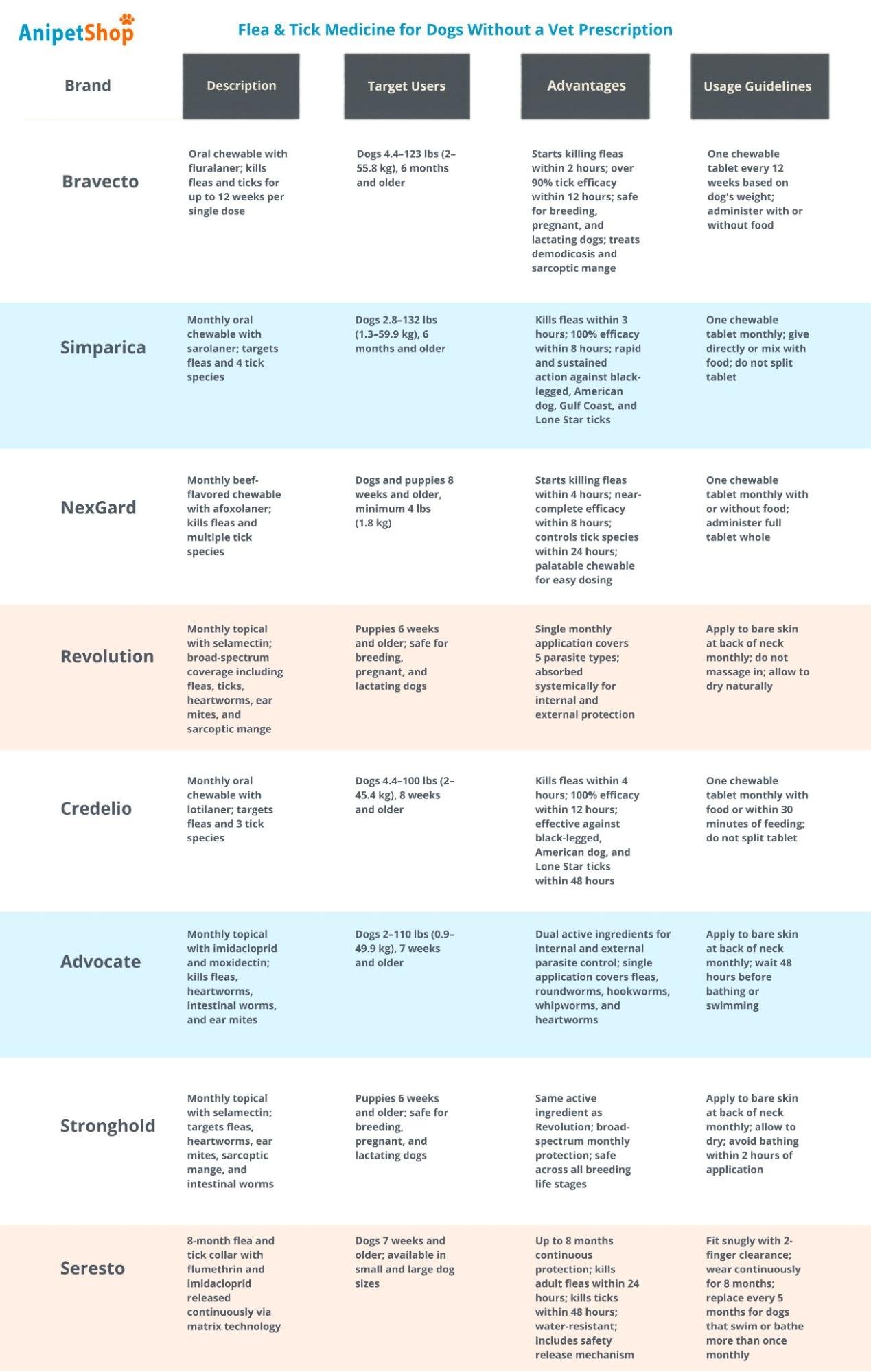
The table below compares all eight products across criteria relevant to clinical selection:
|
Brand |
Description | Target Users | Advantages |
Usage Guidelines |
|
Heartgard Plus |
Monthly chewable using ivermectin + pyrantel pamoate; prevents heartworm, roundworms, and hookworms | Dogs 6 weeks and older; breeding, pregnant, and lactating dogs | Widely trusted; cleared for sensitive life stages; beef-flavored chew | Give once monthly by weight; Blue (up to 25 lbs / 11.3 kg), Green (26–50 lbs / 11.8–22.7 kg), Brown (51–100 lbs / 23.1–45.4 kg) |
|
Valuheart |
Budget-friendly monthly chewable using ivermectin only; heartworm prevention without multi-parasite coverage | Dogs 6 weeks and older on a tight budget; breeding, pregnant, and lactating dogs | Cost-effective; beef-flavored; safe for all life stages | Give once monthly; same weight-based dosing as Heartgard Plus |
|
Simparica Trio |
Monthly chewable using sarolaner + moxidectin + pyrantel; covers heartworm, fleas, ticks, roundworms, and hookworms | Dogs 8 weeks and older, weighing at least 2.8 lbs (1.27 kg) | 100% heartworm efficacy; kills fleas within 4 hours; protects against 5 tick species | Give once monthly; 6 weight-based sizes from 2.8 lbs (1.27 kg) to 132 lbs (59.9 kg) |
|
NexGard Spectra |
Monthly chewable using afoxolaner + milbemycin oxime; covers heartworm, fleas, ticks, roundworms, and hookworms | Dogs 8 weeks and older, weighing at least 4 lbs (1.8 kg); breeding, pregnant, and lactating dogs | Nearly 100% flea efficacy within 8 hours; safe for all life stages; one chew covers all major parasites | Give once monthly; 5 weight-based sizes from 4 lbs (1.8 kg) to 132 lbs (59.9 kg) |
|
Credelio Plus |
Monthly chewable using lotilaner + milbemycin oxime; covers heartworm, fleas, ticks, roundworms, and hookworms | Dogs 8 weeks and older, weighing at least 4.4 lbs (2 kg) | Fast flea kill within 4 hours; strong tick efficacy within 48 hours; palatable tablet | Give once monthly with food; 5 weight-based sizes from 4.4 lbs (2 kg) to 100 lbs (45.4 kg) |
|
Revolution |
Monthly topical spot-on using selamectin; covers heartworm, fleas, ticks, ear mites, and sarcoptic mange | Dogs 6 weeks and older; breeding, pregnant, and lactating dogs | Broad parasite coverage via a single skin application; no oral dosing needed | Apply to base of neck once monthly; 5 weight-based tube sizes from 5.1 lbs (2.3 kg) to 130 lbs (59 kg) |
|
Stronghold |
Monthly topical spot-on using selamectin; covers heartworm, fleas, ear mites, sarcoptic mange, roundworms, and hookworms | Dogs 6 weeks and older; breeding, pregnant, and lactating dogs | Same selamectin formula as Revolution; covers internal and external parasites topically | Apply to base of neck once monthly; identical weight-based tube sizes to Revolution |
|
Advocate |
Monthly topical spot-on using imidacloprid + moxidectin; covers fleas, heartworm, roundworms, hookworms, whipworms, and ear mites | Dogs 7 weeks and older, weighing at least 2 lbs (0.9 kg) | Covers whipworms — a parasite most chewables miss; no oral dosing required | Apply to base of neck once monthly; 5 weight-based sizes from 2 lbs (0.9 kg) to 110 lbs (49.9 kg) |
How to Choose the Right Heartworm Medicine for Dogs?
Five clinical factors determine which heartworm preventative is appropriate for a dog: infection status, age, weight, medical history, and format. Each step below identifies what to confirm and what the consequence is of getting it wrong.
Step 1: Confirm a Negative Heartworm Test Before Starting Prevention
A dog must test negative for active Dirofilaria immitis infection before any preventative is initiated. Administering a macrocyclic lactone to a dog with circulating microfilariae can trigger a rapid die-off reaction, causing cardiovascular shock and potentially fatal outcomes. Dogs 7 months and older that have never been on prevention, have missed two or more consecutive doses, or are switching products should be tested before the first dose.
Step 2: Confirm the Dog Meets the Minimum Age Requirement
Each product carries a labeled minimum age, and administering to younger animals risks toxicity from an immature blood-brain barrier with insufficient ability to limit drug entry into the central nervous system. Simparica Trio and NexGard Spectra are labeled for dogs 8 weeks and older. Heartgard Plus, Revolution, and Stronghold are labeled from 6 weeks. Check the specific product label before administering to any puppy under 12 weeks.
Step 3: Weigh the Dog Accurately Before Selecting a Dose
Heartworm preventatives are dosed by weight band, and selecting a dose based on an outdated or estimated weight risks underdosing or overdosing. Weight band boundaries determine which pack strength is dispensed, and a difference of even a few pounds can shift a dog into a different dose tier.
For example, a dog weighing 24 lbs falls within the Heartgard Plus Blue pack (up to 25 lbs), which contains 68 mcg of ivermectin. The same dog at 27 lbs requires the Green pack (26 to 50 lbs), which contains 136 mcg. Administering the Blue pack to a 27 lb dog delivers half the labeled dose and provides no reliable larval coverage.
Step 4: Review the Dog’s Medical History Before Selecting a Product
Isoxazoline-class products, including Simparica Trio, NexGard Spectra, and Credelio Plus, carry an FDA label warning for neurological adverse reactions in dogs with a history of seizures or neurological conditions. Collies and related MDR1-affected breeds have reduced ability to metabolize certain drug classes, including some macrocyclic lactones at elevated doses. If the dog has a seizure history, neurological condition, or is an MDR1-susceptible breed, consult a veterinarian before selecting a product.
Step 5: Select a Format the Dog Will Accept Consistently
A preventative only works if administered on schedule. Oral chewables require full ingestion and digestion; a dog that consistently refuses or vomits the dose is not protected. Topical spot-ons require 48 hours without water exposure following each application. If neither format can be administered reliably, discuss injectable moxidectin with a veterinarian as an alternative.
Order Heartworm Medicine for Dogs Without Vet Prescription at AniPetShop
Anipetshop is a licensed online pharmacy operating under APVMA regulations in Australia, which classifies most heartworm preventatives as over-the-counter medications. This regulatory framework allows Anipetshop to dispense products including Heartgard Plus, Simparica Trio, NexGard Spectra, Revolution, Advocate, and Interceptor Spectrum without requiring a U.S. veterinary prescription.
The following product standards apply to all orders dispatched through Anipetshop:
- Original manufacturer sourcing: All products are sourced directly from original manufacturers including Boehringer Ingelheim, Zoetis, Elanco, and MSD Animal Health. No generic substitutions or repackaged stock are supplied.
- Active ingredient and dose integrity: Each product contains the same active ingredient and labeled dosage concentration as the equivalent product sold in the U.S. market. Regulatory classification differs by country; pharmacological composition does not.
- English-language labeling: All products are supplied with English-language labels stating active ingredients, weight-band dosing, administration instructions, and contraindications.
- Expiration date: Products are dispatched with sufficient shelf life to complete a standard supply period. Expiration dates are printed on all individual packaging units.
Are There Any Side Effects of Heartworm Medicine for Dogs?
Side effects from heartworm preventatives occur and vary by drug class. The majority are gastrointestinal and resolve without intervention. Neurological reactions are less common but carry greater clinical risk, particularly in dogs with a seizure history or MDR1 gene mutation. The following reactions are organized by drug class to assist with product selection.
Macrocyclic lactones (ivermectin, milbemycin oxime, moxidectin, selamectin) are found in Heartgard Plus, Valuheart, Interceptor Spectrum, NexGard Spectra, Credelio Plus, Simparica Trio, Revolution, Stronghold, and Advocate. Reported adverse reactions include:
- Vomiting and diarrhea: The most commonly reported reactions across oral macrocyclic lactone products. Diarrhea occasionally presents with blood; if this occurs, withhold the next dose and consult a veterinarian.
- Lethargy and reduced appetite: Transient and typically resolving within 24 to 48 hours of administration. Persistent lethargy beyond 48 hours warrants veterinary assessment.
- Neurological signs in MDR1-affected breeds: Collies, Shelties, Australian Shepherds, and related breeds carrying the MDR1 mutation cannot efficiently clear certain macrocyclic lactones from the central nervous system. Signs include ataxia, tremors, hypersalivation, and disorientation. Consult a veterinarian before administering any macrocyclic lactone to an MDR1-susceptible breed.
- Topical application site reactions (selamectin, moxidectin, imidacloprid): Temporary hair loss, skin irritation, or erythema at the application site may occur with Revolution, Stronghold, and Advocate. These reactions are localized and generally resolve without treatment.
Isoxazolines (afoxolaner, sarolaner, lotilaner) are found in NexGard Spectra, Simparica Trio, and Credelio Plus. The FDA issued a label update in 2023 requiring isoxazoline-class products to carry a warning for neurological adverse reactions. Reported reactions include:
- Muscle tremors and ataxia: Can occur in any dog receiving an isoxazoline but are more likely in dogs with pre-existing neurological conditions. Dogs with a seizure history should not receive isoxazoline-class products without prior veterinary clearance.
- Seizures: Reported across all three isoxazoline products. The FDA warning applies class-wide, not to individual brands.
- Hypersensitivity reactions: Urticaria, facial swelling, and respiratory difficulty have been reported. Anaphylaxis is rare but requires immediate veterinary attention.
Death following administration of an oral monthly preventative is extremely rare. Fatal outcomes have been associated primarily with injectable moxidectin formulations administered to heartworm-positive dogs without prior antigen testing, not with standard oral or topical monthly products.
When Should Dogs Be Tested for Heartworms?
Dogs 7 months and older require a negative Dirofilaria immitis antigen test before starting any heartworm preventative. Adult heartworm infection produces no clinical signs in early stages, meaning a dog can carry a substantial worm burden while appearing completely healthy. Administering a macrocyclic lactone to a dog with circulating microfilariae triggers rapid larval die-off, which can cause systemic inflammatory response and cardiovascular shock.
The American Heartworm Society recommends annual testing for all dogs, including those on uninterrupted year-round prevention. No oral or topical preventative achieves 100% efficacy under real-world conditions, and late or missed doses create coverage gaps during which larvae may survive and mature past the susceptible stage.
Testing is also required in the following situations:
- Switching products: A gap between the last dose of one product and the first dose of another creates a window during which larvae may have progressed. A negative antigen test confirms no active infection before the new product is initiated.
- Two or more missed consecutive doses: Missing doses allows larvae from recent mosquito exposure to advance developmentally beyond the stage targeted by preventatives. A test is required before resuming prevention.
- Travel to or from high-prevalence regions: Dogs moved from low-prevalence to high-prevalence heartworm regions, or returning from extended stays in endemic areas, should be tested before the next dose regardless of whether doses were administered on schedule.
What Happens If a Dog Gets Heartworm Prevention While Already Infected?
Administering a macrocyclic lactone preventative to a dog with an active Dirofilaria immitis infection triggers rapid microfilarial die-off in the bloodstream. The sudden mass death of circulating larvae initiates a systemic inflammatory response that can progress to anaphylactic shock, acute respiratory distress, and cardiovascular collapse. Fatal outcomes within 24 hours of administration have been documented in dogs that were not tested before the first dose was given.
Treatment of an established heartworm infection follows a staged clinical protocol, not a simple course of prevention. The American Heartworm Society protocol involves pre-treatment stabilization with doxycycline and corticosteroids, followed by a series of melarsomine dihydrochloride injections administered by a veterinarian. Strict exercise restriction is enforced throughout the treatment period, as physical exertion elevates blood flow and increases the risk of fatal pulmonary embolism from dying adult worms. Monthly prevention is not reinstated until antigen testing confirms complete clearance of adult worms.
Skipping the antigen test before starting prevention does not reduce cost or time in any meaningful way. A negative test takes minutes and costs significantly less than managing the acute reaction that follows administering prevention to an infected dog.
Frequently Asked Questions About Heartworm Prevention in Dogs
Can I Purchase Heartworm Prevention Medicine Without a Prescription?
Heartworm preventatives are available through Anipetshop without a veterinary prescription. Anipetshop operates as a licensed online pharmacy under APVMA regulations in Australia, where most monthly heartworm preventatives are classified as over-the-counter medications. Products dispensed through Anipetshop contain the same active ingredients and labeled dosage concentrations as their U.S. prescription counterparts.
What Active Ingredients Treat Heartworms in Dogs?
Four active ingredients are used in monthly heartworm preventatives: ivermectin, milbemycin oxime, moxidectin, and selamectin. All four are macrocyclic lactones that cause paralysis and death of Dirofilaria immitis larvae by binding to glutamate-gated chloride channels in invertebrate nerve cells. None eliminate adult worms already established in cardiac or pulmonary tissue; adult worm clearance requires melarsomine dihydrochloride administered by a veterinarian.
Do Dogs Really Need Heartworm Medication Year-Round?
Year-round prevention is the standard recommendation from the American Heartworm Society, regardless of seasonal mosquito activity. Mosquito populations are not fully absent during winter months in most U.S. regions, and a single infective bite is sufficient to initiate larval development. Discontinuing prevention during cooler months also creates a compliance gap that increases the risk of missing doses when prevention is restarted.
Can I give my dog heartworm medicine without testing?
No. A dog must test negative for active Dirofilaria immitis infection before any preventative is administered. Administering a macrocyclic lactone to a dog with circulating microfilariae triggers rapid larval die-off, which can cause systemic inflammatory response and cardiovascular shock. Annual testing is required even for dogs on uninterrupted year-round prevention, as no product achieves 100% efficacy under real-world conditions, and vomiting after oral administration or late dosing can leave gaps in larval coverage.
How often should I give my dog heartworm prevention medication?
Most oral and topical heartworm preventatives are dosed once every 30 days. The 30-day interval is based on the pharmacokinetic window during which the active ingredient maintains larvicidal blood concentrations sufficient to eliminate larvae acquired since the previous dose. Administering late extends the period during which larvae may survive and advance developmentally past the susceptible stage. Injectable formulations (ProHeart 6 and ProHeart 12) extend the dosing interval to 6 or 12 months but require veterinary administration.
Can puppies be started on heartworm prevention?
Most monthly heartworm preventatives are labeled for use from 6 or 8 weeks of age, depending on the product. Heartgard Plus, Revolution, and Stronghold are labeled from 6 weeks. Simparica Trio, NexGard Spectra, and Credelio Plus are labeled from 8 weeks, with a minimum weight requirement of 1.27 kg, 1.8 kg, and 2 kg respectively. Puppies under 7 months do not require a heartworm antigen test before starting prevention, as the prepatent period for Dirofilaria immitis means adult worms cannot yet be detected in dogs that young. Consult a veterinarian to confirm the appropriate product based on the puppy’s current weight and health status.
Which Heartworm Prevention Medicine is Best for Dogs?
No single product is appropriate for all dogs. Product selection depends on the dog’s weight, age, health history, parasite exposure risk, and whether concurrent flea, tick, or intestinal worm coverage is needed. Dogs with a seizure history should not receive isoxazoline-class products including Simparica Trio, NexGard Spectra, or Credelio Plus without prior veterinary clearance. MDR1-affected breeds require veterinary assessment before receiving any macrocyclic lactone. Consult a veterinarian to confirm which product is appropriate for the individual dog before placing an order.