
NexGard for Dogs Side Effects: A Guide for Pet Owners
Vomiting was the most frequently reported adverse reaction in the U.S. field study of NexGard, occurring in 4.1% of treated dogs. Other reported reactions occurring at more than 1% during at least one month of observation included dry/flaky skin, diarrhea, lethargy, and anorexia. In the same 90-day study of 415 dogs treated with afoxolaner, no serious adverse reactions were observed.
The active ingredient in NexGard, afoxolaner, belongs to the isoxazoline class. This drug class has been associated with neurological adverse reactions, including tremors, ataxia, and seizures, and seizures have been reported even in dogs without a previous seizure history.
This guide walks through what’s common, what’s more serious, which dogs may need extra caution, and what to do if your dog develops a reaction after taking NexGard.
What side effects can NexGard cause in dogs?
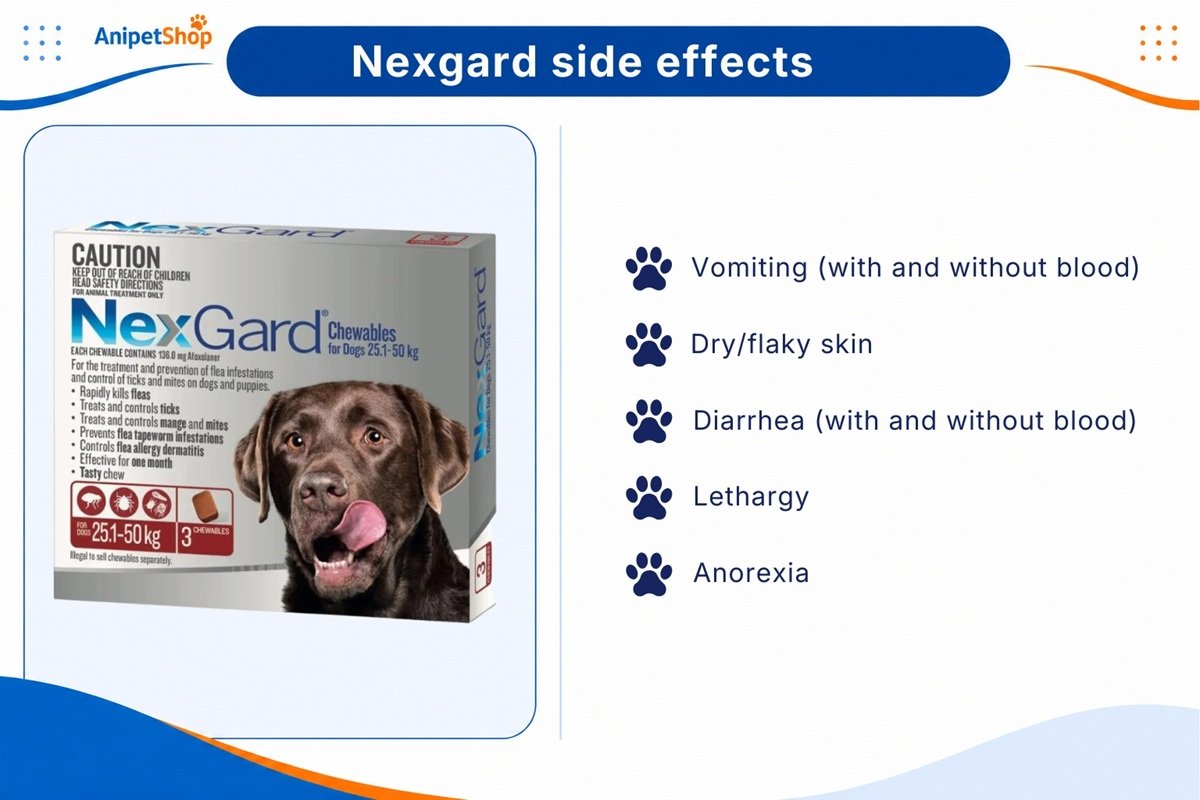
The most frequently reported adverse reaction to NexGard is vomiting, followed by dry/flaky skin, diarrhea, lethargy, and anorexia. These findings come from a well-controlled U.S. field study involving 415 dogs treated with afoxolaner and 200 dogs given an active control over 90 days.
The table below shows the adverse reactions reported in more than 1% of NexGard-treated dogs during at least one month of the study:
|
Adverse Reaction |
% of Treated Dogs (n=415) |
|
Vomiting (with and without blood) |
4.1% |
|
Dry/flaky skin |
3.1% |
|
Diarrhea (with and without blood) |
3.1% |
| Lethargy |
1.7% |
| Anorexia |
1.2% |
Vomiting was the most frequently reported reaction. The label notes that vomiting was generally self-limiting and short in duration, and tended to decrease with subsequent doses.
A second U.S. field safety and effectiveness study involving 130 dogs with fleas also reported pruritus, diarrhea, vomiting, anorexia, and lethargy as adverse reactions.
Which side effects of NexGard are considered serious?
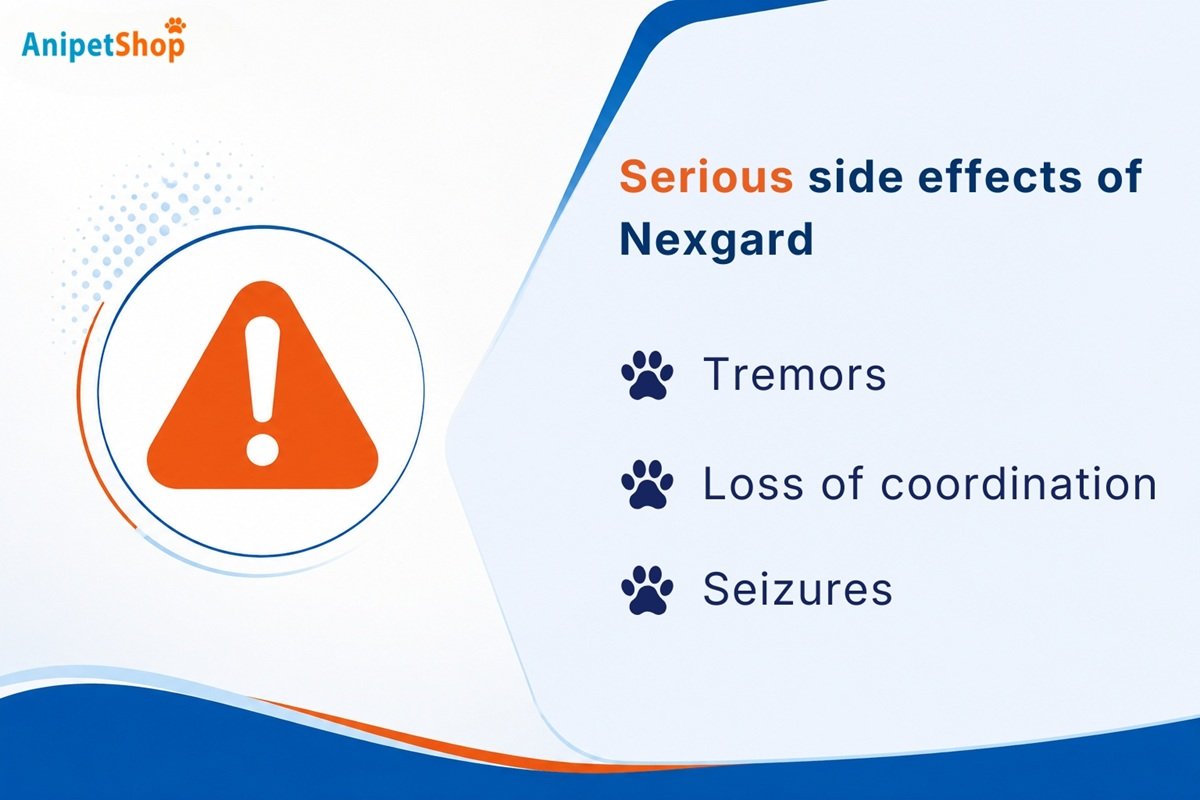
Neurological reactions are the main serious safety concern associated with NexGard. Afoxolaner is an isoxazoline, and this class has been associated with tremors, ataxia, and seizures in dogs.
Seizures have been reported in dogs receiving isoxazoline-class drugs even when they did not have a previous history of seizures. This is why the NexGard label recommends using caution in dogs with a history of seizures or neurological disorders.
Signs to watch for include:
- Tremors: Your dog may develop shaking or involuntary muscle movements.
- Loss of coordination (ataxia): Your dog may appear unsteady or have difficulty coordinating normal movements.
- Seizures: Your dog may experience abnormal seizure activity, which can occur even without a previous seizure history.
In the 90-day U.S. field study, three dogs with a history of seizures received NexGard. Two experienced seizures during the study, while the third did not experience seizures during the study.
These neurological reactions are particularly important to discuss with a veterinarian if your dog already has a seizure history or neurological disorder.
What rare side effects should dog owners be aware of?
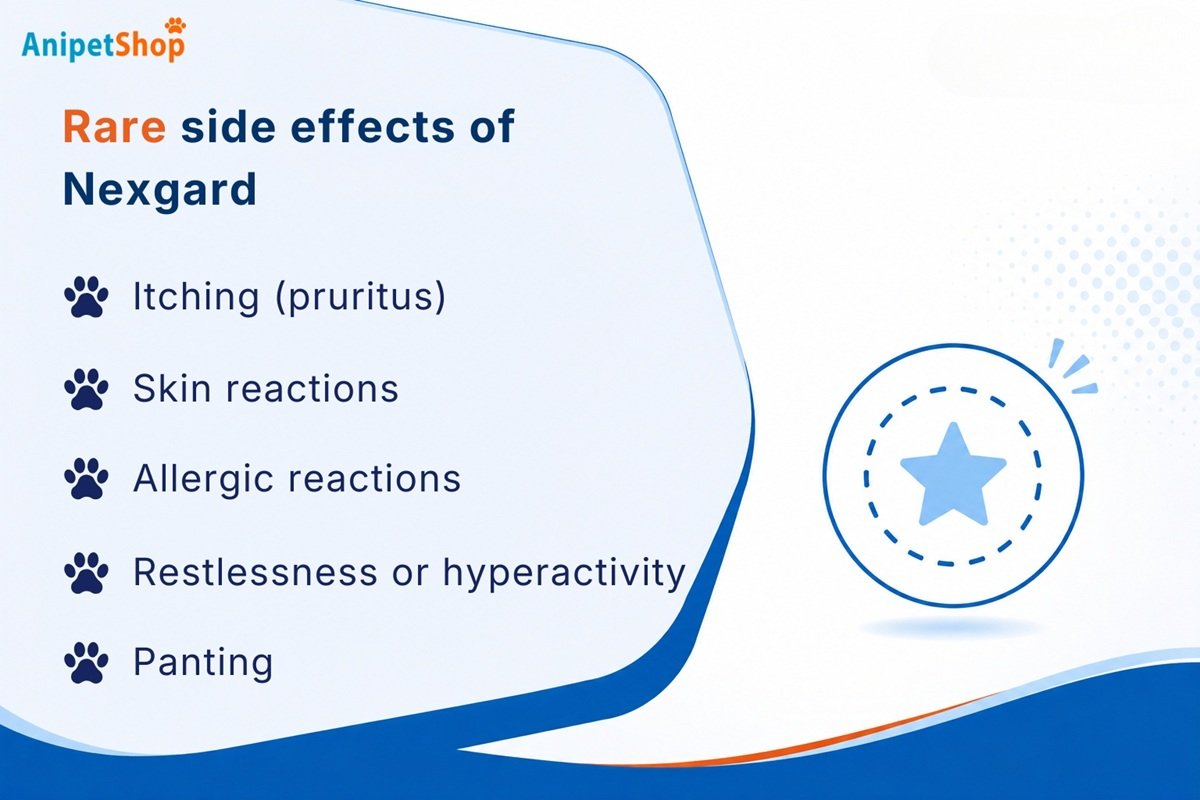
NexGard’s post-approval adverse-event reports include several reactions beyond those observed most frequently in the controlled field study. These reports include pruritus, seizures, hyperactivity or restlessness, panting, erythema, ataxia, dermatitis, allergic reactions such as hives or swelling, and tremors.
However, the label specifically cautions that post-approval reports cannot be used to reliably estimate how frequently these events occur or establish a definite causal relationship to NexGard.
Some of the reported reactions include:
- Itching (pruritus): Your dog may scratch or show increased irritation of the skin.
- Skin reactions: Reported events include erythema, dermatitis, rash, and papules.
- Allergic reactions: Hives and swelling have been reported.
- Restlessness or hyperactivity: Some post-approval reports included hyperactivity or restlessness.
- Panting: Panting has also been reported after NexGard use.
Because these reactions come from post-approval reporting, the available data do not establish a specific incidence rate for each event.
Which dogs may have a higher risk of side effects?
Dogs with a history of seizures or neurological disorders may need extra caution when using NexGard. The label also states that the safe use of NexGard has not been evaluated in breeding, pregnant, or lactating dogs.
Dogs that may need extra attention include:
- Dogs with a history of seizures or neurological disorders: Because afoxolaner belongs to the isoxazoline class, NexGard should be used with caution in dogs with these conditions. Seizures have also been reported in dogs without a previous seizure history.
- Breeding, pregnant, or lactating dogs: The safe use of NexGard in these dogs has not been evaluated.
- Dogs younger than 8 weeks or weighing less than 4 lb: The safety of NexGard has not been evaluated in dogs below these age and weight limits.
These factors do not automatically mean NexGard cannot be used. However, they are important circumstances to discuss with your veterinarian before treatment.
How can you avoid side effects when giving your dog NexGard?
The NexGard label recommends giving the product orally once a month at a minimum dosage of 2.5 mg/kg (1.14 mg/lb). The chew can be administered with or without food.
Keep these points in mind:
- Check your dog’s age and weight: NexGard is indicated for dogs and puppies 8 weeks of age and older weighing at least 4 lb.
- Choose the correct weight range: NexGard is available in different strengths based on body weight, including:
- NexGard Chewables for Dogs 4-10 lbs
- NexGard Chewables for Dogs 10.1-24 lbs
- NexGard Chewables for Dogs 24.1-60 lbs
- NexGard Chewables for Dogs 60.1-121 lbs
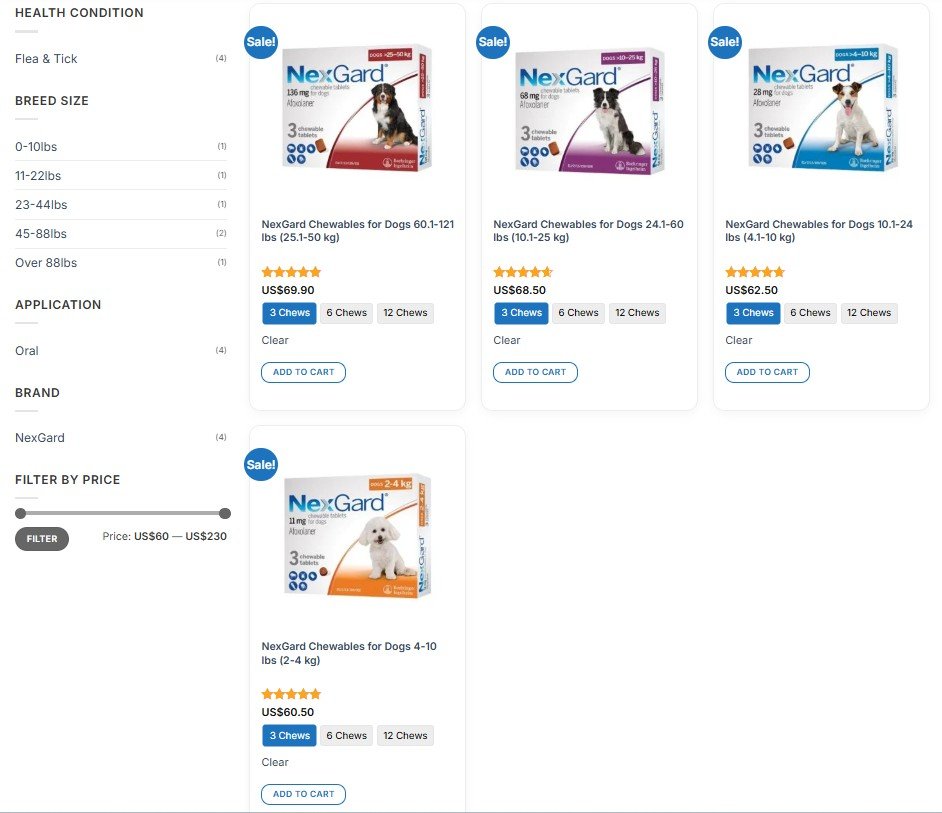
Dogs over 121 lb should receive the appropriate combination of chewables.
- Give the complete dose: Make sure your dog consumes the entire chewable. The label recommends observing the dog for a few minutes to ensure that the dose has not been lost or refused.
- Give NexGard with or without food: Unlike some oral parasite medications, NexGard can be administered either with or without food.
- Follow the monthly schedule: NexGard is administered orally once a month. If a dose is missed, give NexGard and resume the monthly dosing schedule.
- Tell your veterinarian about seizure or neurological history: The label specifically recommends caution in dogs with a history of seizures or neurological disorders.
What should you do if your dog experiences a reaction?
If your dog develops an unusual reaction after taking NexGard, pay attention to the type and timing of the symptoms.
For vomiting in particular, the product label gives specific instructions: if vomiting occurs within two hours of administration, or if you suspect that some of the dose was lost, administer another full dose.
Keep these points in mind:
- Monitor mild reactions: Vomiting, diarrhea, lethargy, or reduced appetite were among the reactions reported in the field studies. Vomiting was generally described as self-limiting and short in duration.
- Check whether the full dose was retained: If vomiting occurs within two hours or part of the chew was lost, the label recommends redosing with another full dose.
- Watch for neurological signs: Pay particular attention to tremors, loss of coordination, or seizures because these reactions have been associated with the isoxazoline class.
- Watch for allergic or skin reactions: Post-approval reports include hives, swelling, erythema, dermatitis, rash, and papules.
- Contact your veterinarian about concerning reactions: A veterinarian can help determine whether the symptoms require further evaluation, particularly if neurological signs occur or symptoms are persistent or worsening.
- Discuss the next dose if a reaction occurs: If your dog experiences a concerning reaction, speak with your veterinarian before continuing treatment.
When should you contact your veterinarian right away?
Contact your veterinarian promptly if your dog develops significant or neurological symptoms after taking NexGard.
Pay particular attention to:
- Seizures: Seizures have been reported in dogs receiving isoxazoline-class drugs, including dogs without a previous seizure history.
- Tremors or trouble with coordination: Tremors and ataxia are among the neurological adverse reactions associated with the isoxazoline class.
- Hives or swelling: Allergic reactions, including hives and swelling, have been reported in post-approval experience.
- Persistent or concerning digestive reactions: Vomiting and diarrhea were reported in controlled field studies. Vomiting was generally short-lived, but symptoms that persist or become concerning should be discussed with a veterinarian.
- Reactions in dogs with seizure or neurological history: These dogs warrant extra caution because the label specifically recommends caution with NexGard in this population.
The controlled U.S. field study did not observe serious adverse reactions among the 415 dogs treated with afoxolaner. However, neurological reactions remain an important safety consideration because they have been reported with isoxazoline-class drugs and in post-approval experience.
FAQs about NexGard for Dogs Side Effects
Are NexGard side effects common in dogs?
Most of the adverse reactions reported in the controlled U.S. field study occurred in a relatively small percentage of treated dogs. Vomiting was the most frequently reported reaction at 4.1%, followed by dry/flaky skin and diarrhea at 3.1% each. Lethargy and anorexia were reported in 1.7% and 1.2% of treated dogs, respectively.
No serious adverse reactions were observed in the 415 NexGard-treated dogs during that 90-day study.
Can NexGard cause seizures in dogs with no seizure history?
Yes. The NexGard label states that seizures have been reported in dogs receiving isoxazoline-class drugs even when they had no previous history of seizures. Afoxolaner, the active ingredient in NexGard, belongs to this class.
This is why NexGard should be used with caution in dogs with a history of seizures or neurological disorders.
Is NexGard safe for pregnant or breeding female dogs?
The safe use of NexGard in breeding, pregnant, or lactating dogs has not been evaluated. The label therefore does not establish safety for these populations.
If your dog is breeding, pregnant, or lactating, discuss NexGard with your veterinarian before administration.
What should I do if my dog vomits after taking NexGard?
If your dog vomits within two hours of taking NexGard, the product label recommends giving another full dose. The same applies if you suspect that some of the dose was lost.
Vomiting was the most frequently reported adverse reaction in the U.S. field study and was generally self-limiting and short in duration.
Can NexGard be given with food to prevent side effects?
NexGard can be administered with or without food. The label does not state that giving NexGard with food is required to reduce adverse reactions.
The key administration requirement is that your dog receives and consumes the complete dose.
NexGard is generally well tolerated in the controlled field study, with vomiting, dry/flaky skin, diarrhea, lethargy, and anorexia being the most frequently reported adverse reactions. Neurological reactions such as tremors, ataxia, and seizures are the more important safety concern associated with its isoxazoline class, particularly for dogs with a history of seizures or neurological disorders. Correct weight-based dosing, complete dose administration, and attention to any unusual reaction are the practical steps for using NexGard appropriately.

Anipet Team
Anipet Team is dedicated to sharing reliable information about pet health, veterinary care, and animal wellbeing. Our content is researched and reviewed by veterinary professionals to provide pet owners with trusted, practical information for caring for their pets.