
Revolution for Dogs Side Effects: A Guide for Pet Owners
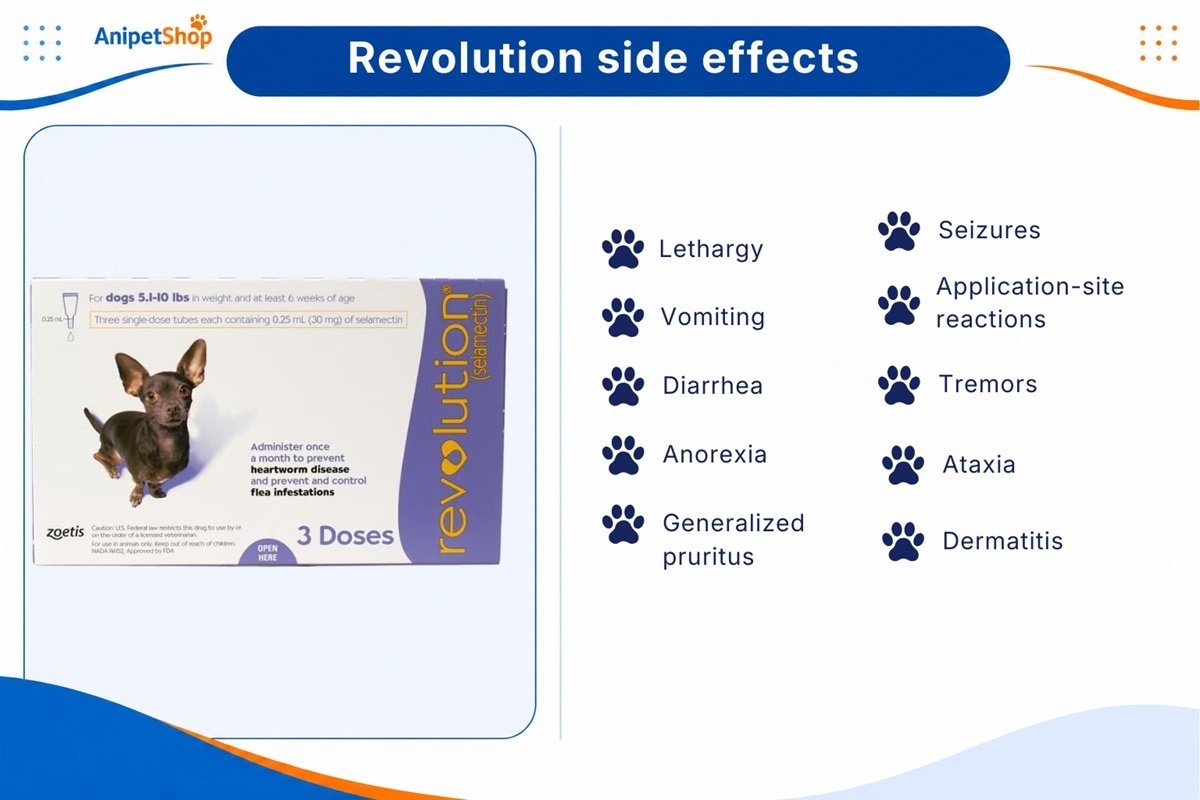
Lethargy, vomiting, diarrhea, and decreased appetite are among the adverse events most frequently reported in dogs after Revolution (selamectin), based on post-approval reports. Other reported reactions include generalized itching, seizures, application-site reactions, tremors, ataxia, and dermatitis. However, the product label notes that post-approval reports cannot be used to reliably estimate how often these reactions occur or establish whether Revolution caused them.
Revolution is a topical parasiticide containing selamectin. It is approved for dogs six weeks of age and older and is used for flea control, heartworm prevention, ear mites, sarcoptic mange, and certain tick infestations.
This guide walks through what’s commonly reported, which reactions may be more serious, what to watch for at the application site, which dogs may need extra caution, and when to contact your veterinarian.

What side effects can Revolution cause in dogs?
The most frequently reported adverse events in dogs following post-approval use of Revolution are lethargy, vomiting, diarrhea, and anorexia, followed by generalized itching, seizures, application-site reactions, tremors, ataxia, death, and dermatitis.
These reports come from post-approval adverse drug experience reporting. The label specifically cautions that not all adverse events are reported and that the available data cannot reliably determine the frequency of each reaction or prove that the product caused the event.
Earlier pre-approval clinical trials also reported vomiting, loose stool or diarrhea with or without blood, loss of appetite, lethargy, salivation, rapid breathing, and muscle tremors in treated dogs and cats, with each of these signs occurring in no more than 0.5% of the 1,743 treated animals.
The reported reactions include:
|
Adverse Reaction |
What Owners May Notice |
| Lethargy | Unusual tiredness or reduced activity |
| Vomiting | Throwing up after treatment |
| Diarrhea | Loose or watery stools, sometimes with blood |
| Anorexia | Reduced or absent appetite |
| Generalized pruritus | Increased scratching or itching |
| Seizures | Sudden shaking, stiffening, or loss of body control |
| Application-site reactions | Hair loss, lesions, redness, itching, or inflammation |
| Tremors | Shaking or twitching |
| Ataxia | Wobbling, staggering, or difficulty coordinating movement |
| Dermatitis | Skin inflammation or irritation |
These signs vary in severity. Digestive or behavioral changes may be mild, while neurological signs such as seizures, tremors, and ataxia warrant prompt veterinary attention.
Which side effects of Revolution are considered serious?
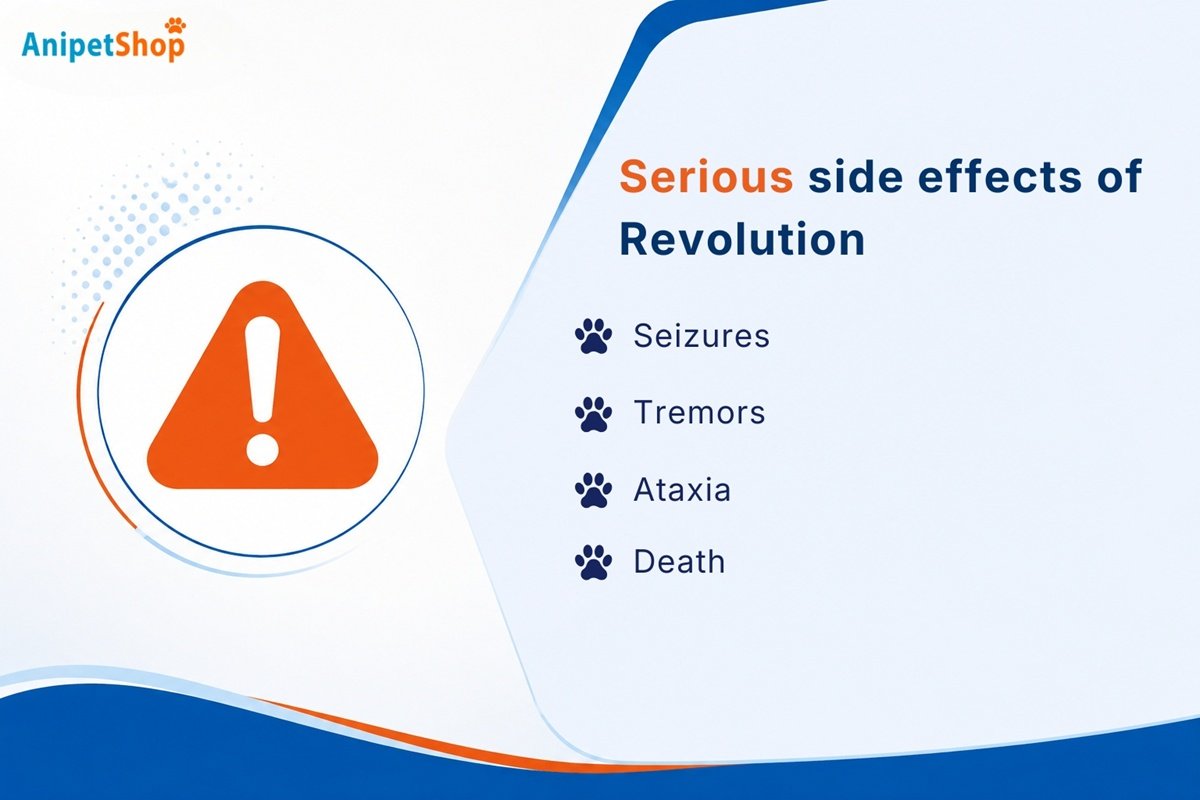
Serious reactions reported after Revolution include seizures, tremors, ataxia, and, in post-approval reports, death. The product label does not provide enough information to determine how often these events occur or whether every reported event was caused by Revolution.
Here are some signs to watch for:
- Seizures: Your dog may suddenly shake, stiffen, lose control of its body, or behave unusually.
- Tremors: Your dog may shake or twitch involuntarily.
- Loss of coordination (ataxia): Your dog may wobble, stagger, or have difficulty walking normally.
These neurological signs should be taken seriously, particularly if they are new, severe, or persistent.
Revolution has also been studied in avermectin-sensitive Collies. In one pre-clinical oral dosing study, one sensitive Collie developed ataxia for several hours after receiving 5 mg/kg orally, although no other adverse reactions occurred after subsequent higher doses. In a separate topical safety study using 1, 3, and 5 times the recommended dose, salivation was observed in all treatment groups, including the vehicle control.
What application-site reactions can Revolution cause?
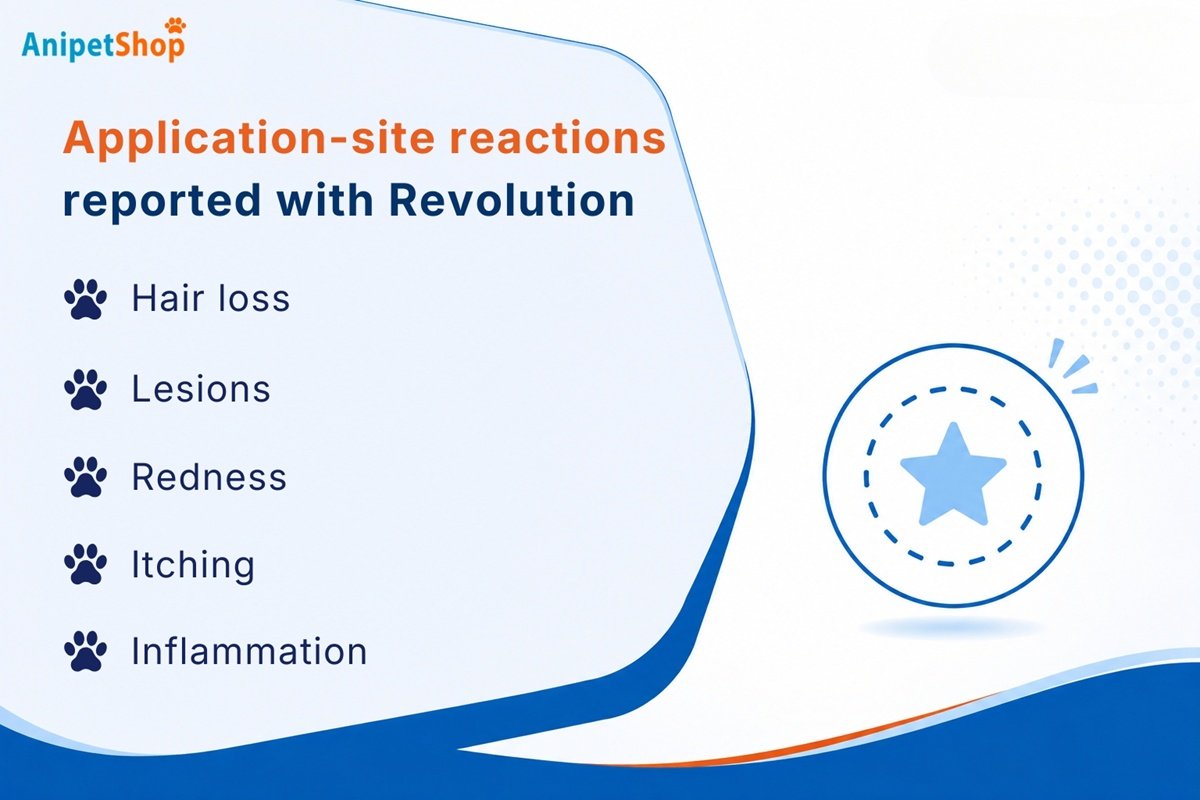
Because Revolution is applied directly to the skin, some dogs may develop reactions at or near the treatment site. Reported application-site reactions include hair loss, lesions, redness, itching, and inflammation.
Some signs to watch for include:
- Hair loss: A patch of hair may become thinner or fall out around the application area.
- Redness or inflammation: The skin may appear irritated or swollen.
- Itching: Your dog may scratch, lick, or bite at the treatment area.
- Skin lesions: Changes in the skin may develop where the product was applied.
These reactions were reported in post-approval experience, but their frequency cannot be reliably estimated from the available reports.
The label also notes that temporary stiff hair, hair clumping, hair discoloration, or a slight powdery residue may appear at the treatment site in some animals. These effects are temporary and do not affect the safety or effectiveness of Revolution.
Which dogs may have a higher risk of side effects?
The Revolution label does not identify a specific group of dogs as generally being more likely to experience adverse reactions. However, some dogs require additional caution because of their health status or circumstances.
Dogs that may need extra attention include:
- Sick, debilitated, or underweight dogs: The label specifically states that Revolution should not be used in sick, debilitated, or underweight animals.
- Dogs with an existing heartworm infection: Dogs should be tested for existing heartworm infections before administration. Revolution is intended to prevent heartworm disease, but it is not effective against adult Dirofilaria immitis.
- Avermectin-sensitive Collies: Safety studies found Revolution could be used in avermectin-sensitive Collies at topical doses up to five times the recommended dose without observed adverse reactions. However, an oral pre-clinical study did report temporary ataxia in one sensitive Collie after a 5 mg/kg dose.
- Young puppies: Revolution is labeled for dogs six weeks of age and older. Safety studies included six-week-old puppies given 1, 3, 5, and 10 times the recommended dose, with no adverse reactions observed in those studies.
Having one of these factors does not necessarily mean your dog cannot receive Revolution. Your veterinarian can determine whether the medication is appropriate based on your dog’s health and heartworm status.
How can you reduce the risk of side effects when giving your dog Revolution?
The best way to reduce medication-related problems is to use the correct weight-based dose and apply Revolution exactly as directed.
Keep these points in mind:
- Check your dog’s age and weight: Revolution is labeled for dogs six weeks of age and older. The recommended minimum dose is 2.7 mg of selamectin per pound (6 mg/kg) of body weight.
- Choose the correct dose: Revolution is supplied in different strengths for different weight ranges. Dogs weighing up to 130 lb have designated weight bands, while dogs over 130 lb require an appropriate combination of tubes.
- Apply it to dry, intact skin: Part the hair at the base of the neck in front of the shoulder blades until the skin is visible, then apply the entire contents of the tube directly to the skin. Do not apply Revolution to broken skin or wet hair.
- Do not massage the product into the skin: The label instructs owners to place the tube directly on the skin and empty its contents without massaging the product in.
- Have the application technique demonstrated: A veterinarian or veterinary technician should demonstrate or instruct the owner on proper topical application before the first use.
- Test for heartworm infection first: Dogs should be tested for existing heartworm infections before Revolution is administered.
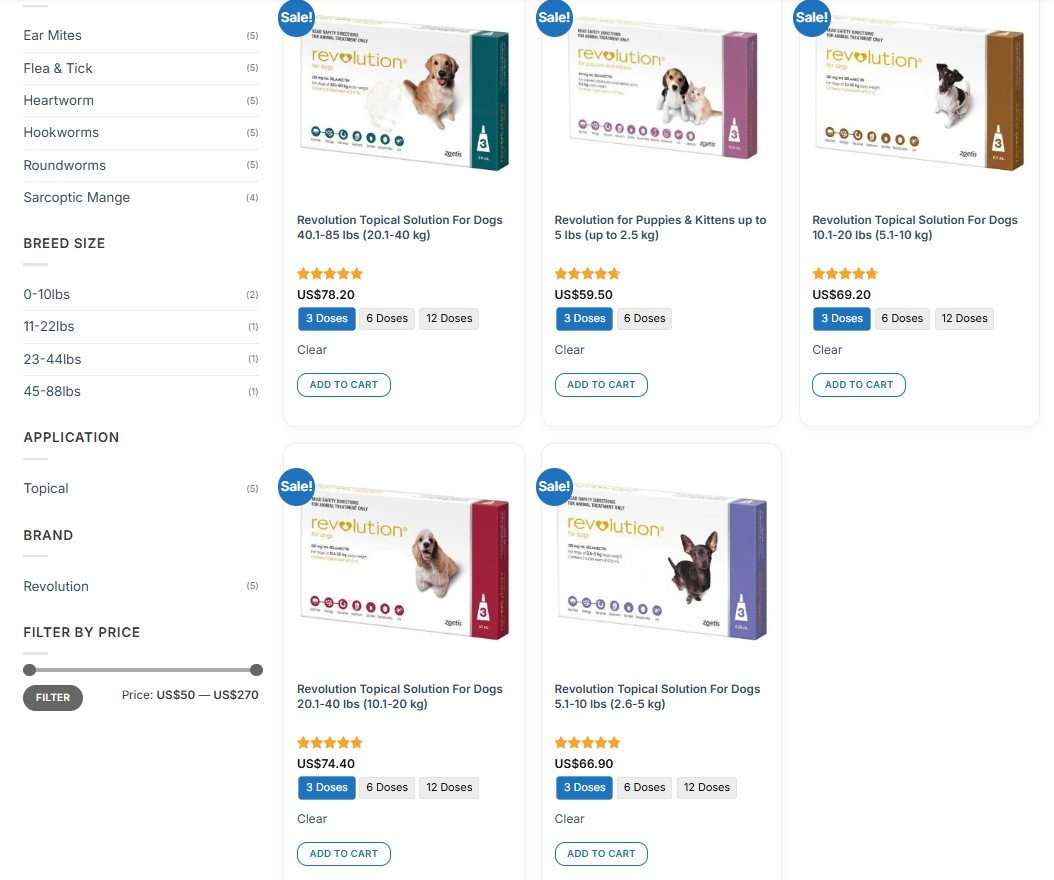
For dogs, the labeled weight ranges are:
- Revolution for Puppies up to 5 lbs (up to 2.5 kg)
- Revolution for Dogs 5.1–10 lbs (2.6–5 kg)
- Revolution for Dogs 10.1–20 lbs (5.1–10 kg)
- Revolution for Dogs 20.1–40 lbs (10.1–20 kg)
- Revolution for Dogs 40.1–85 lbs (20.1–40 kg)
Dogs over 130 lb require an appropriate combination of tubes according to the product label.
What should you do if your dog experiences a reaction?
If your dog develops unusual symptoms after Revolution, monitor the reaction closely and consider how severe or persistent the symptoms are. Because adverse events can range from mild digestive changes to neurological signs, the appropriate response depends on what your dog is experiencing.
- Monitor mild symptoms: Watch for vomiting, diarrhea, reduced appetite, or tiredness and note whether the symptoms improve or worsen.
- Check the application site: Look for redness, itching, inflammation, hair loss, or other changes where Revolution was applied.
- Watch for neurological signs: Pay close attention to seizures, tremors, or difficulty walking.
- Contact your veterinarian: Seek veterinary advice if symptoms are persistent, worsening, or unusual for your dog.
- Seek urgent veterinary care: Severe neurological signs, collapse, or other potentially life-threatening symptoms require prompt veterinary attention.
- Discuss future doses with your veterinarian: If your dog experiences an adverse reaction, ask your veterinarian whether Revolution should be used again before giving another dose.
Do not assume that a reported reaction was necessarily caused by Revolution. The product label notes that post-approval reports cannot reliably establish a causal relationship between exposure and every reported adverse event.
When should you contact your veterinarian right away?
Contact your veterinarian promptly if your dog develops severe, persistent, or neurological symptoms after receiving Revolution.
- Seizures: Any new seizure-like episode warrants veterinary attention.
- Tremors or trouble walking: Ongoing shaking, wobbling, or difficulty coordinating movement should be evaluated.
- Severe or persistent vomiting or diarrhea: These signs may require attention when they continue or occur alongside other concerning symptoms.
- Significant skin reactions: Contact your veterinarian if redness, inflammation, itching, lesions, or hair loss at the application site is severe or worsening.
- Collapse or other severe symptoms: Seek urgent veterinary care for potentially life-threatening changes.
Mild, isolated vomiting, diarrhea, tiredness, or appetite changes have been reported after Revolution, but owners should monitor their dogs closely and contact a veterinarian if symptoms persist, worsen, or are accompanied by neurological signs.
FAQs about Revolution side effects in dogs
Are Revolution side effects common in dogs?
The Revolution label does not provide reliable frequency estimates for the adverse events reported after approval. In post-approval reports, lethargy, vomiting, diarrhea, and anorexia were the most frequently reported adverse events in dogs, but these reports cannot establish how often the reactions actually occur.
Can Revolution cause seizures in dogs?
Seizures have been reported in dogs following Revolution use. They appear in the post-approval adverse event reports, but the available data cannot determine their true frequency or establish that Revolution caused every reported seizure.
Can Revolution cause vomiting or diarrhea in dogs?
Yes. Vomiting and diarrhea have been reported in dogs following Revolution use. Both were among the adverse events reported during pre-approval clinical trials and are also among the more frequently reported adverse events in post-approval reports.
Can Revolution cause hair loss at the application site?
Yes. Application-site reactions reported after Revolution include alopecia, lesions, redness, itching, and inflammation. The label also notes that temporary hair stiffness, clumping, discoloration, or a slight powdery residue can occur at the treatment site and do not affect the product’s safety or effectiveness.
Is Revolution safe for puppies?
Revolution is labeled for dogs six weeks of age and older. In safety studies, six-week-old puppies received 1, 3, 5, and 10 times the recommended dose without observed adverse reactions. However, the appropriate product strength and use should still be determined according to the dog’s weight and veterinary guidance.
What should I do if my dog has a reaction to Revolution?
Monitor your dog and note what symptoms appear, how severe they are, and whether they improve or worsen. Contact your veterinarian for persistent or worsening symptoms, and seek prompt veterinary attention for seizures, tremors, difficulty walking, collapse, or other severe reactions.
Revolution has been tested in healthy dogs across more than 100 pure and mixed breeds, including puppies six weeks of age and older, pregnant and lactating females, breeding males and females, and avermectin-sensitive Collies. Reported adverse events in dogs include lethargy, vomiting, diarrhea, anorexia, itching, seizures, application-site reactions, tremors, ataxia, death, and dermatitis. Because post-approval reporting cannot reliably establish frequency or causation, any concerning reaction should be evaluated based on the individual dog’s symptoms and health history.

Anipet Team
Anipet Team is dedicated to sharing reliable information about pet health, veterinary care, and animal wellbeing. Our content is researched and reviewed by veterinary professionals to provide pet owners with trusted, practical information for caring for their pets.