Free Shipping on Orders Over $99*



Price range: US$73.50 through US$137.80
This product has multiple variants. The options may be chosen on the product page
Sale!
Price range: US$68.00 through US$213.50
This product has multiple variants. The options may be chosen on the product page
Price range: US$62.00 through US$228.00
This product has multiple variants. The options may be chosen on the product page
Price range: US$53.00 through US$186.00
This product has multiple variants. The options may be chosen on the product page
Price range: US$52.00 through US$182.00
This product has multiple variants. The options may be chosen on the product page
Price range: US$65.00 through US$123.00
This product has multiple variants. The options may be chosen on the product page
Price range: US$52.10 through US$173.30
This product has multiple variants. The options may be chosen on the product page
Sale!
Price range: US$47.80 through US$84.50
This product has multiple variants. The options may be chosen on the product page
Sale!
Price range: US$45.80 through US$81.00
This product has multiple variants. The options may be chosen on the product page
Sale!
Price range: US$59.00 through US$200.00
This product has multiple variants. The options may be chosen on the product page

Price range: US$52.50 through US$168.50
This product has multiple variants. The options may be chosen on the product page
Price range: US$51.00 through US$178.00
This product has multiple variants. The options may be chosen on the product page
This collection covers topical spot-on and oral deworming medications for cats that target roundworms, hookworms, and tapeworms. Active compounds across these products include praziquantel, emodepside, selamectin, sarolaner, esafoxolaner, eprinomectin, imidacloprid, and moxidectin, each with a distinct mechanism of action and parasite spectrum.
These formulations are available without a prescription through Anipetshop, a licensed pharmacy operating under APVMA regulations in Australia, and contain the same active ingredients at the same labeled dosages as the corresponding products sold in the U.S. market.
Do You Need a Prescription for Intestinal Worms Medicine For Cats?
Intestinal worm medications for cats are available without a prescription through Anipetshop, a licensed online pharmacy operating under Australia’s APVMA regulations.
Whether a prescription is required depends on the regulatory classification in the country of purchase, not the formulation of the medication itself.
- In the United States, the FDA classifies many veterinary antiparasitic medications as prescription-only.
- Australia’s APVMA classifies the same compounds as over-the-counter products, meaning licensed Australian pharmacies can legally supply them without a prescribing veterinarian.
Because Anipetshop operates under APVMA regulations, these medications are legally dispensed without a prescription. The products supplied contain the same active ingredients, at the same labeled dosages, as the prescription versions sold in the U.S. market.
Products available without prescription through Anipetshop include:
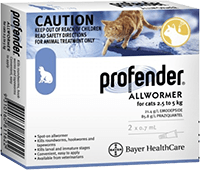
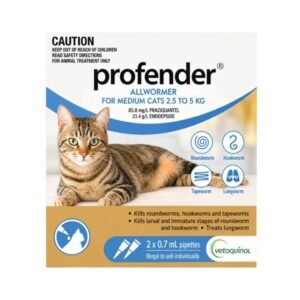
- Profender
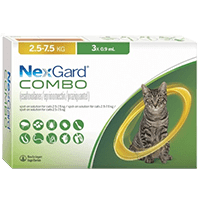
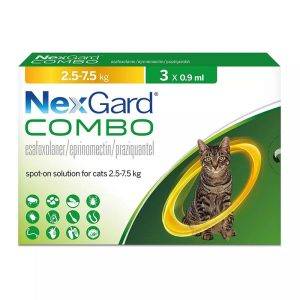
- NexGard Combo
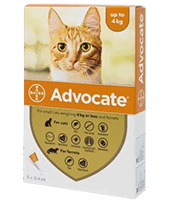
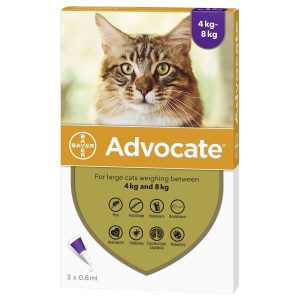
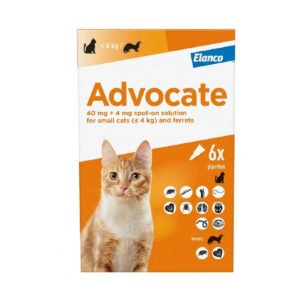
- Advocate
- Revolution
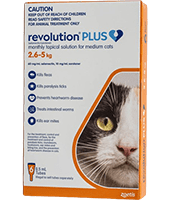
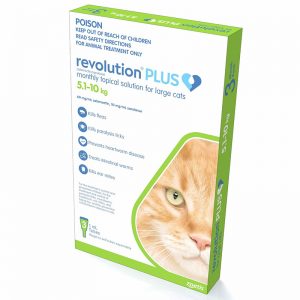
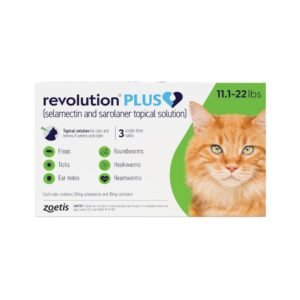
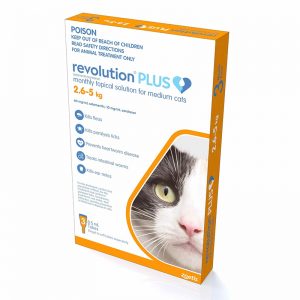
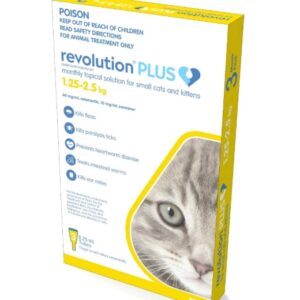
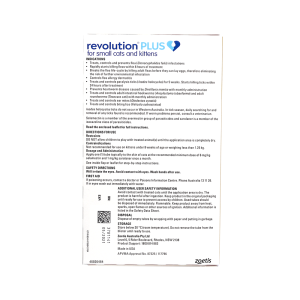
- Revolution Plus
- Stronghold
- Stronghold Plus
Why Do You Need To Buy Intestinal Worms Medicine For Cats?
Intestinal parasites in cats cause direct tissue damage, nutrient competition, and in several species, zoonotic transmission to humans. Nearly all kittens acquire worm infections before or shortly after birth, either transplacentally or through infected milk, which makes early treatment a clinical priority rather than a precaution.
The following consequences explain why deworming is necessary regardless of a cat’s age or living situation:
- Nutrient competition leading to malnutrition: Intestinal worms attach to the gut lining and absorb nutrients before the host can. In kittens, sustained infection results in measurable weight loss, protein deficiency, and stunted growth.
- Hookworm-induced blood loss: Ancylostoma species attach to intestinal mucosa and feed directly on blood. Heavy infestations cause iron-deficiency anemia, pale mucous membranes, and in young kittens, fatal hemorrhage.
- Roundworm-induced intestinal obstruction: Large Toxocara burdens can physically occlude the gastrointestinal tract. This is a surgical emergency and carries a high mortality risk without prompt intervention.
- Zoonotic transmission to household members: Toxocara cati larvae can migrate through human tissue after accidental ingestion of contaminated feces or soil. Ocular larva migrans, where larvae reach the eye, can cause permanent vision loss.
- Exposure risk in indoor-only cats: Indoor cats remain exposed through flea ingestion (the intermediate host for Dipylidium caninum tapeworms), contaminated soil carried in on footwear, and predation of infected rodents indoors.
Choosing the Right Intestinal Worms Medicine Format
Format selection affects how the active compound reaches the parasite, how quickly it acts, and whether the cat will tolerate administration. Three delivery formats are available: topical spot-on, oral tablet, and oral liquid suspension.
The table below compares each format across clinically relevant criteria to inform product selection:
|
Aspect |
Topical (Spot-On) | Oral Tablet |
Oral Liquid/Suspension |
|
Mechanism |
Absorbed transdermally into systemic circulation; reaches intestinal parasites via bloodstream. | Absorbed through the gastrointestinal tract; acts directly on parasites in the gut lumen. |
Absorbed through the gastrointestinal tract; acts on parasites during intestinal transit. |
|
Speed of Action |
Onset within 6 to 12 hours; full distribution within 24 hours. | Onset as fast as 30 minutes for some compounds. |
Onset within a few hours for most formulations. |
|
Duration |
Typically 30 days per application for combination products. | Single dose for active infection; a second dose at 2 to 3 weeks is required for some species. |
Single dose for current infection; kittens require more frequent re-dosing. |
|
Water Resistance |
Application site should not be wet for 24 to 48 hours post-application. | Unaffected by water exposure. |
Unaffected by water exposure. |
|
Tick Coverage |
Present in combination products such as Revolution Plus and Stronghold Plus. | Absent in most tablet formulations. |
Absent in all liquid suspension formulations. |
|
Best For |
Cats that resist oral administration; owners requiring combined flea, tick, and worm coverage. | Cats that accept oral dosing; scenarios requiring precise weight-based dosing. |
Kittens under minimum tablet weight thresholds; multi-cat households requiring syringe dosing. |
1. Topical (Spot-On) Treatments
Spot-on formulations are applied to the skin at the base of the skull, where the cat cannot reach with its tongue or paws during grooming. The active compounds absorb transdermally and distribute systemically, reaching both external parasites and intestinal worms through the bloodstream.
Products available in spot-on format through Anipetshop include:
- Profender
- NexGard Combo
- Advocate
- Revolution
- Revolution Plus
- Stronghold
- Stronghold Plus
2. Oral Tablets
Tablets deliver active compounds directly into the gastrointestinal tract, where they act on parasites in the gut lumen. This format allows precise weight-based dosing and is appropriate for cats that accept oral administration by hand, in food, or via a pill dispenser.
Oral tablet products include Drontal, which targets roundworms, hookworms, and tapeworms via praziquantel and pyrantel pamoate, and Elanco Tapeworm Dewormer, which targets Dipylidium caninum and Taenia species via praziquantel.
3. Oral Liquids (Suspensions)
Liquid suspensions are administered by oral syringe, either directly into the mouth or mixed into a small amount of wet food. This format is appropriate for kittens that have not reached the minimum weight threshold for topical or tablet products, and for multi-cat households where dose measurement by volume is more practical.
Oral liquid products include Durvet WormEze, indicated for roundworm infections, and Panacur Oral Suspension (fenbendazole), which covers roundworms, hookworms, and some tapeworm species.
7 Best Medication Brands Defense Against Intestinal Worms in Cat at AnipetShop
All seven products listed below are topical spot-on formulations supplied through Anipetshop without a prescription, under APVMA regulations. Each contains the same active ingredients and labeled dosages as the corresponding products sold in regulated markets.
The table below compares each product by active compounds, parasite coverage, minimum age and weight requirements, and dosing instructions to support accurate product selection.
|
Brand |
Description | Target Users | Advantages |
Usage Guidelines |
|
Profender |
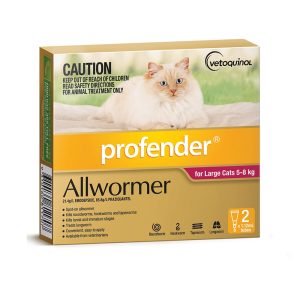
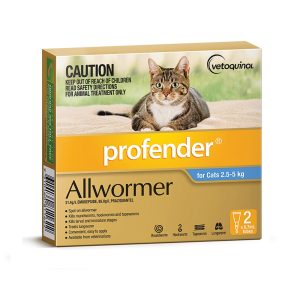
Topical dewormer with emodepside and praziquantel targeting roundworms, hookworms, and tapeworms | Cats 8 weeks old and 2.2 lbs (1 kg) minimum; safe for pregnant, breeding, and lactating cats | Single application eliminates 3 worm types; no oral dosing stress |
Apply to the skin at the base of the skull; check weight for correct tube size (Orange, Green, or Purple) |
|
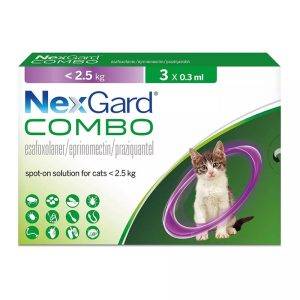
NexGard Combo |
All-in-one topical with esafoxolaner, eprinomectin, and praziquantel for fleas, ticks, heartworms, intestinal worms, and ear mites | Cats 8 weeks old and 1.8 lbs (0.8 kg) minimum | Broadest parasite coverage in a single monthly dose; treats both internal and external parasites |
Apply monthly to skin at base of skull; use Orange (1.8-5.5 lbs) or Green (5.5-16.5 lbs) tubes |
|
Advocate |
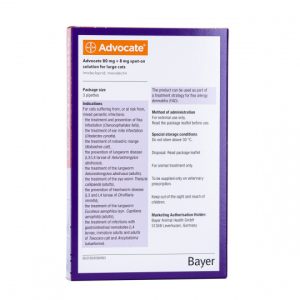
Monthly spot-on with imidacloprid and moxidectin for fleas, heartworms, roundworms, hookworms, whipworms, and ear mites | Cats 9 weeks old and 2 lbs (1 kg) minimum | Covers whipworms that many competitors miss; strong flea and heartworm prevention |
Apply monthly to skin at base of skull; Turquoise pack for all weight ranges |
|
Revolution |
Monthly topical with selamectin for fleas, heartworms, ear mites, roundworms, and hookworms | Cats 8 weeks old and 2.8 lbs (1.3 kg) minimum; safe for pregnant, breeding, and lactating cats | Proven safety profile across life stages; protects against 5 parasite types |
Apply monthly to skin at base of skull; Purple (2.8-5.5 lbs) or Blue (5.6-15 lbs) tubes |
|
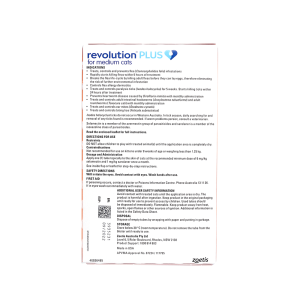
Revolution Plus |
Advanced monthly topical with selamectin and sarolaner adding tick protection to Revolution’s coverage | Cats 8 weeks old and 2.8 lbs (1.3 kg) minimum | Adds tick protection over standard Revolution; kills 6 parasite types |
Apply monthly to skin at base of skull; Purple (2.8-5.5 lbs), Blue (5.6-11 lbs), or Tan (11.1-22 lbs) tubes |
|
Stronghold |
Monthly topical with selamectin for fleas, heartworms, ear mites, roundworms, and hookworms | Cats 6 weeks old minimum; safe for pregnant, breeding, and lactating cats | Earliest start age at 6 weeks; safe for breeding and lactating cats |
Apply monthly to skin at base of skull; Purple (5.1-10 lbs) or Blue (10.1-20 lbs) tubes |
|
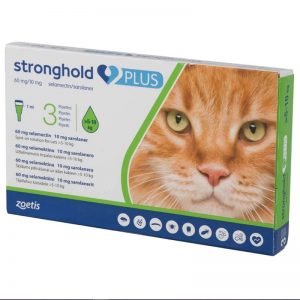
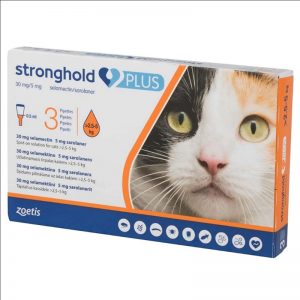
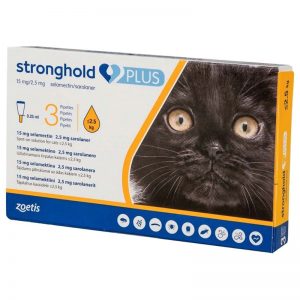
Stronghold Plus |
Enhanced monthly topical with selamectin and sarolaner adding tick and lice protection | Cats 8 weeks old and 2.8 lbs (1.3 kg) minimum; safe for pregnant, breeding, and lactating cats | Kills 7 parasite types including lice; safe across all life stages |
Apply monthly to skin at base of skull; Purple (2.8-5.5 lbs), Blue (5.6-11 lbs), or Tan (11.1-22 lbs) tubes |
How to Choose the Right Intestinal Worms Medicine for Cats?
Product selection depends on four sequential factors: the parasite species present, the cat’s current body weight, the cat’s age and life stage, and any health conditions that affect which compounds are safe to use. Working through these in order reduces the risk of selecting a product with the wrong spectrum, incorrect dose size, or a contraindicated active ingredient.
Follow these steps to identify the correct product before purchasing:
Step 1: Identify the parasite species present.
Different active ingredients target different parasite classes, and no single compound covers all worm species. Roundworms and hookworms respond to pyrantel pamoate, selamectin, moxidectin, or emodepside. Tapeworms require praziquantel specifically. If the worm type is unconfirmed, a fecal examination by a veterinarian will identify the species and prevent selecting a product with the wrong spectrum.
Step 2: Weigh your cat on the day of dosing.
All topical and oral dewormers are dosed by body weight, and tube or tablet selection is determined by weight band. A cat weighing 5.4 lbs (2.45 kg) falls into the lower tube size for NexGard Combo (Purple: 1.8 to 5.5 lbs), while a cat at 6 lbs (2.7 kg) requires the next size up (Yellow: 5.5 to 16.5 lbs). Underdosing due to an outdated weight estimate reduces efficacy; overdosing increases the risk of adverse effects.
Step 3: Confirm the cat meets the minimum age threshold for the product.
Most topical products are approved from 8 weeks of age and a minimum weight of 1.8 to 2.8 lbs depending on the formulation. Stronghold is approved from 6 weeks with no minimum weight listed, making it the appropriate option for younger kittens. Administering a product below its labeled minimum age or weight is an off-label use and should be discussed with a veterinarian first.
Step 4: Review the cat’s health history before selecting an active ingredient.
Cats with a history of neurological conditions or seizures require veterinary clearance before receiving isoxazoline-class compounds (esafoxolaner, sarolaner). Pregnant, breeding, and lactating cats should use only products with labeled approval for those life stages: Revolution, Stronghold, Stronghold Plus, and Profender carry explicit labeling for these groups. Consult a veterinarian if the cat has any underlying condition that may affect compound selection.
Step 5: Match the product to the cat’s parasite exposure frequency.
Cats with outdoor access or access to prey animals should receive monthly broad-spectrum treatment to cover re-exposure to roundworms, hookworms, and tapeworms. Indoor-only cats with no flea exposure require deworming less frequently, but should still have a fecal examination twice a year to confirm parasite-free status. Multi-cat households require simultaneous treatment of all animals to prevent cross-reinfection.
Order Intestinal Worms Medicine for Cats Without Vet Prescription at Anipet Shop
Anipetshop is a licensed online pharmacy operating under APVMA regulations in Noosaville, Australia. Intestinal worm medications are dispensed without a prescription because the APVMA classifies these compounds as over-the-counter products, whereas the U.S. FDA designates the same formulations as prescription-only. The active ingredients, dosage concentrations, and manufacturing standards are identical across both regulatory markets.
Products are sourced directly from original manufacturers including Zoetis, Boehringer Ingelheim, and Elanco, with no generic substitutions. The following sourcing and supply conditions apply to all orders:
- English-language labeling: All products are supplied with English labeling that matches the manufacturer’s original packaging for the relevant market.
- Expiration date integrity: Products are dispatched with sufficient shelf life remaining to complete the labeled treatment course without potency loss.
- Direct manufacturer sourcing: Stock is sourced from licensed suppliers in Australia and Europe, not from secondary or gray-market distributors.
- Formulation equivalence: Active ingredients, dosage concentrations, and excipient compositions match the labeled specifications of the corresponding products sold in regulated U.S. and international markets.
How to Administer Intestinal Worms Medicine to a Cat
Intestinal worm medications for cats are available in three administration formats: topical spot-on, oral tablet, and oral liquid suspension. The correct technique differs by format, and errors in application result in either incomplete absorption or a missed dose entirely. Select the method that matches the product purchased.
1. Topical Spot-On Application
The active compound absorbs transdermally and requires direct contact with bare skin. Application onto fur prevents absorption entirely and renders the dose ineffective.
Step 1: Part the fur at the base of the skull. Use one or two fingers to separate the coat until the skin is clearly visible. The base of the skull is the only site a cat cannot reach with its tongue or paws during grooming.
Step 2: Dispense the full tube contents onto the exposed skin. Place the open tip of the tube directly against the skin and squeeze the entire contents onto one spot without dragging the tube. A partially empty tube indicates an incomplete dose.
Step 3: Restrict bathing for 48 hours post-application. Water exposure within 48 hours of application dilutes the compound at the absorption site before full transdermal uptake is complete. Keep the cat away from other animals until the application site is dry, typically within 1 to 2 hours.
2. Oral Tablet Administration
Oral tablets are absorbed through the gastrointestinal tract and act directly on parasites in the gut lumen. Accurate placement at the base of the tongue is critical: shallow placement allows the cat to eject the tablet before swallowing, resulting in a missed dose.
Step 1: Attempt food concealment first. Place the tablet inside a small amount of wet food or a pill pocket and offer it before the cat’s regular meal. This is appropriate only for intact, uncoated tablets where embedding does not affect the release mechanism.
Step 2: Position the cat for direct pilling if food concealment fails. Place the cat on a stable surface and wrap it securely in a towel to immobilize the forelimbs. Hold the head from above with the non-dominant hand, placing the thumb and forefinger on the upper cheekbones.
Step 3: Tilt the head and open the jaw. Tilt the head back until the nose points toward the ceiling. The lower jaw should drop open under its own weight. Do not force the jaw open with the fingers, as this increases resistance and stress.
Step 4: Place the tablet at the base of the tongue. Using the dominant hand, place the tablet as far back on the tongue as possible, targeting the posterior third. A pill dispenser keeps fingers clear of the teeth and improves placement accuracy.
Step 5: Confirm swallowing. Close the mouth and hold it gently shut. Stroke the throat or blow briefly on the nose until the cat licks its lips, indicating the swallow reflex has been triggered.
3. Oral Liquid Administration
Oral liquid suspensions are administered by syringe and absorb through the gastrointestinal tract. This format is appropriate for kittens below the minimum weight threshold for tablet or spot-on products, and for cats that resist oral tablet administration. Dose volume is strictly weight-dependent: measure precisely, as underdosing reduces efficacy and overdosing increases the risk of adverse effects.
Step 1: Draw the exact dose into an oral syringe. Confirm the cat’s current weight before measuring, as dose volume is calculated per kilogram of body weight. Do not estimate.
Step 2: Insert the syringe into the side of the mouth behind the canine teeth. Position the tip just behind the large upper canine teeth, angled toward the cheek pouch. Directing liquid straight down the pharynx causes aspiration and choking.
Step 3: Dispense in small increments. Depress the plunger slowly in short bursts to allow swallowing between each increment. If the cat coughs or chokes, withdraw the syringe immediately and allow the airway to clear before continuing.
Are There Any Side Effects of Intestinal Worms Medicine for Cats?
Topical and oral dewormers can produce adverse reactions ranging from transient gastrointestinal signs to, in rare cases, neurological events requiring emergency care. The severity and likelihood of side effects vary by drug class and individual patient factors. Cats with a history of neurological conditions or known hypersensitivity to any active ingredient should be assessed by a veterinarian before treatment is initiated.
The following side effects are organized by clinical significance:
Mild and transient reactions (typically resolve within 24 to 48 hours without intervention):
- Gastrointestinal upset: Vomiting, diarrhea, or soft stools occurring within 24 to 48 hours of administration are the most commonly reported reactions across both oral and topical formulations.
- Lethargy: Reduced activity lasting up to 48 hours post-dose has been reported across multiple drug classes and does not require intervention if the cat continues to eat and drink.
- Hypersalivation: Excessive drooling following topical application occurs when the cat grooms the application site and ingests the compound orally. Applying the product at the base of the skull rather than between the shoulder blades reduces this risk.
- Reduced appetite: Transient food refusal in the 12 to 24 hours following oral administration is reported for several formulations and resolves without treatment in most cases.
- Local skin irritation: Topical formulations can cause erythema, pruritus, or focal alopecia at the application site. If irritation persists beyond 48 hours or the skin becomes broken, contact a veterinarian before the next dose.
Serious reactions requiring immediate veterinary attention:
- Neurological signs: Seizures, disorientation, or ataxia following administration of isoxazoline-class compounds (esafoxolaner in NexGard Combo, sarolaner in Revolution Plus and Stronghold Plus) require immediate veterinary assessment. Cats with a prior seizure history should not receive these compounds without prior veterinary clearance.
- Systemic allergic reaction: Urticaria, facial oedema, or respiratory distress following any formulation indicates a hypersensitivity response. Administer no further doses and seek emergency veterinary care.
- Severe gastrointestinal toxicity: Repeated vomiting, haematochezia (blood in stool), or acute collapse following administration are signs of systemic toxicity and require emergency treatment.
Frequently Asked Questions About Intestinal Worm Medicine for Cats
Is it possible to treat my cat for worms without a vet visit?
Yes. Profender, NexGard Combo, Advocate, Revolution, and Revolution Plus are legally dispensed without a prescription through Anipetshop, which operates under APVMA regulations in Australia. The APVMA classifies these compounds as over-the-counter products; the U.S. FDA designates the same formulations as prescription-only. Cats with a history of seizures or neurological conditions require veterinary clearance before product selection.
How often should a cat be dewormed?
Indoor adult cats with no flea exposure should have a fecal examination twice per year. Kittens and newly acquired cats require fecal testing four times per year. Cats with outdoor access or flea exposure should receive a monthly broad-spectrum preventative such as Revolution Plus or NexGard Combo year-round.
Can kittens be dewormed?
Yes, provided the product meets the kitten’s age and weight requirements. Profender, Revolution, Revolution Plus, NexGard Combo, and Stronghold Plus are approved from 8 weeks of age. Stronghold is approved from 6 weeks with no minimum weight listed, making it the appropriate option for younger kittens that have not yet reached other products’ weight thresholds.
Does heartworm medication also kill intestinal worms?
Several do, but the spectrum varies by active ingredient. Revolution Plus and NexGard Combo cover roundworms, hookworms, and tapeworms alongside heartworm. Selamectin-only products such as Revolution and Stronghold cover roundworms and hookworms but not tapeworms, which require praziquantel specifically.
How do I know if the medication worked?
Dead worms may be visible in the litter box or vomit within 24 hours of administration. Resolution of proglottid segments (rice-grain-like pieces near the tail or in feces) indicates tapeworm clearance. A fecal examination 2 to 4 weeks after treatment confirms whether the infection has been fully resolved.
Can deworming tablets be crushed into food?
Check the product labeling first. Crushing bitter tablets causes food refusal or hypersalivation in most cats. Enteric-coated or film-coated tablets should never be crushed, as the coating controls the release rate of the active compound in the gastrointestinal tract.
What should I do if my cat vomits within an hour of oral dosing?
Do not re-dose without veterinary guidance. The amount absorbed before vomiting is unknown, and re-dosing risks overdose. Contact a veterinarian to determine whether a repeat dose is appropriate and at what interval.
Can a topical dewormer be applied to a long-haired cat?
Yes, but the fur must be parted thoroughly until bare skin at the base of the skull is clearly visible before the tube is dispensed. Application onto fur rather than skin prevents transdermal absorption and renders the dose ineffective.
Can dog deworming medication be used on a cat?
No. Permethrin, present in many canine formulations, causes acute neurological toxicity in cats including tremors and seizures, and is fatal without emergency treatment. Never administer any product labeled for dogs to a cat.
Is it safe to deworm a pregnant or nursing cat?
It depends on the product. Revolution, Stronghold, Stronghold Plus, and Profender carry manufacturer approval for pregnant, breeding, and lactating cats. NexGard Combo, Advocate, and Revolution Plus do not carry the same labeled approval for all life stages. Consult a veterinarian before treating a pregnant or nursing cat.
Why does my cat still have worms after treatment?
The two most common causes are re-infestation from an untreated source and a mismatch between the active ingredient used and the parasite species present. Tapeworm re-infestation occurs when fleas remain in the environment, as Dipylidium caninum uses the flea as an intermediate host. A follow-up fecal examination confirms whether the original species was covered by the product used.
Does one medication kill all worm species?
No. Selamectin-based products cover roundworms and hookworms but not tapeworms. Tapeworm treatment requires praziquantel, present in Profender, NexGard Combo, and Drontal. If multiple species are confirmed, select a product whose labeled spectrum covers all identified parasites.
How long does it take for deworming medication to work?
Most dewormers begin acting within 2 to 6 hours and clear the majority of the worm burden within 24 hours. A second dose at 2 to 3 weeks is required for some species to eliminate larvae that were not yet susceptible at the time of the first dose.
Do fleas need to be treated at the same time as intestinal worms?
Yes, if tapeworms are present or flea exposure is ongoing. Dipylidium caninum completes part of its lifecycle inside the flea, and a cat ingests the parasite by swallowing an infected flea during grooming. Treating tapeworms without eliminating the flea population results in immediate re-infestation.