Free Shipping on Orders Over $99*




Price range: US$95.80 through US$96.98
This product has multiple variants. The options may be chosen on the product page


Price range: US$60.00 through US$112.00
This product has multiple variants. The options may be chosen on the product page
Price range: US$73.50 through US$137.80
This product has multiple variants. The options may be chosen on the product page
Sale!
Price range: US$68.00 through US$213.50
This product has multiple variants. The options may be chosen on the product page
Price range: US$62.00 through US$228.00
This product has multiple variants. The options may be chosen on the product page
Sale!

Price range: US$58.64 through US$98.92
This product has multiple variants. The options may be chosen on the product page
Sale!
Price range: US$58.64 through US$98.92
This product has multiple variants. The options may be chosen on the product page
Price range: US$58.50 through US$110.50
This product has multiple variants. The options may be chosen on the product page
Price range: US$62.50 through US$116.50
This product has multiple variants. The options may be chosen on the product page
Sale!

Price range: US$59.50 through US$99.65
This product has multiple variants. The options may be chosen on the product page
Sale!
Price range: US$56.50 through US$170.50
This product has multiple variants. The options may be chosen on the product page
Price range: US$53.00 through US$186.00
This product has multiple variants. The options may be chosen on the product page
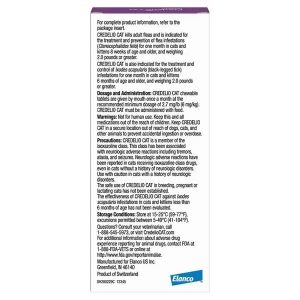
This collection covers topical spot-ons, oral chewables, and medicated collars formulated for flea and tick control in cats. Products included are Bravecto, Credelio, Advocate, NexGard Combo, Revolution, Revolution Plus, and Stronghold. Each targets specific parasite species and differs in active ingredient class, duration of coverage, and parasite spectrum.
All products are supplied by Anipetshop, a licensed online pharmacy operating under APVMA regulations in Noosaville, Australia. The active ingredients and dosage standards are identical to those in equivalent products sold in the U.S. market. No prescription is required to order, as these formulations are classified as over-the-counter under APVMA’s regulatory framework.
Do You Need a Prescription for Flea and Tick Medicine For Cats?
Flea and tick medications for cats are available at Anipetshop without a prescription. Anipetshop is a licensed online pharmacy operating under the Australian Pesticides and Veterinary Medicines Authority (APVMA), which classifies many of these products as over-the-counter. U.S. customers can order directly without a vet visit or a valid veterinarian-client-patient relationship (VCPR).
Whether a prescription is required depends on the country of supply and its regulatory framework, not on the formulation of the medication itself.
- In the United States, the FDA classifies many systemic flea and tick treatments, particularly oral and combination therapies, as prescription-only, requiring documented veterinary authorization before dispensing.
- Australia’s APVMA applies a risk-based classification system under which the same active ingredients, at the same dosage standards, are designated over-the-counter and can be dispensed without veterinary authorization.
As Anipetshop operates under APVMA regulations, it can supply these medications legally to customers in the U.S., Canada, and the UK without a prescription requirement. The products carry the same active ingredients and meet the same dosage standards as the equivalent prescription-only products sold in the U.S. market. All products are sourced directly from original manufacturers, not reformulated or substituted.
The following flea and tick medications for cats are currently available at Anipetshop without a prescription:
Why Flea and Tick Prevention Matters Year-Round?
Fleas and ticks pose direct medical risks to cats, including pathogen transmission, severe dermatological reactions, and systemic illness. Outdoor exposure is not a prerequisite: fleas can enter a home on clothing or footwear, and ticks can be carried in on other animals or through gaps in screens. Year-round prevention is clinically indicated for both indoor and outdoor cats.
The following conditions illustrate the clinical consequences of untreated flea and tick exposure:
- Bacterial and parasitic infection: Fleas transmit Bartonella henselae (cat scratch fever) and Dipylidium caninum Ticks transmit Anaplasma spp. and Cytauxzoon felis, a protozoan infection with a high fatality rate in domestic cats.
- Hemolytic anemia from blood loss: Sustained flea infestation causes measurable red blood cell depletion, particularly in kittens and cats under 2 kg. Severe cases require veterinary intervention before antiparasitic treatment can proceed.
- Flea Allergy Dermatitis (FAD): Cats sensitized to flea saliva mount an IgE-mediated hypersensitivity response to a single bite. This produces pruritus, excoriation, secondary bacterial skin infection, and focal alopecia that persists after fleas are eliminated.
- Environmental infestation and reinfestation cycle: A single female flea deposits up to 50 eggs per day into carpet fibers, bedding, and upholstery. This environmental reservoir sustains reinfestation even after the cat has been treated.
- Zoonotic pathogen exposure to household members: Fleas and ticks transmit Rickettsia typhi (murine typhus) and Borrelia burgdorferi (Lyme disease) to humans. Cats in affected households are a direct amplification vector for human exposure.
Treating an established infestation requires more than applying a product to the cat. Professional carpet treatment typically costs $50 to $70 per room, and a full home decontamination service runs approximately $200 to $300 per visit. Consistent monthly prevention costs a fraction of a single remediation visit. Products such as Revolution Plus and NexGard Combo cover fleas, ticks, heartworm larvae, and intestinal parasites within a single monthly dose.
Types of Flea and Tick Medications for Cats Without Vet Prescription
Flea and tick medications for cats are available in three delivery formats: topical spot-ons, oral chewables, and medicated collars. Each format differs in active ingredient class, onset time, duration of coverage, and parasite spectrum. The table below compares these formats across the criteria most relevant to selecting a product.
| Aspect | Topical Spot-Ons | Oral Chewables | Flea Collars (Seresto) |
| Mechanism | Applied to skin; active ingredient spreads via skin lipids or absorbs systemically to kill parasites on contact or at bite. | Ingested; enters bloodstream and kills fleas and ticks when they bite. | Worn around the neck; releases active ingredients into the skin lipid layer over several months. |
| Speed of Action | Kills fleas within 6 to 12 hours; ticks within 36 to 48 hours. | Kills fleas within 30 minutes (nitenpyram/Capstar); isoxazoline chewables act within 4 hours. | Kills fleas within 24 hours; ticks within 48 hours. |
| Duration | 1 month per dose; Bravecto extends to 12 weeks. | 24 hours (Capstar); 1 month (Credelio). | Up to 8 months. |
| Water Resistance | Water-resistant after 24 to 48 hours post-application. | Unaffected by bathing or swimming; efficacy is systemic. | Water-resistant; remains effective after bathing. |
| Tick Coverage | Varies by product; Revolution Plus (sarolaner + selamectin) and NexGard Combo cover multiple tick species. Revolution and Advocate do not cover ticks. | Limited; Capstar does not kill ticks. Credelio covers ticks. | Covers multiple tick species. |
| Parasite Spectrum | Varies; NexGard Combo and Advocate extend to heartworm larvae and intestinal worms. | Flea and tick only for most OTC options. | Flea and tick only. |
1. Topical Spot-On Treatments
Topical spot-ons are liquid formulations dispensed in single-dose pipettes and applied directly to the skin at the base of the skull, where the cat cannot self-groom the site. Depending on the active ingredient, the compound either distributes through skin lipids to provide contact-kill coverage or absorbs systemically and kills parasites at the point of bite. The products available at Anipetshop in this format are listed below, with their active ingredients and coverage scope.
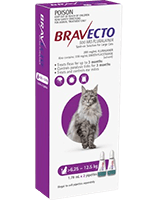
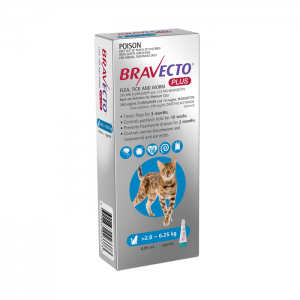
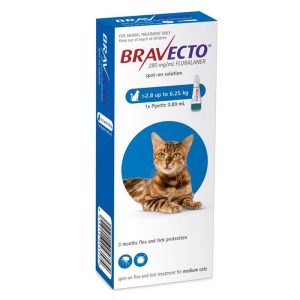
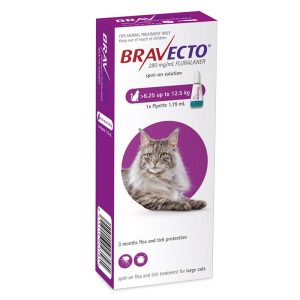
- Bravecto: Contains fluralaner, an isoxazoline-class compound. A single application provides flea and tick coverage for 12 weeks, compared to the 4-week duration of most other topicals.
- Advocate: Contains imidacloprid and moxidectin. Kills fleas and ear mites, prevents heartworm larvae, and treats roundworm and hookworm infections. Does not cover ticks.
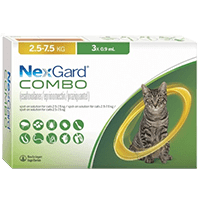
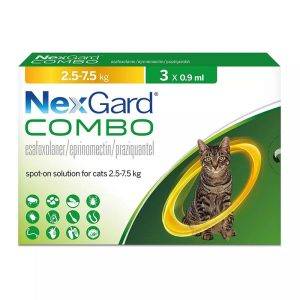
- NexGard Combo: Contains esafoxolaner, eprinomectin, and praziquantel. Covers fleas, ticks, heartworm larvae, roundworms, hookworms, and tapeworms within a single monthly application.
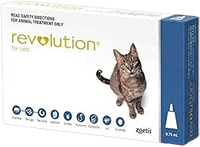
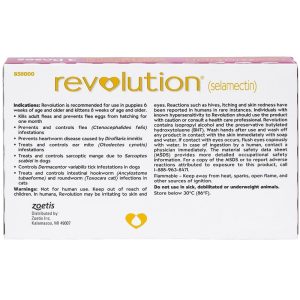
- Revolution: Contains selamectin. Covers fleas, heartworm larvae, ear mites, roundworms, and hookworms. Does not kill ticks.
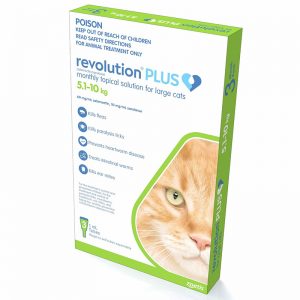
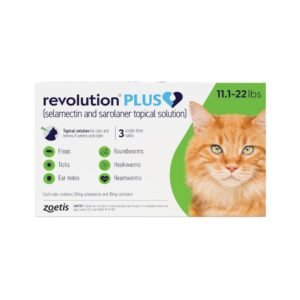
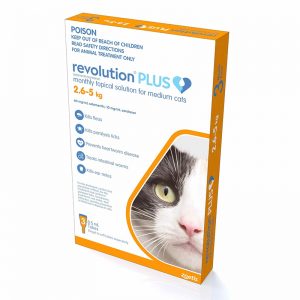
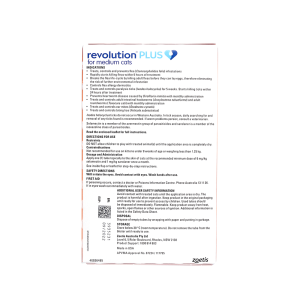
- Revolution Plus: Contains selamectin and sarolaner. Adds tick coverage across multiple species compared to standard Revolution, while retaining the same heartworm and intestinal worm spectrum.
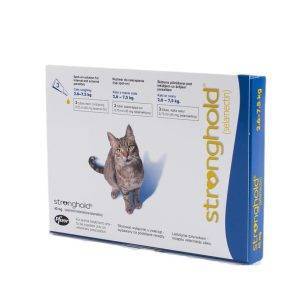
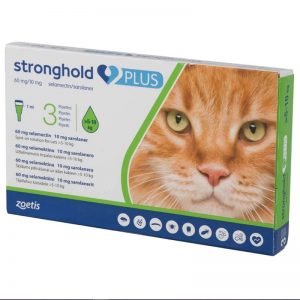
- Stronghold: Contains selamectin at the same concentration as Revolution. Marketed under the Stronghold name in Europe and select international markets; parasite coverage is identical.
2. Oral Chewables
Oral chewables are flavored tablets absorbed through the gastrointestinal tract into systemic circulation. Parasites ingest the active compound when they bite, which is the mechanism of kill. This format is appropriate for cats that react to topical application sites or groom excessively before the spot-on has dried.
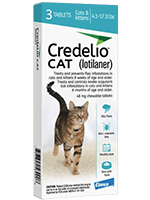
- Credelio: Contains lotilaner, an isoxazoline-class compound. Kills fleas and ticks with a monthly dosing interval. Formulated specifically for cats; the dog formulation contains a different concentration and should not be substituted.
3. Flea and Tick Collars
Medicated collars release active ingredients continuously into the lipid layer of the skin and coat over an extended period. Seresto, the primary collar option available for cats, provides flea and tick coverage for up to 8 months per collar. This format requires no monthly reapplication but should be checked regularly for fit and skin reaction at the contact site.
Flea and Tick Medication Brands Available at Anipetshop
Seven flea and tick medications for cats are available at Anipetshop without a prescription: Revolution Plus, Bravecto Plus, Advocate, NexGard Combo, Revolution, Stronghold, and Frontline. These products differ in active ingredient class, parasite spectrum, dosing interval, and minimum age eligibility.
The table below compares each product across the criteria relevant to selecting the correct formulation for your cat:
| Brand | Description | Target Users | Advantages | Usage Guidelines |
| Revolution Plus | Monthly topical; selamectin + sarolaner | Cats 8 weeks+, 1.27 kg (2.8 lbs)+; indoor/outdoor | Covers fleas, ticks, heartworm, ear mites, roundworms, hookworms | Apply monthly to base of neck; not tested in pregnant/lactating cats |
| Bravecto Plus | 3-month topical; fluralaner + moxidectin | Cats preferring quarterly dosing | Fleas (3 months), ticks (10 weeks), heartworm, ear mites in one application | Apply every 12 weeks; not for cats under 6 months |
| Advocate | Monthly topical; imidacloprid + moxidectin | Cats 9 weeks+, 0.91 kg (2 lbs)+; heartworm-endemic regions | Kills fleas, heartworm larvae, roundworms, hookworms, whipworm ear mites | Apply monthly; safety in pregnancy not established |
| NexGard Combo | Monthly topical; esafoxolaner + eprinomectin + praziquantel | Cats 8 weeks+, 0.82 kg (1.8 lbs)+; broad parasite risk | Fleas, ticks, heartworm, roundworms, hookworms, tapeworms, ear mites | Apply monthly; not tested in breeding/pregnant/lactating cats |
| Revolution | Monthly topical; selamectin | Breeding, pregnant, or lactating cats; cats 8 weeks+ | Covers fleas, heartworm larvae, ear mites, roundworms, hookworms; proven safety in pregnancy | Apply monthly; does not cover adult heartworms or ticks |
| Stronghold | Monthly topical; selamectin | Kittens from 6 weeks; breeding/pregnant cats | Broadest age eligibility in the lineup; safe for pregnant and lactating cats | Apply every 4 weeks; same active ingredient as Revolution |
| Frontline | Monthly topical; fipronil | Budget-conscious owners; pregnant/lactating cats | Flea and tick control; confirmed safe for breeding, pregnant, and lactating cats | Apply monthly; flea and tick only, no heartworm coverage |
How to Choose the Right Flea and Tick Medication for Cats Without Prescription
Four factors determine which product is appropriate for your cat. Work through each before placing an order.
Step 1: Weigh your cat before every purchase. Dosing thresholds are set by body weight, not by breed or size category. Revolution Plus, for example, has a separate formulation for cats 1.25 kg to 2.5 kg and another for cats 2.5 kg to 5 kg. Administering the wrong weight-band dose produces either underdosing and treatment failure, or compound overexposure.
Step 2: Confirm the minimum age requirement for the specific product. Minimum age eligibility varies by active ingredient: Stronghold is approved from 6 weeks, while most isoxazoline-class products require the cat to be at least 8 weeks old. Administering a product before the labeled minimum age can cause adverse neurological effects in kittens.
Step 3: Check for contraindications before ordering. Cats with a history of neurological conditions or seizures should not receive isoxazoline-class compounds (fluralaner, sarolaner, lotilaner) without prior veterinary clearance. Permethrin-containing products labeled for dogs are acutely toxic to cats and must never be substituted. Consult a veterinarian before ordering if your cat has an existing health condition or is currently on other medications.
Step 4: Match the delivery format to your cat’s physiology and handling tolerance. Cats that groom excessively immediately after topical application may ingest the compound before it distributes through the skin lipid layer, reducing efficacy and increasing ingestion risk. An oral chewable such as Credelio eliminates this variable. Cats with a history of skin sensitivity at application sites should also be considered for oral administration.
Order Flea & Tick Medicines for Cats at Anipetshop
Anipetshop is a licensed online pharmacy operating under APVMA regulations in Noosaville, Australia. All flea and tick medications supplied are sourced directly from original manufacturers, not repackaged generics or gray-market substitutes. The active ingredients, dosage, and labeling are identical to the equivalent products distributed in the U.S. market.
The following sourcing and supply standards apply to every order:
- English labeling: All products ship with original English-language manufacturer labeling, including dosing instructions, weight thresholds, and contraindication warnings.
- Manufacturer-direct sourcing: Products are sourced from original manufacturers across Australia and Europe. No third-party repackaging or reformulation occurs at any point in the supply chain.
- Expiration date integrity: Each product is supplied with sufficient shelf life remaining to complete the intended treatment course before the expiration date.
- Formulation equivalence: Active ingredients, concentrations, and dosage standards are identical to those in U.S.-market products. No generics or substitutes are supplied in place of the advertised brand.
How to Administer Flea and Tick Medication on Cats
Administration method varies by delivery format. Incorrect application reduces efficacy and, in some cases, increases the risk of accidental ingestion or skin reaction. Follow the steps below for the format you are using.
For topical spot-ons:
- Part the fur to expose skin. Apply at the base of the skull where the cat cannot self-groom. Separating the fur until the skin is visible ensures the compound contacts skin directly, not coat.
- Dispense the full pipette contents onto one site. Do not split the dose across multiple spots or rub it in. Distributing the compound manually disrupts the lipid-layer absorption mechanism.
- Keep the application site dry for 24 hours. Do not bathe the cat or allow the site to contact water before the compound has fully distributed. Other pets and children should not contact the treated area until it is dry.
- Wash hands immediately after application. Direct skin contact with undiluted spot-on compounds should be avoided.
For oral chewables and tablets:
- Administer with or within 30 minutes of a meal. Food presence in the stomach supports absorption for most oral antiparasitic compounds and reduces the incidence of gastrointestinal upset.
- Place the tablet at the base of the tongue and close the mouth. Stroking the throat stimulates the swallowing reflex. Do not crush and mix into a partial food portion; the cat may consume only part of the dose.
- Observe the cat for 15 minutes post-administration. If the cat vomits within this window, the dose should be considered lost. Contact the prescribing veterinarian or Anipetshop for guidance on redosing.
For flea and tick collars:
- Fit the collar with two fingers of clearance between the collar and neck. A collar fitted too tightly restricts circulation; fitted too loosely, it can be removed by the cat or caught on objects.
- Trim excess collar length after fitting. Leaving a long tail allows the cat to chew the collar material and ingest active ingredients at an uncontrolled dose.
- Inspect the contact site weekly for the first month. Localized alopecia, erythema, or skin thickening at the collar line indicates a contact reaction and warrants collar removal and veterinary assessment.
Are There Any Side Effects of Flea and Tick Medication for Cats?
Flea and tick medications can produce adverse effects ranging from transient local reactions to systemic toxicity requiring immediate veterinary intervention. The severity and likelihood of each reaction vary by drug class, route of administration, and individual patient factors. The following adverse effects are organized by clinical presentation.
- Application site reaction: Erythema, pruritus, or localized alopecia at the spot-on application site indicates dermal sensitivity to the formulation. These reactions typically resolve within several days of a single application but recur with repeat dosing in sensitized cats.
- Hypersalivation after topical application: Occurs when the cat grooms the application site before the compound has dried. The bitter taste of most formulations triggers a salivation response; this is not a sign of systemic toxicity if isolated.
- Gastrointestinal upset: Vomiting or diarrhea following oral administration is more likely when the tablet is given on an empty stomach. Administering with food reduces this risk for most oral antiparasitic compounds.
- Lethargy: Transient reduction in activity has been reported following administration of isoxazoline-class and selamectin-based products. Lethargy persisting beyond 48 hours warrants veterinary assessment.
- Neurological signs: Tremors, ataxia, or seizure activity following administration of isoxazoline-class compounds (fluralaner, sarolaner, lotilaner) represent a known adverse effect class. Cats with pre-existing neurological conditions are at elevated risk. If any neurological signs appear, contact a veterinarian immediately and do not redose.
- Contact dermatitis progressing to chemical burn: Sustained skin inflammation at a topical application site can progress to vesiculation and tissue damage if the product is not removed. Wash the site with mild soap and water and seek veterinary attention.
- Systemic toxicity: Seizures, labored breathing, or collapse following administration require emergency veterinary care. These presentations can deteriorate rapidly and are not manageable at home.
Cat Flea and Tick Prevention & Treatment FAQs
Which Flea and Tick Medications for Cats Are Available Without a Prescription?
Revolution Plus, Bravecto Plus, Advocate, NexGard Combo, Revolution, Stronghold, and Frontline are all available at Anipetshop without a prescription. These products differ in parasite spectrum, active ingredient class, and dosing interval. The correct choice depends on your cat’s weight, age, health history, and the parasites prevalent in your area.
What Is the Most Effective Flea Treatment for Cats?
Effectiveness depends on the clinical objective. Nitenpyram (Capstar) kills existing adult fleas within 30 minutes but provides no residual protection beyond 24 hours. For sustained monthly prevention with broad parasite coverage, Revolution Plus (selamectin + sarolaner) covers fleas, ticks, heartworm larvae, ear mites, roundworms, and hookworms within a single monthly application.
Can You Use Adult Cat Flea Medication on Kittens?
No. Minimum age and weight thresholds vary by active ingredient and are not interchangeable across products. Administering an adult-labeled product to a kitten below the specified threshold risks neurological adverse effects. Check the product label for the exact minimum age and weight before administration.
Do Indoor-Only Cats Need Flea and Tick Prevention?
Yes. Fleas do not require direct outdoor access to reach an indoor cat. They enter homes on clothing, footwear, and other animals, and can transfer between units in multi-dwelling buildings. Year-round prevention is indicated for indoor cats on the same basis as outdoor cats.
Can You Use Dog Flea and Tick Products on Cats?
No. Many canine formulations contain permethrin, a pyrethroid compound that is acutely toxic to cats. Cats lack the hepatic enzyme pathway required to metabolize permethrin, and even brief dermal exposure can cause tremors, seizures, and death. Never apply a product labeled for dogs to a cat, regardless of dose size.
Why Does My Cat Still Have Fleas After Treatment?
Flea and tick medications kill parasites after contact or at the point of bite; they do not repel. Persistent flea activity after treatment indicates one of three conditions: a missed or incorrectly applied dose, reinfestation from an environmental reservoir in carpets or bedding, or a product with insufficient residual duration for the level of environmental infestation present. Treating the cat without addressing the home environment does not eliminate an established flea cycle.
Do All Cats Need Year-Round Flea and Tick Prevention?
Yes. Flea and tick exposure is not limited to outdoor environments or seasonal periods. Indoor cats remain at risk through indirect exposure routes, and flea populations in carpets and upholstery persist year-round in temperature-controlled homes. Year-round prevention is the only approach that eliminates the risk of an environmental infestation establishing between doses.